Home Donate New Search Gallery Reviews How-To Books Links Workshops About Contact
Sony PCM-F1
Portable Digital Audio Recorder (1981-)
I bought the very first one that hit the docks in the USA (serial number xxxxx10) directly from Sony in April 1981. I was the first private citizen to own a digital audio recorder in the United States. More recently I've bought two more used at eBay (How to Win at eBay). This all-content, junk-free website's biggest source of support is when you use those or any of these links to approved sources when you get anything, regardless of the country in which you live. Thanks for helping me help you! Ken.
Complete Sample Live Recording from 1984 © Ken Rockwell (91 Minutes, 1 GB AIF)
I recorded this on my F1 with an ORTF pair of SM-81 suspended from the catwalks far above the orchestra.
My mics ran through 200 feet of cable into an API board in the control room with the levels all at -12 dB. I sent the outputs into my F1. I set levels on the F1 at rehearsal and just let the recorder run in 16 bit mode for the whole concert. There's no processing, EQ, gain-riding or anything else involved, just set-and-enjoy for the whole concert.
Note how with "only" 16 bits that I still have one bit I never used (about -6 dB peak level), and even with only 15 bits, I have captured the complete orchestra, brass, choir, soloists and the concert hall's brand-new Allen Digital Organ on its inaugural concert with zero audible noise. My mics, electronics and recorder are so quiet that we can hear all the silence, breathing and squeaky chairs and background noise of the air conditioning in the hall, also all without any recording noise. 16 bits is more than enough to capture the entire dynamic range of live music, from tutti ƒƒƒƒ fortissiissiissimo down to the background noise in the hall if you record it well.
Back in the 1980s I astonished people with these first digital recordings, especially in 1981 which was a year before the CD was announced. Before this PCM-F1, a digital recorder cost about as much as a house and were only owned by major studios. When I would walk my F1 into smaller studios they were astonished, running all over telling everyone to come out and see the first digital recorder they'd ever seen in person.
Some time around 2010 I played a copy of the master Betamax tape through a PCM-601 and fed its SPDIF output into my Mac Pro's direct digital audio input. I started a recording program (Garage Band for all I know), let it run for the full hour and a half and saved the © file as AIF, which I post here.
This system uses pre-emphasis, and hopefully however you're hearing it applies the appropriate de-emphasis. If you have Logic Pro or similar, maybe you could be so kind as to let me know if the pre-emphasis flag is set.
Also know that it is a 44.056 ksps recording, not 44.100 ksps. I can't recall how my file is flagged; I don't think 44.056 is an option (SPDIF came out after the CD made 44.1 ksps a standard).
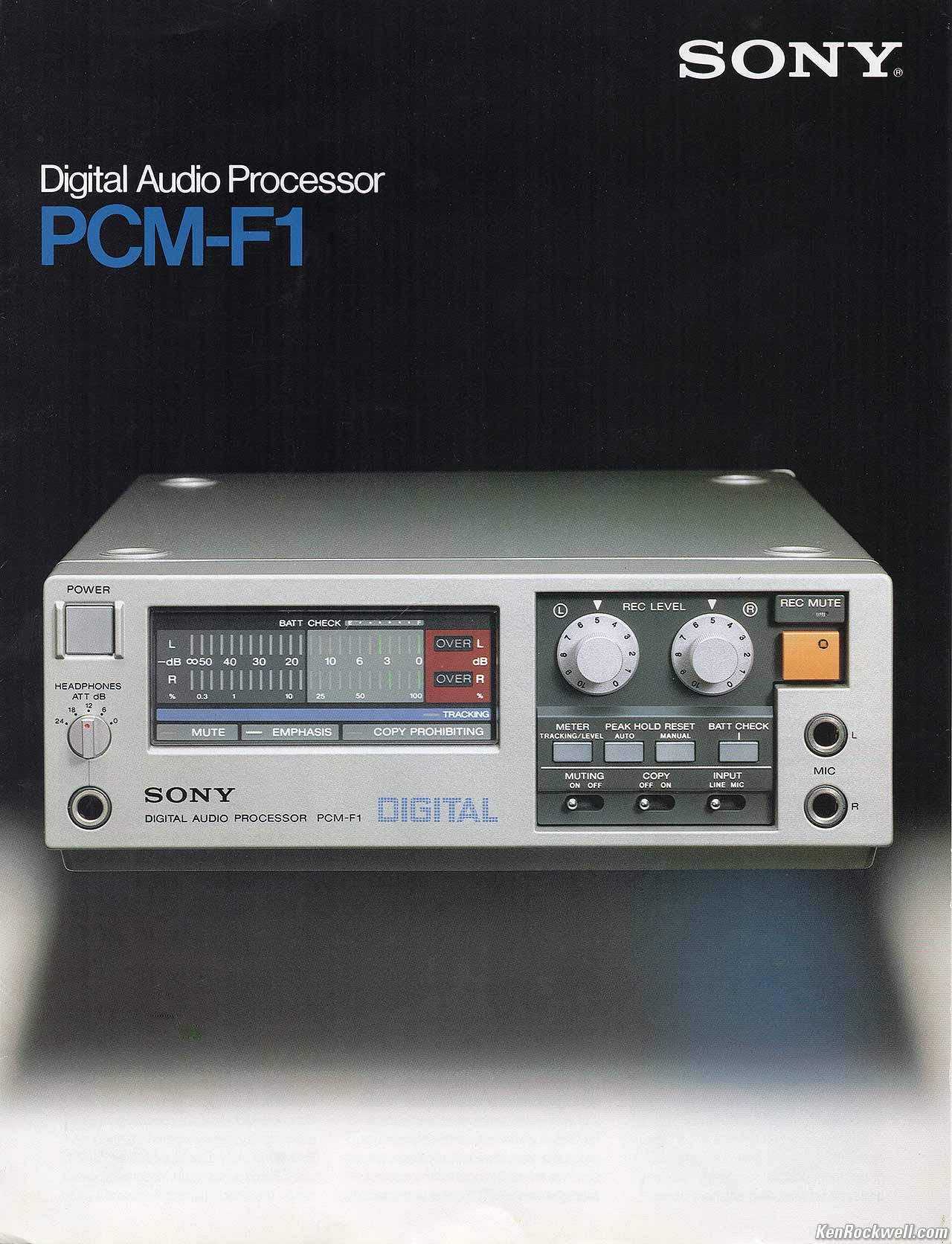
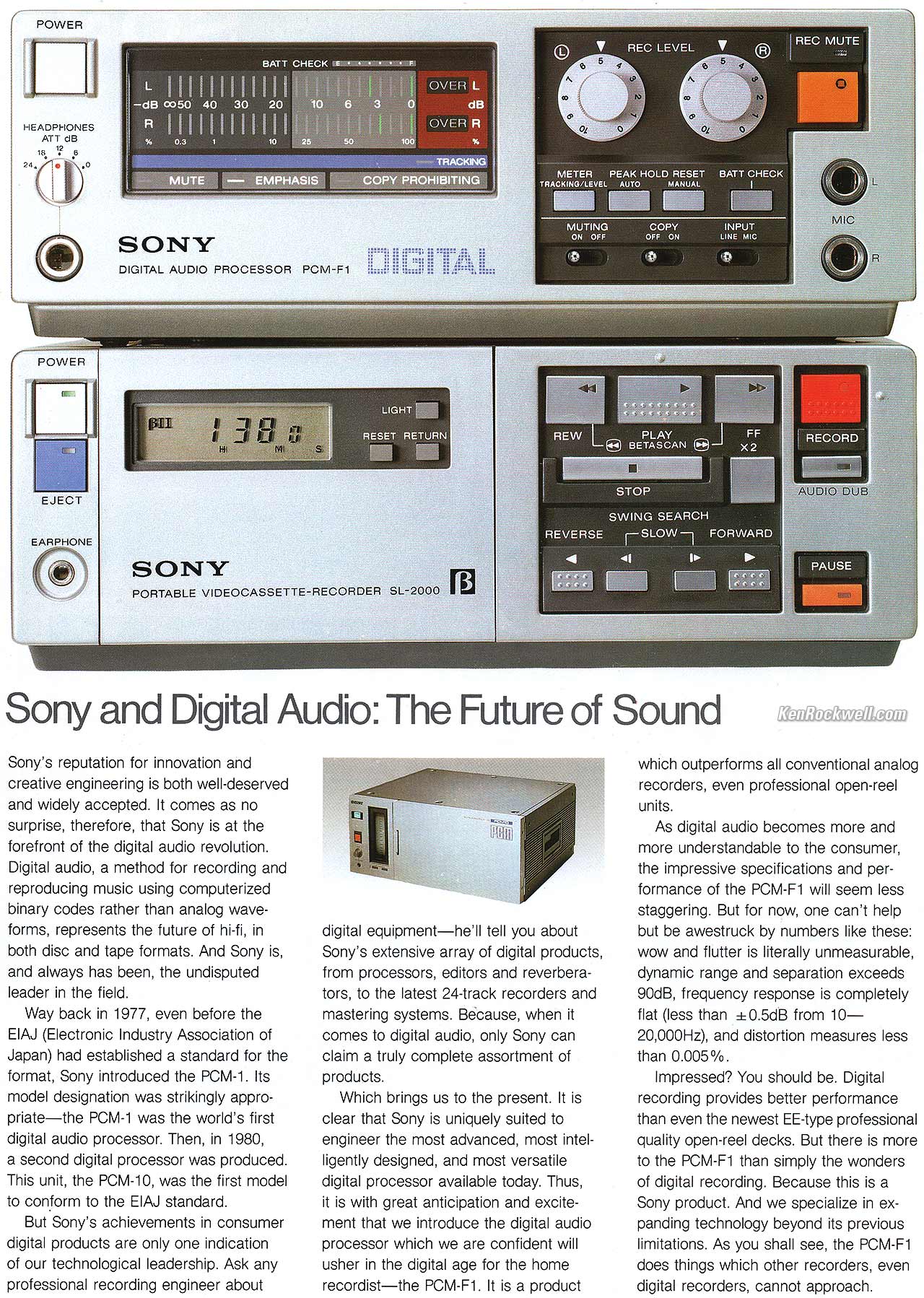
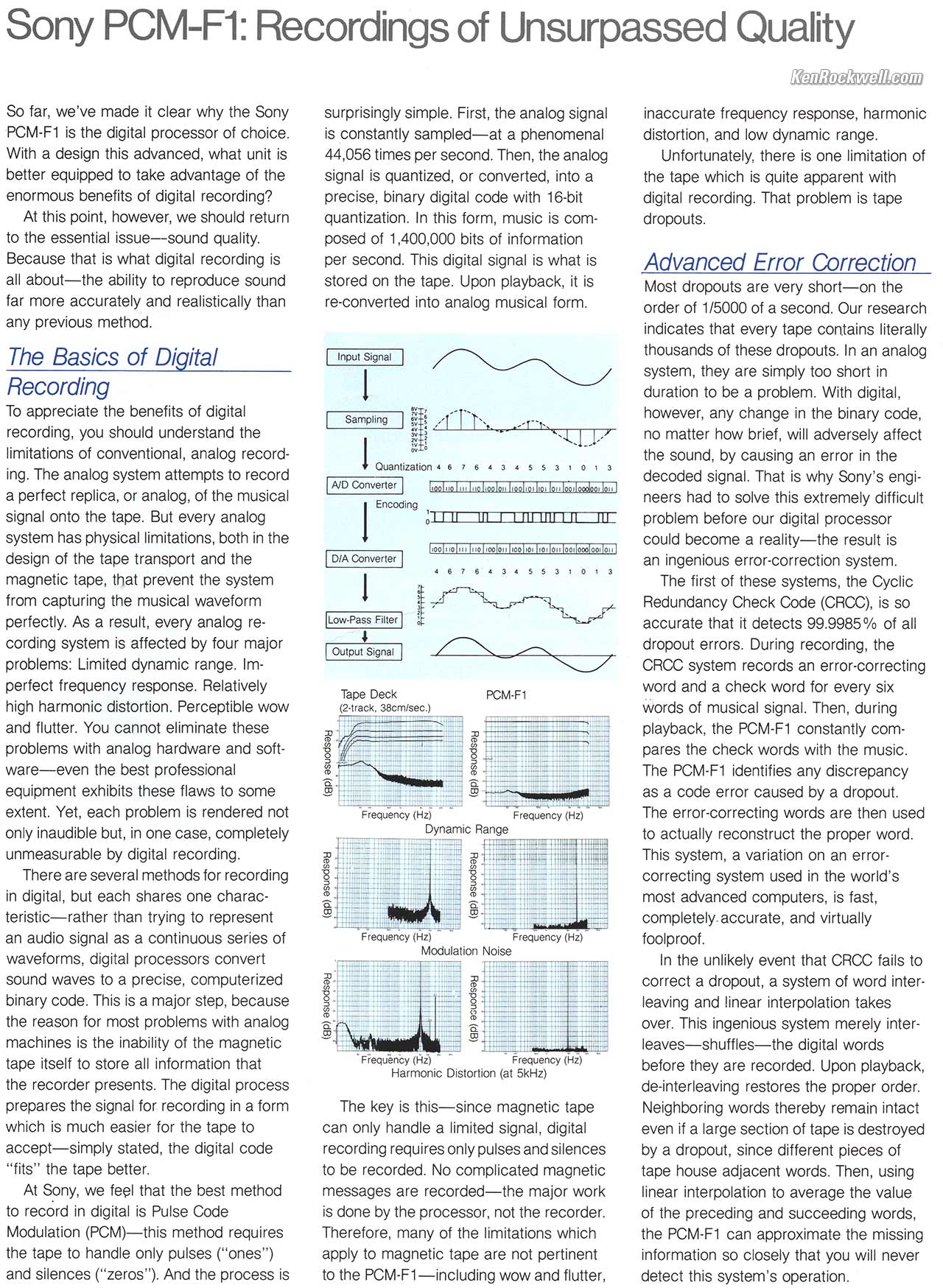
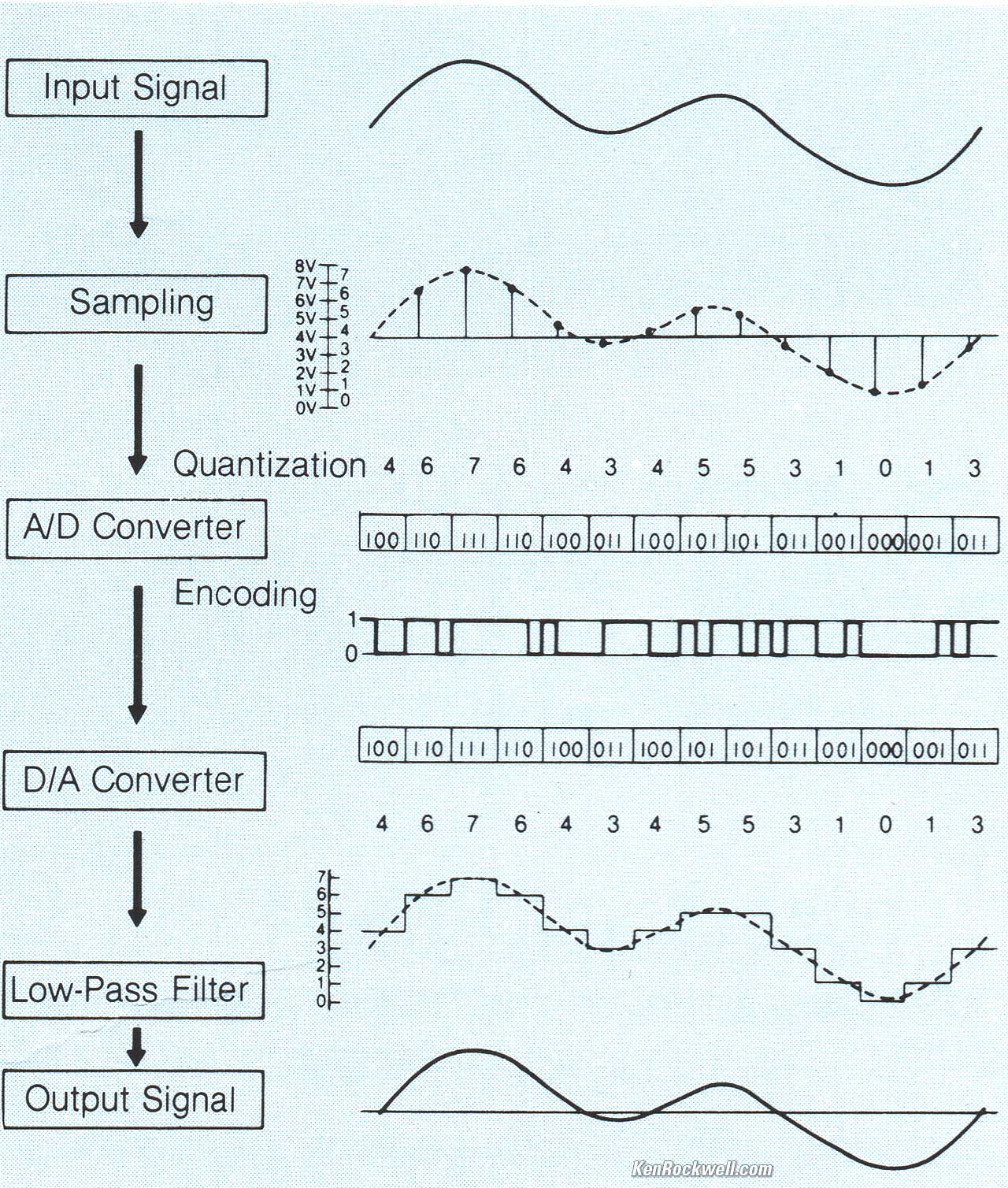
Sony PCM-F1 (16 or 14-bit EIAJ at 44.056 ksps, NTSC or PAL output, 2-channels simultaneous encode and decode, $1,900 new in 1982, about $100 used in 2016). I got serial number 10 in April 1981 direct from Sony, and I've gotten two used later at this link directly to them at eBay (see How to Win at eBay). bigger.
April 2016 All Reviews > Audio Reviews > Sony Reviews

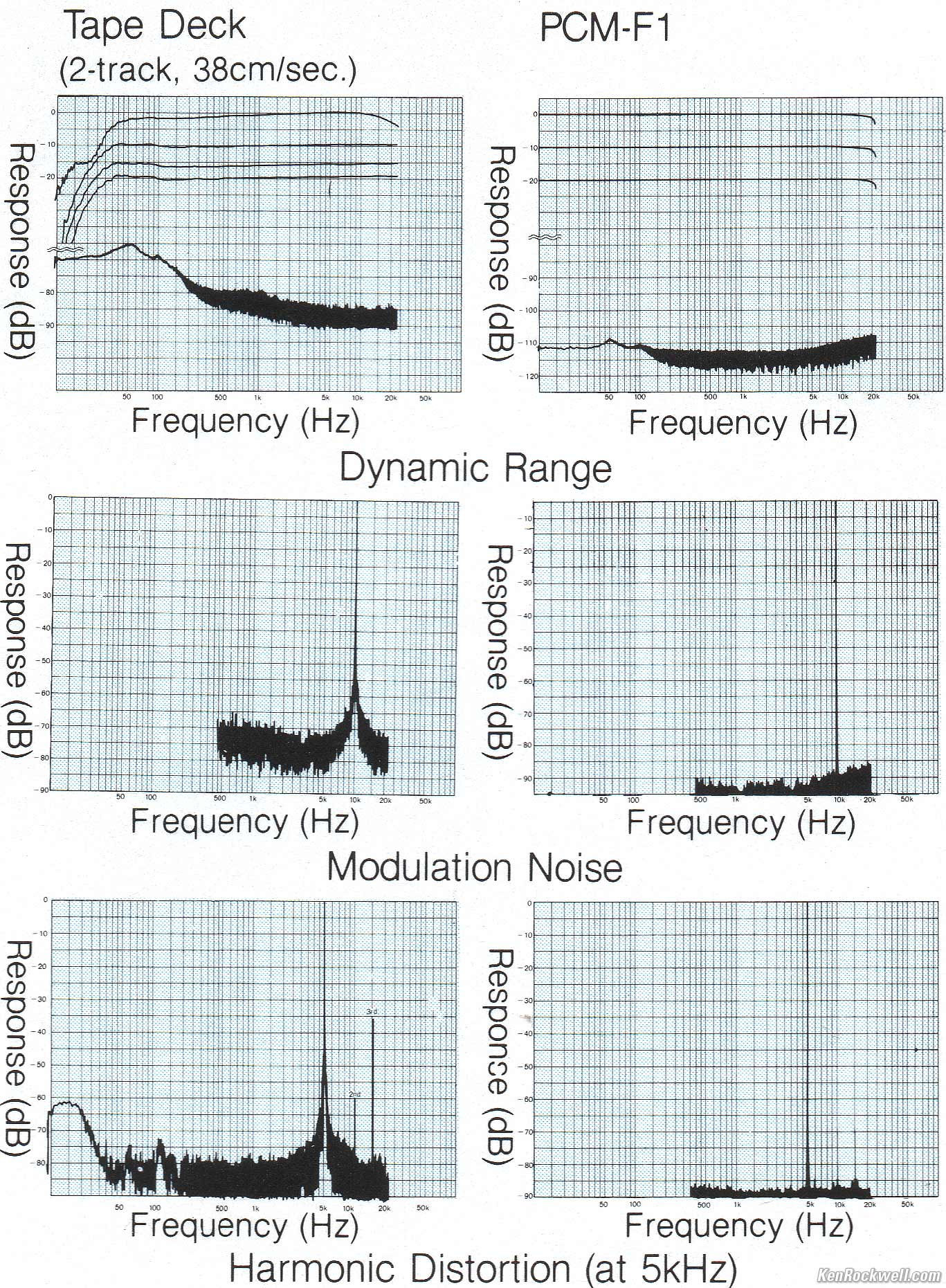
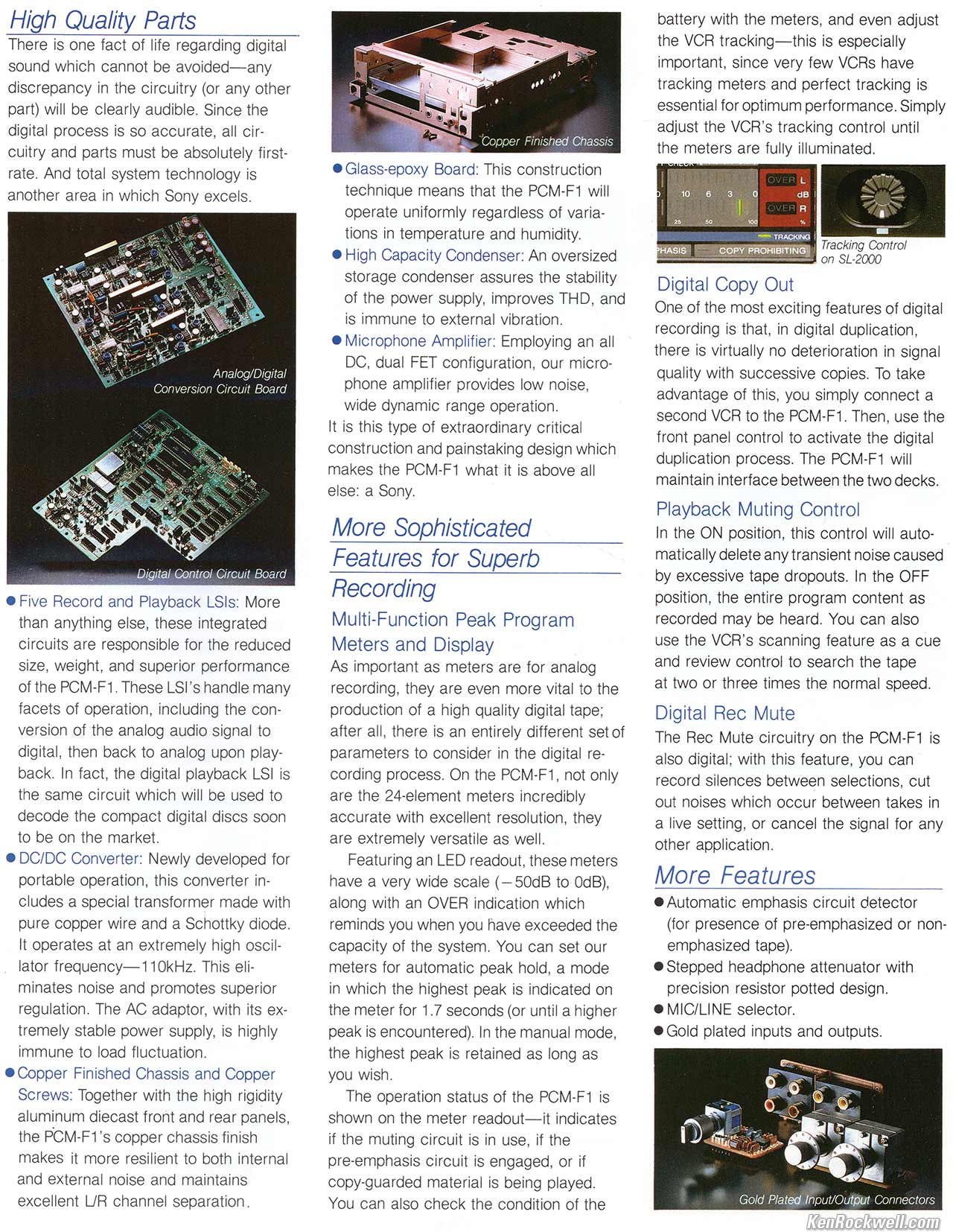
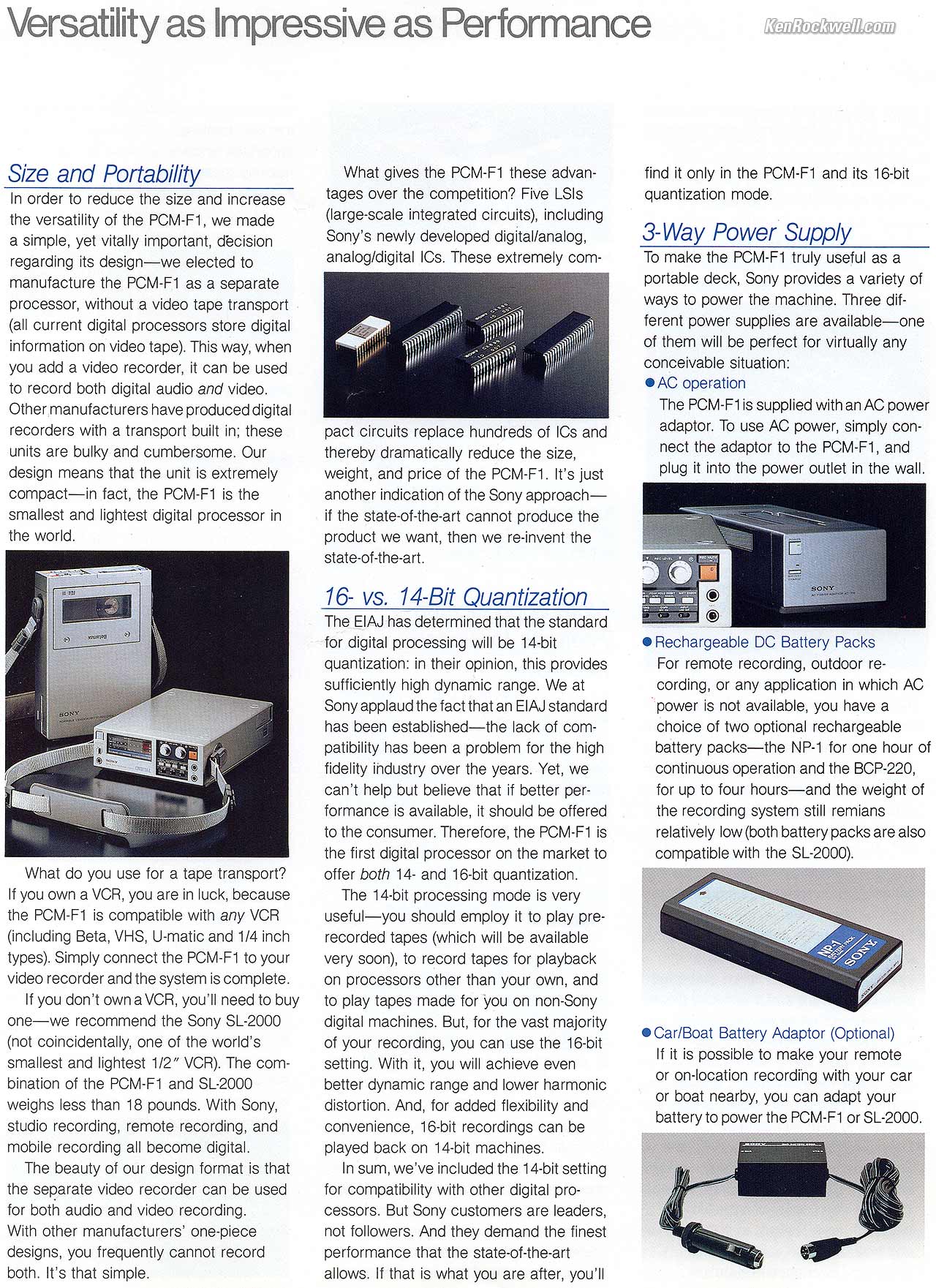
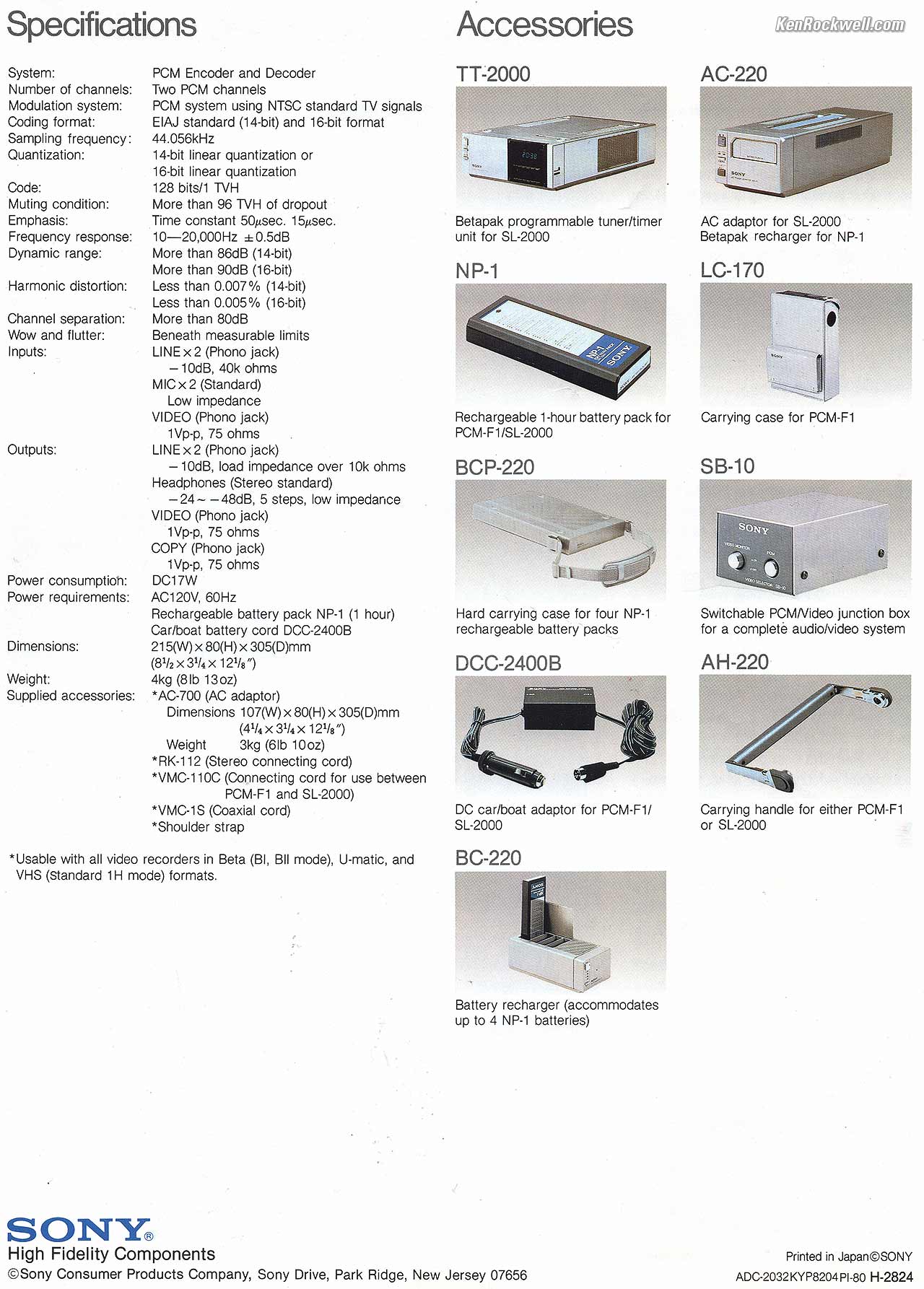
Measurements top
Intro Specs Performance Measurements Usage Recommendations More
Sound
Zipper noise is audible at 4 Hz.
It's premphasized. For play-in from a CD player, set 0 dBFS from a 0 dBFS 8 kHz sinewave.
1 kHz too low, and a 1002.7 Hz square is too much.
Once you've done this, the CD-1 fade-to-noise has some distortion at 0:06 at 14 bits, AOK to 0:15 at 16 bits
Meters
Dual 24-segment meters read the premphasized digital signal.
Infinite peak hold.
Output
Line
Line output @ 0 dBFS: 0.725 V.
Phones
Phones output @ 0 dBFS:
192 mV @ - 24 dB
379 mV @ - 18 dB
0.74 @ -12 dB
1.445 V @ -6 dB
2.755 V @ 0 db
Power
AC-700: 5.2 W off, 6.65 W on but unconnected, 8.0 W connected but off, 34.6W operating cold, 32.6 W warm. No change with signal.
+ is towards heat sink, - is towards audio connectors
Review from 1982
See the March, 1982 issue of Audio Magazine.
© Ken Rockwell. All rights reserved. Tous droits réservés. Alle Rechte vorbehalten.
Help Me Help You
I support my growing family through this website, as crazy as it might seem.
The biggest help is when you use any of these links when you get anything. It costs you nothing, and is this site's, and thus my family's, biggest source of support. eBay is always a gamble, but all the other places always have the best prices and service, which is why I've used them since before this website existed. I recommend them all personally.
If you find this page as helpful as a book you might have had to buy or a workshop you may have had to take, feel free to help me continue helping everyone.
If you've gotten your gear through one of my links or helped otherwise, you're family. It's great people like you who allow me to keep adding to this site full-time. Thanks!
If you haven't helped yet, please do, and consider helping me with a gift of $5.00.
As this page is copyrighted and formally registered, it is unlawful to make copies, especially in the form of printouts for personal use. If you wish to make a printout for personal use, you are granted one-time permission only if you PayPal me $5.00 per printout or part thereof. Thank you!
Thanks for reading!
Mr. & Mrs. Ken Rockwell, Ryan and Katie.