
August & September 2018's News
< < back to Today's News

Mirrorless vs DSLR Nikon vs Canon vs Sony Full-Frame Mirrorless
Canon: EOS R 1DX II 5DS/R 5D Mk IV 6D II 7D II 80D 77D SL2 T6 Flash Lenses
Nikon: Z7 Z6 D5 D850 D810 D750 D610 D500 D7500 D5600 D3500 D3400 Lenses
Sony: A9 A7R III A7 III A7RII A7SII A7II A7 A6500 A6300 A6000 RX10 IV RX100/6 RX100V Lenses
LEICA: M10D M10P M10 M240 M-E M9P M9T M9 M7 M6/TTL CLE M3 IIIf IIIa Lenses
All Reviews: Apple Audio Fuji Zeiss Hasselblad Contax Olympus Pentax
Recommended Cameras Best Cameras Gifts How to Take Better Pictures random
Links: Adorama Amazon B&H Crutchfield eBay Tutorial Videos Infrared
Adorama's Daily Deals Amazon's Deals-of-the-Day B&H Deal of the Day Crutchfield's Sales


|








30 September 2018, Sunday
Nikon Z7s have shipped!
Presuming you ordered yours on time, Nikon actually shipped the Z7 on Thursday as promised. I don't have mine yet as I'm in San Diego this weekend for the:
Miramar Air Show
I shot these on a hazy Friday. The Sony A9 and Sony 400/2.8 made this the easiest shoot ever.
You all know about the Sony A9 and Sony 400/2.8, but you probably don't know about the Wimberley WH-200 which is a gimbal mount for ultrateles. It's an industry-standard American-made device that balances our entire camera and lens assembly so we can point it and track moving objects like jets and birds with a single fingertip:
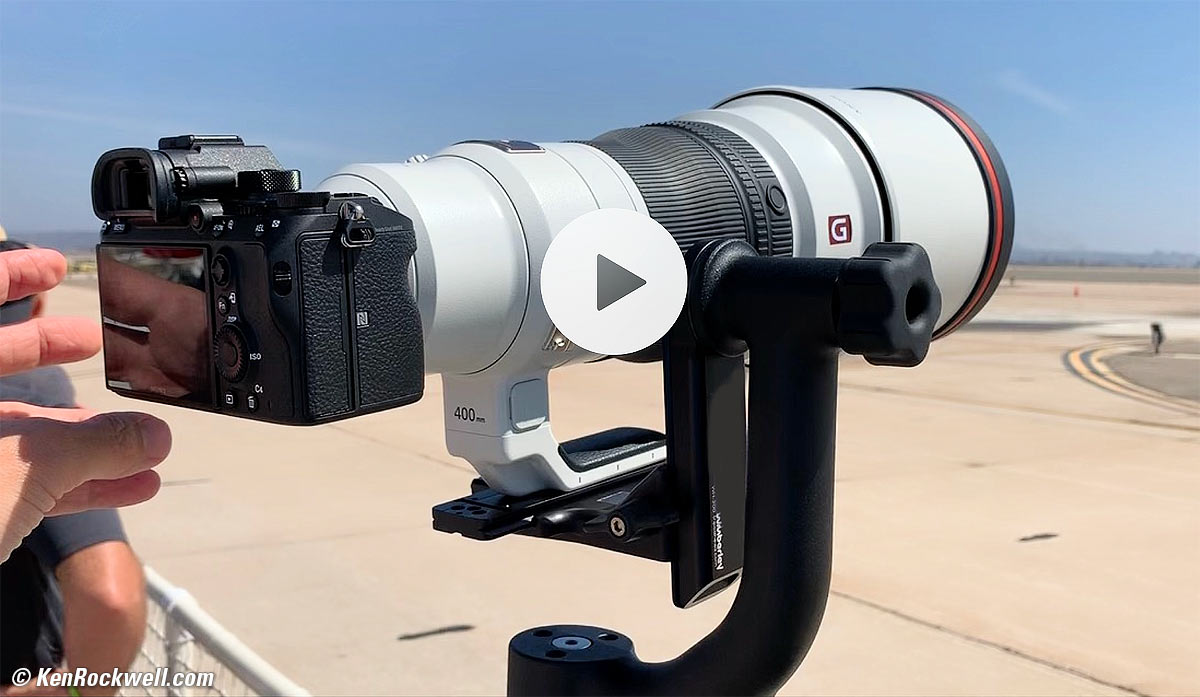
Live Video: The Wimberley WH-200 Head in Action.
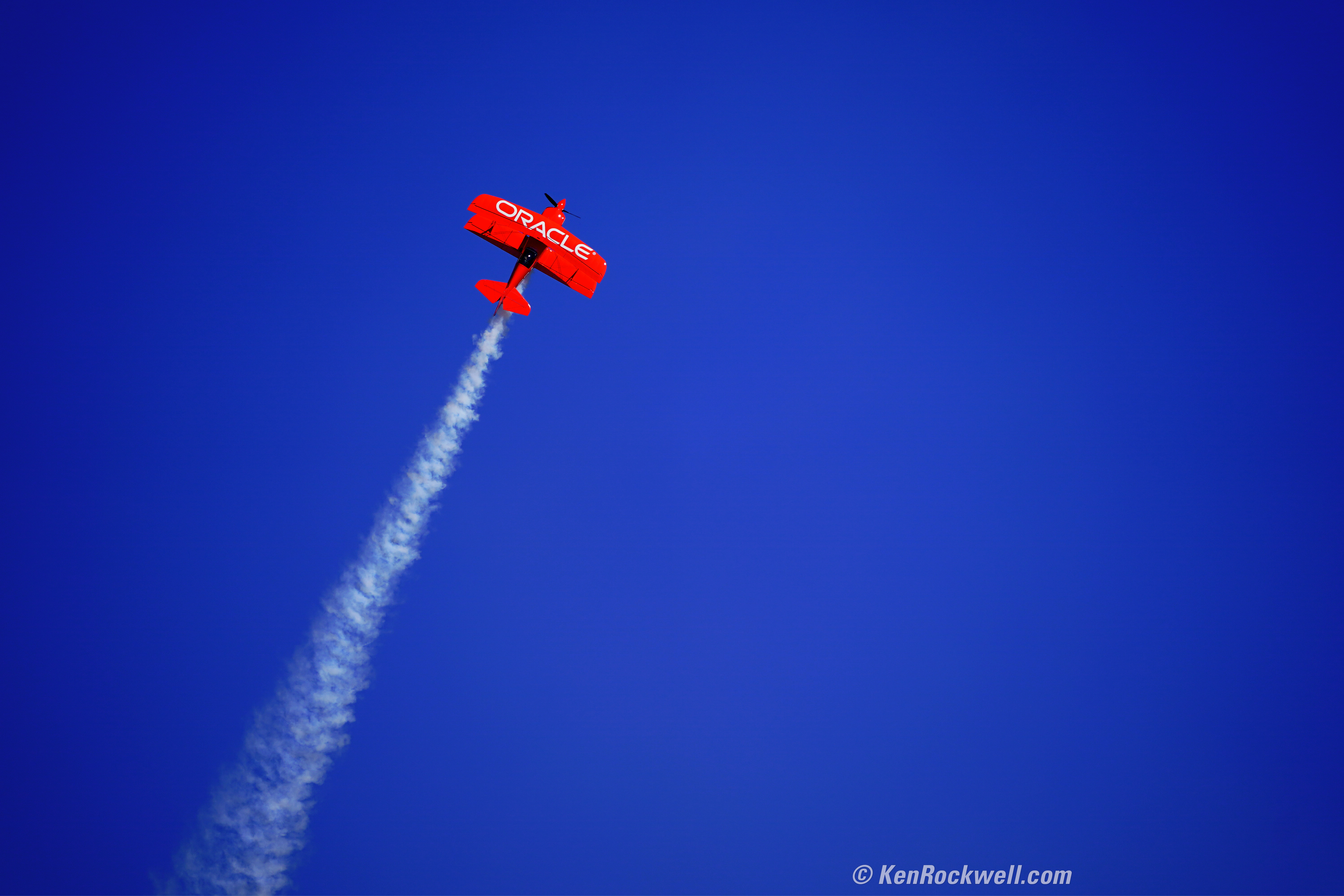
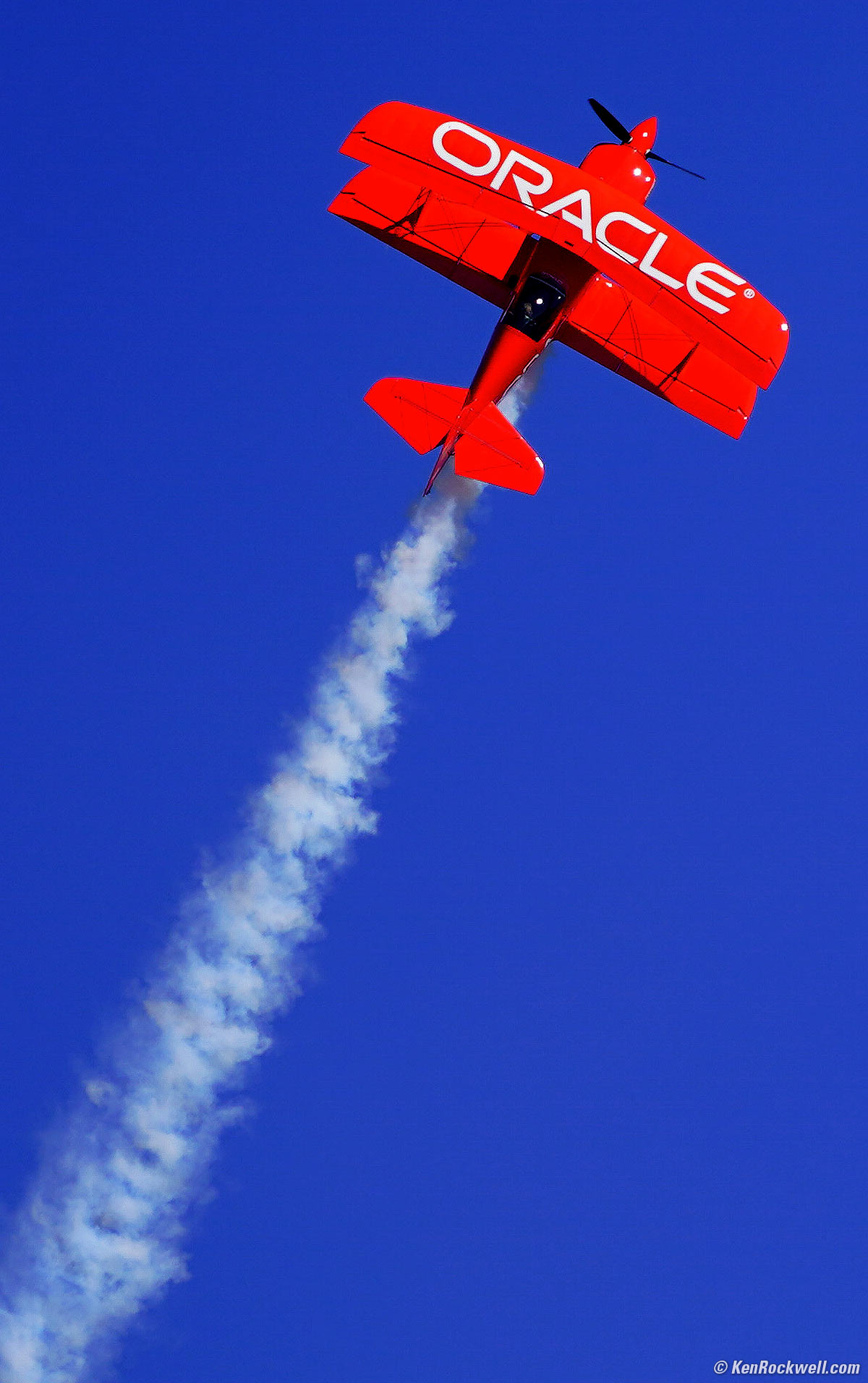
Red Biplane against Blue Sky with Smoke Trail, Miramar Air Show. Sony A9, Sony 400/2.8 on Wimberley WH-200, f/2.8 at 1/4,000 at ISO 100. bigger or full-resolution.
This guy was about a mile away! This system is so sharp it's no problem cropping as needed at this distance.
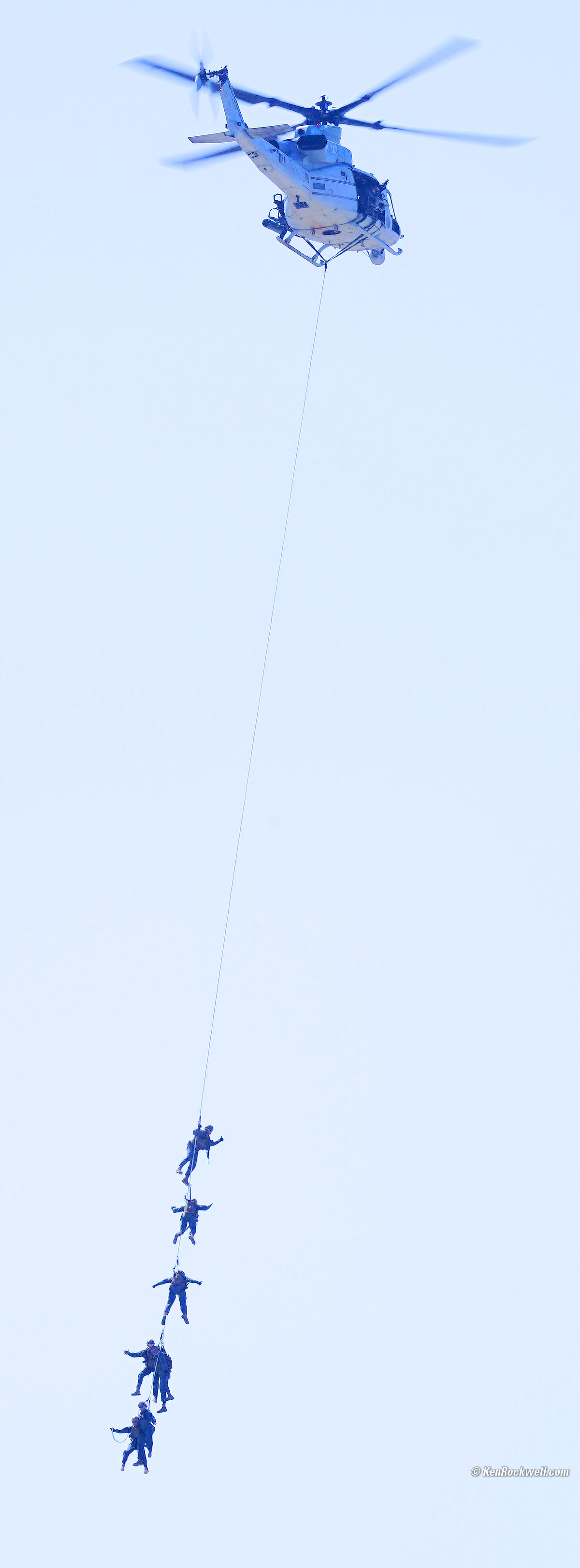
Marines dangling under a helicopter, Miramar Air Show. Sony A9, Sony 400/2.8 on Wimberley WH-200, f/2.8 at 1/2,500 at ISO 100. bigger.
With a 400mm lens I had to wait until these Marines were about a mile away until I could fit them all in one frame. They were about a thousand feet off the ground - and remember that The Marines, like all of America's military, are a volunteer force.
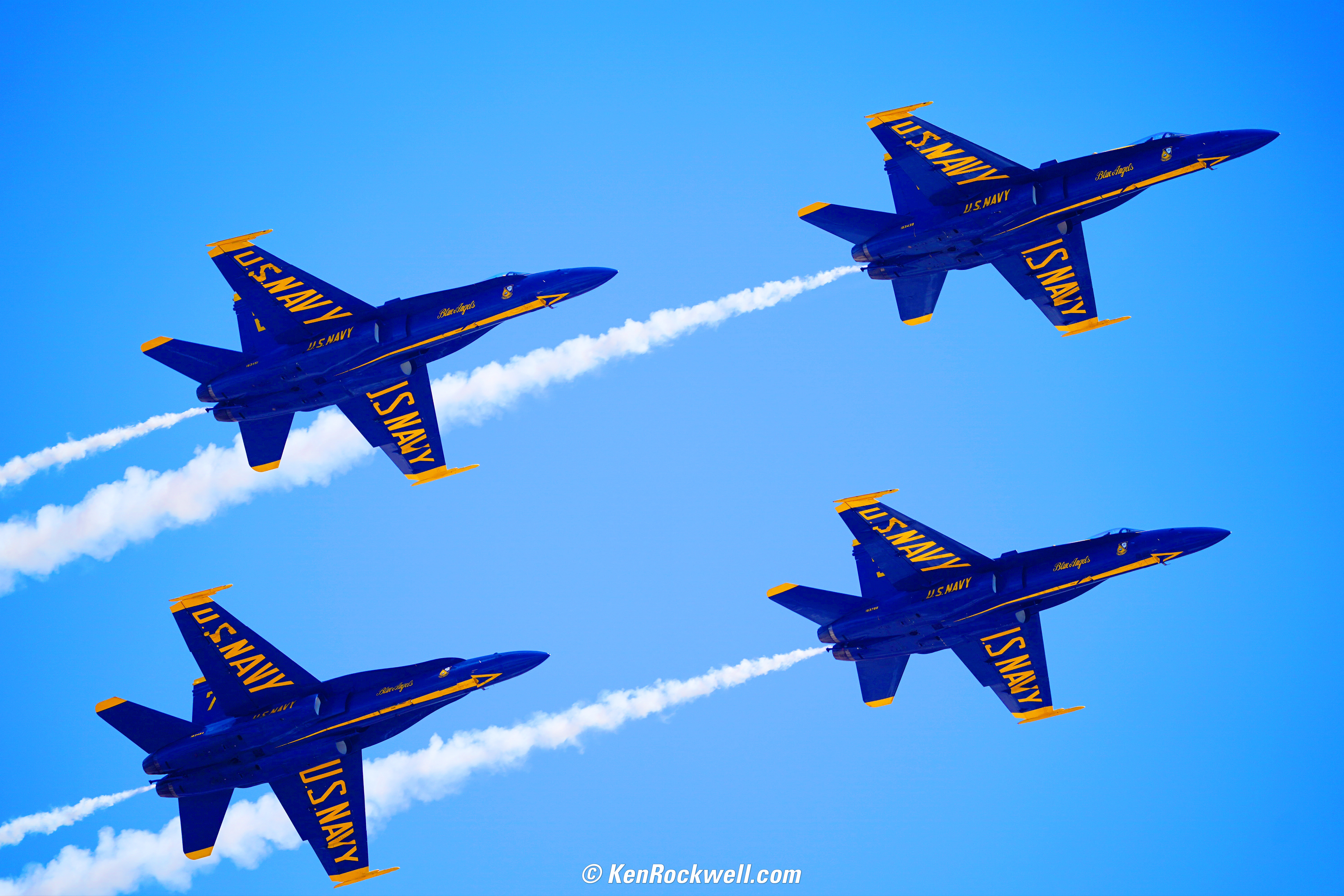
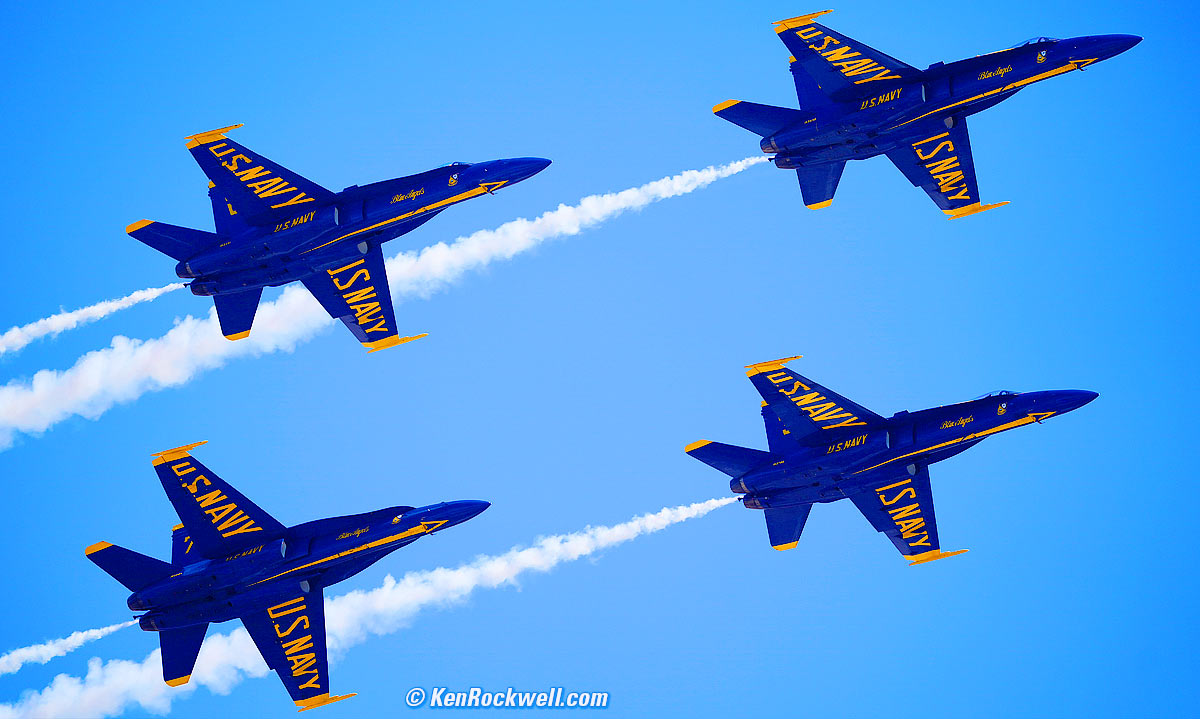
The Blue Angels, Miramar Air Show. Sony A9, Sony 400/2.8 on Wimberley WH-200, f/2.8 at 1/2,500 at ISO 100. bigger or full-resolution.
Standard shot, made trivially easy with the Wimberley WH-200 to hold my A9 and 400/2.8.
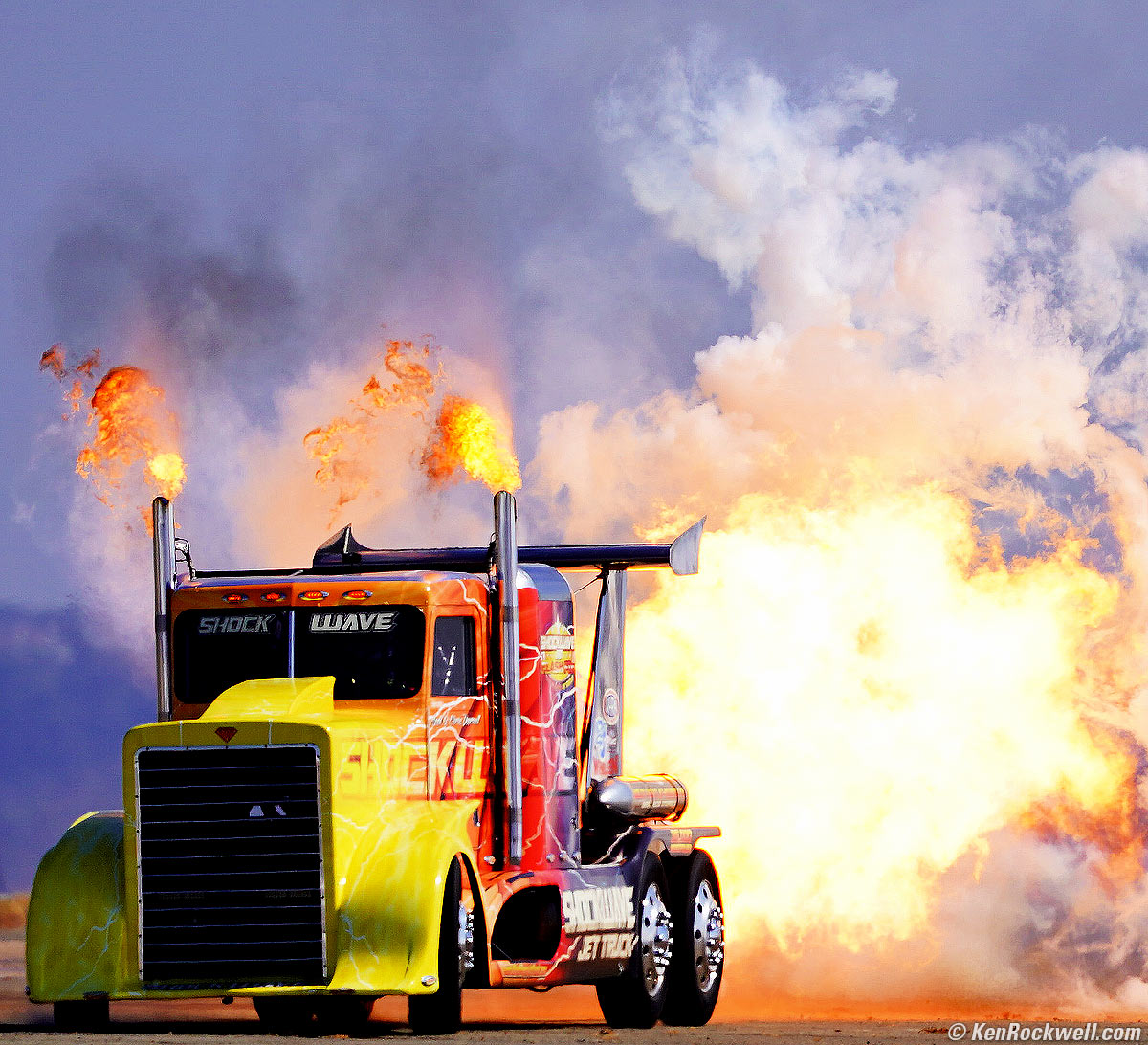
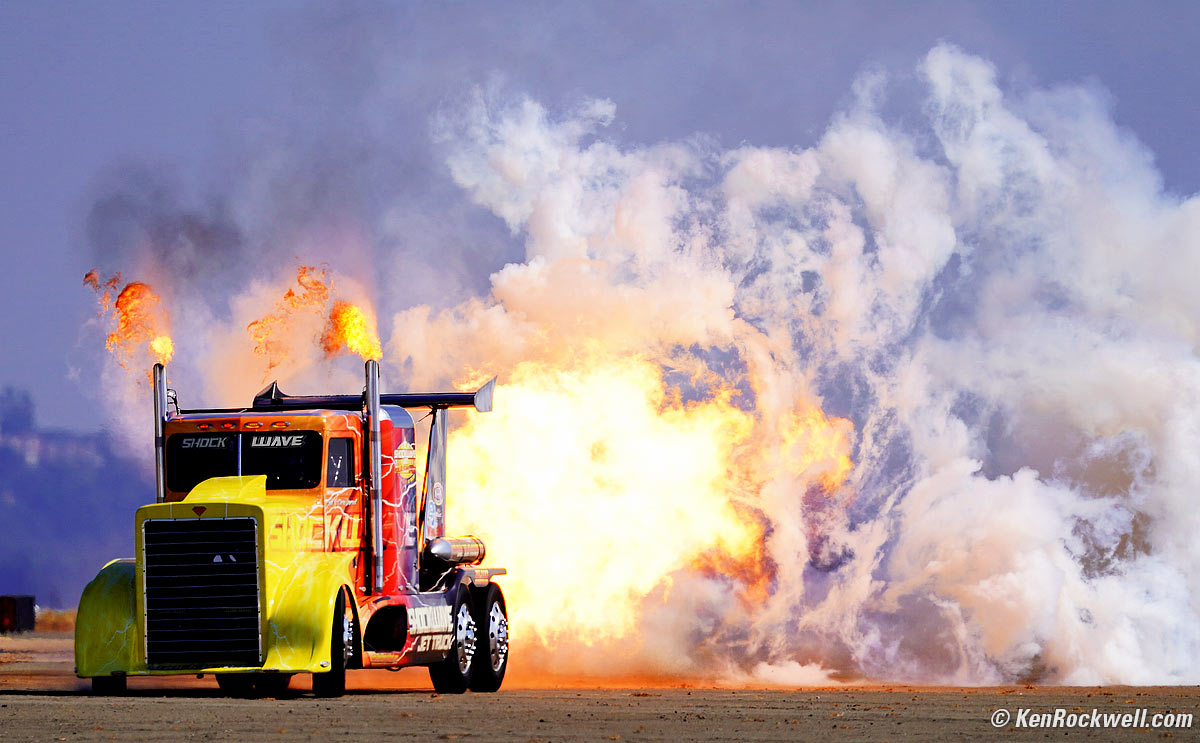
Shockwave Jet Truck, Miramar Air Show. Sony A9, Sony 400/2.8 on Wimberley WH-200, f/2.8 at 1/4,000 at ISO 100. bigger or wider.
This was a long way away and cropped. You couldn't shoot this on an iPhone because 1.) you'd be so close that you'd get sucked into the jet engine, and 2.) a closer point of view would have made the front of the truck huge and the flame tiny. By getting further away we change the relative rendering so that the truck's grille shrinks and the flames grow huge in the background.
How loud is this thing? I'm writing this two days later on Sunday from five miles away, and I just heard it during today's show!
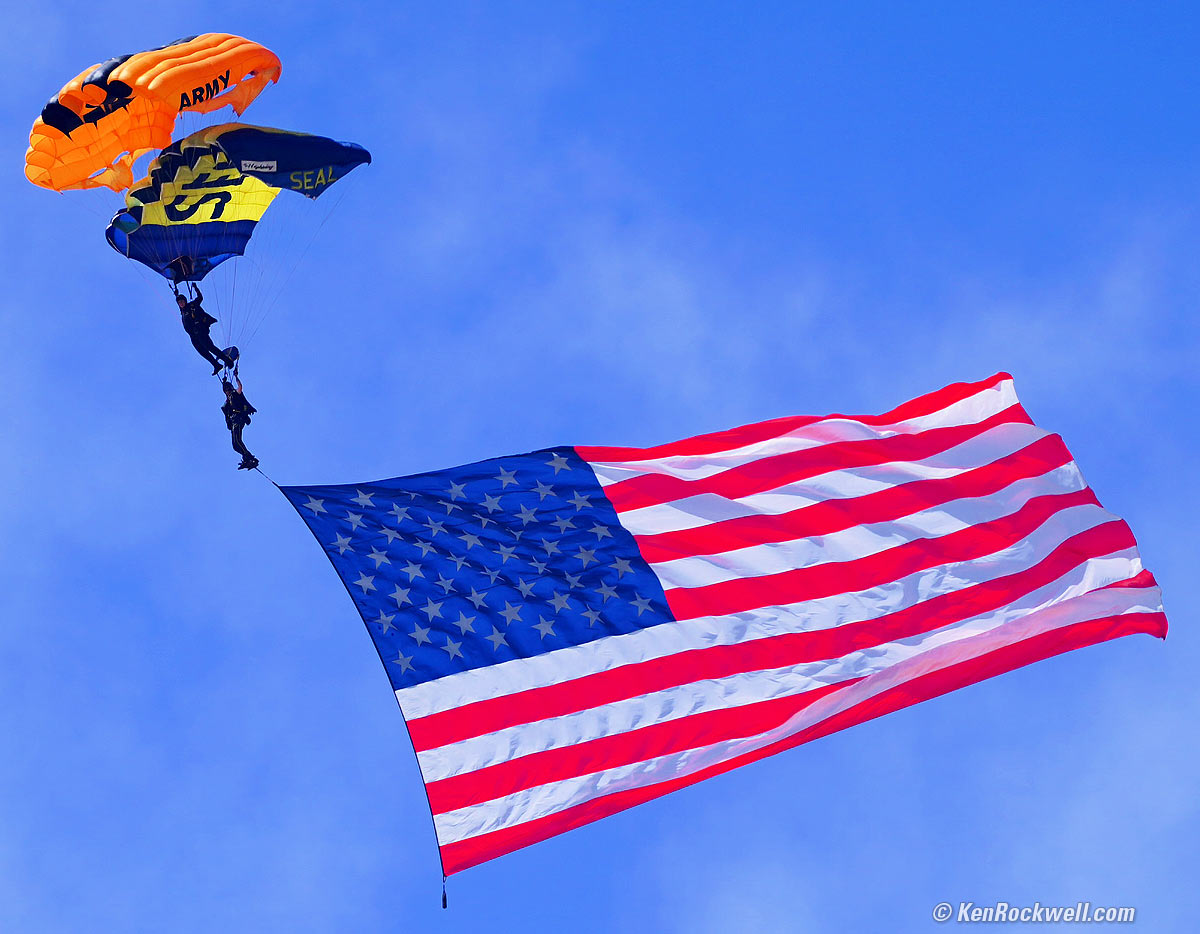
Flag and Paratroopers, Miramar Air Show. Sony A9, Sony 400/2.8 on Wimberley WH-200, f/2.8 at 1/4,000 at ISO 100. bigger.
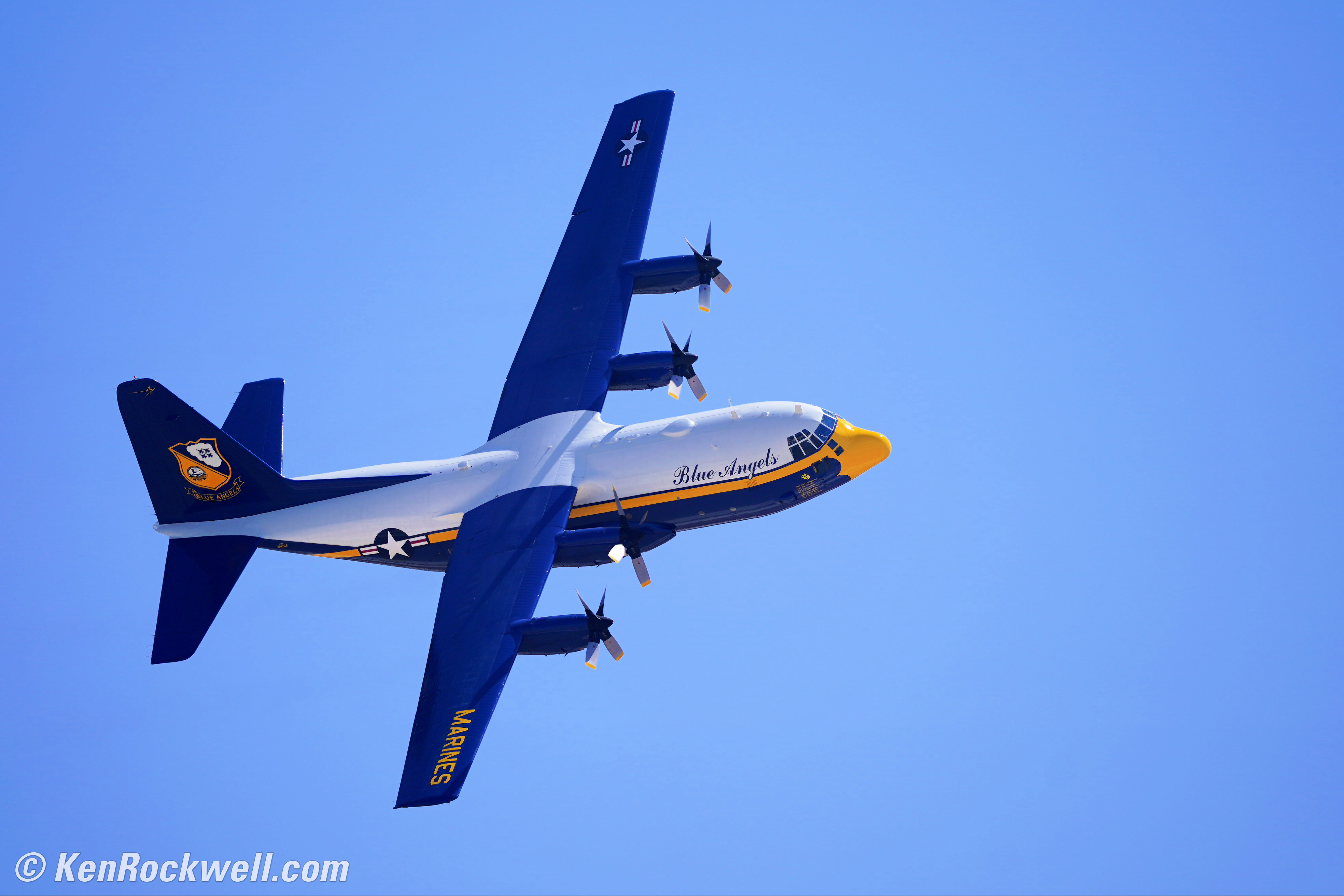
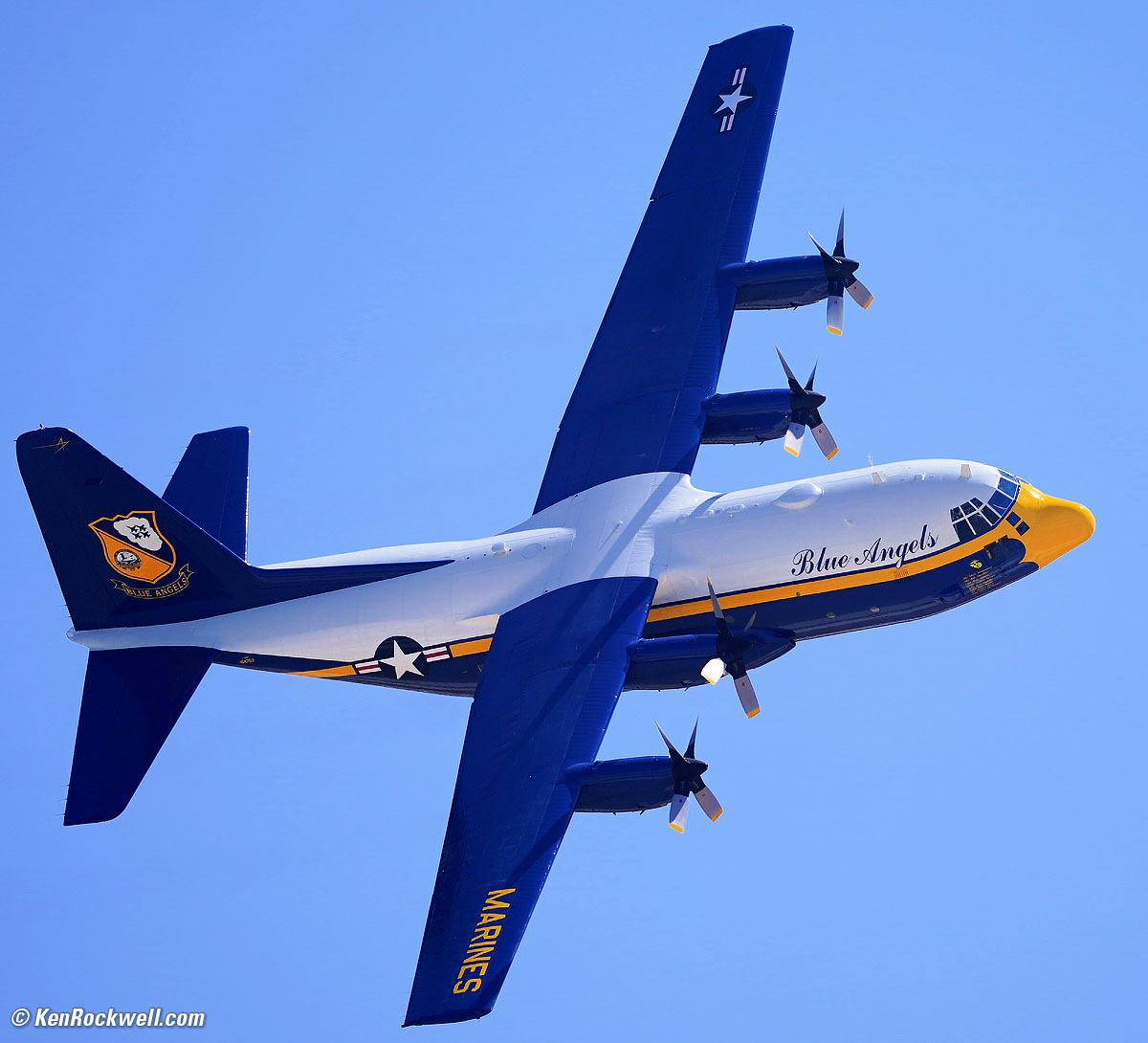
Blue Angels' Fat Albert, Miramar Air Show. Sony A9, Sony 400/2.8 on Wimberley WH-200, f/2.8 at 1/4,000 at ISO 100. bigger or full-resolution.
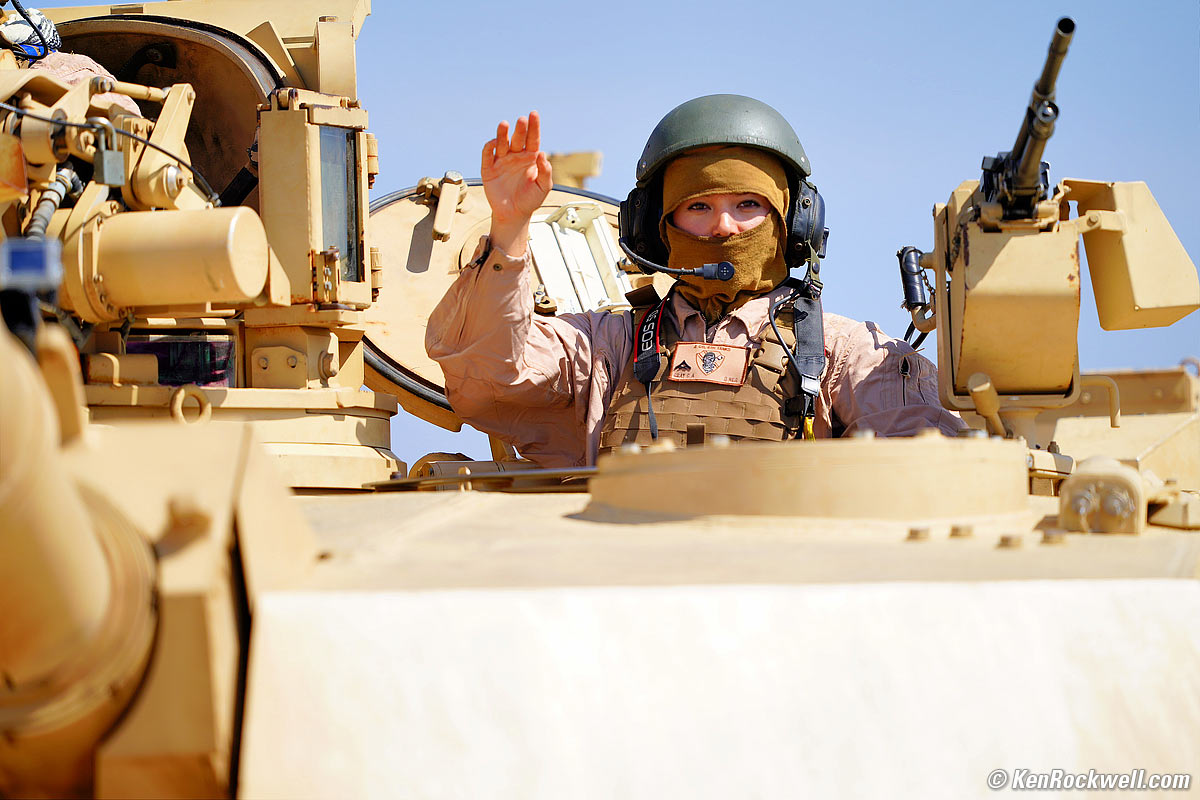
C. A. Gray and Tank, Miramar Air Show. Sony A9, Sony 400/2.8 on Wimberley WH-200, f/2.8 at 1/2,000 at ISO 100. bigger.
Did you look closely? There's a Canon 5D Mark IV in this picture:
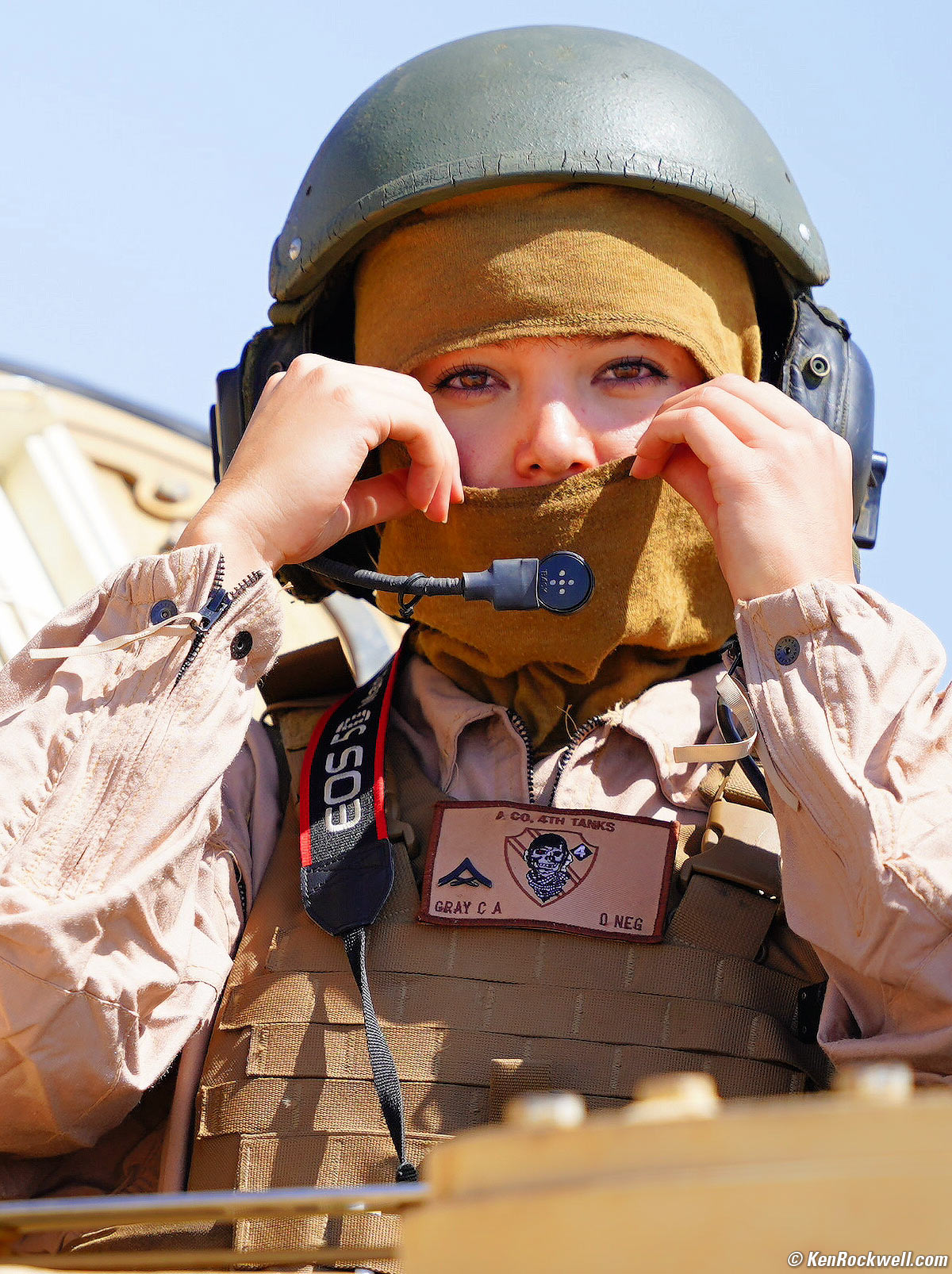
Canon 5D Mark IV and Tank, Miramar Air Show. Sony A9, Sony 400/2.8 on Wimberley WH-200, f/2.8 at 1/2,000 at ISO 100. bigger.
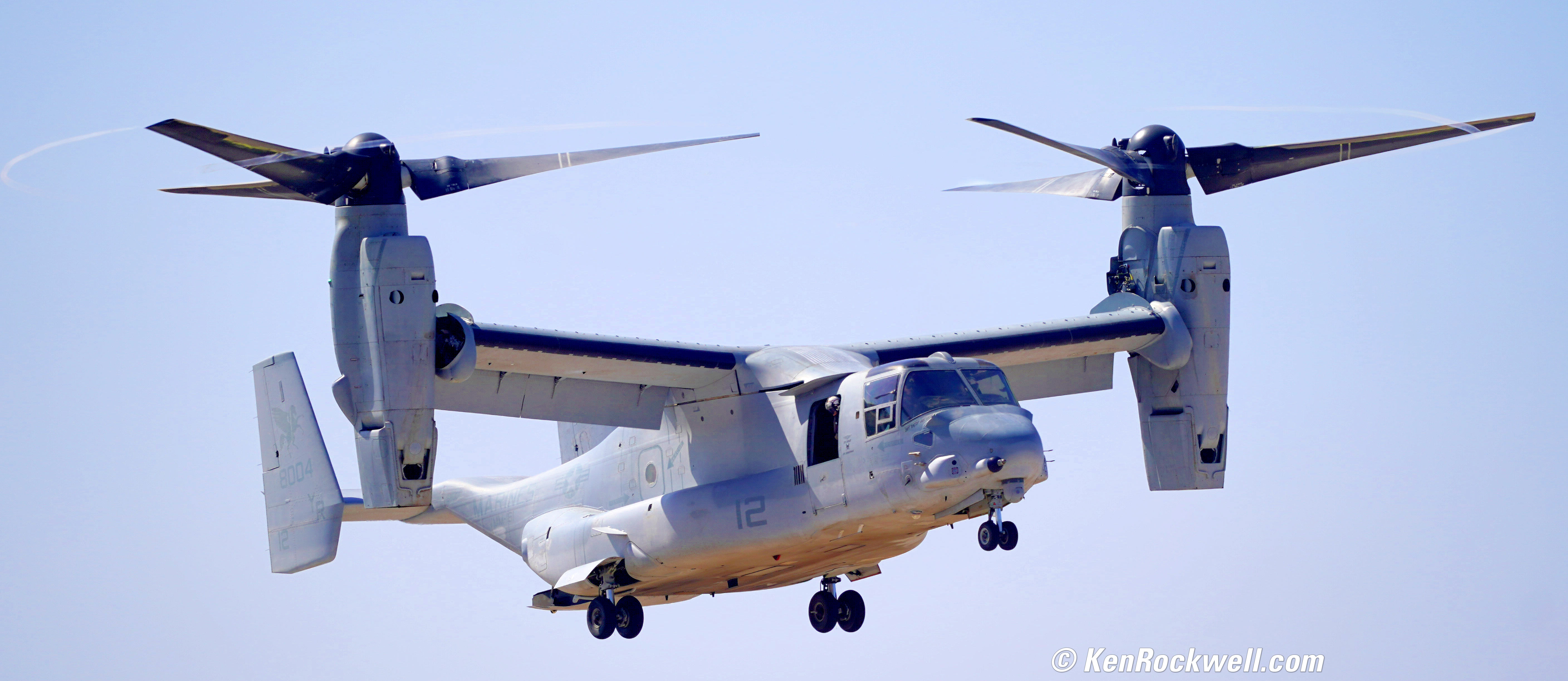
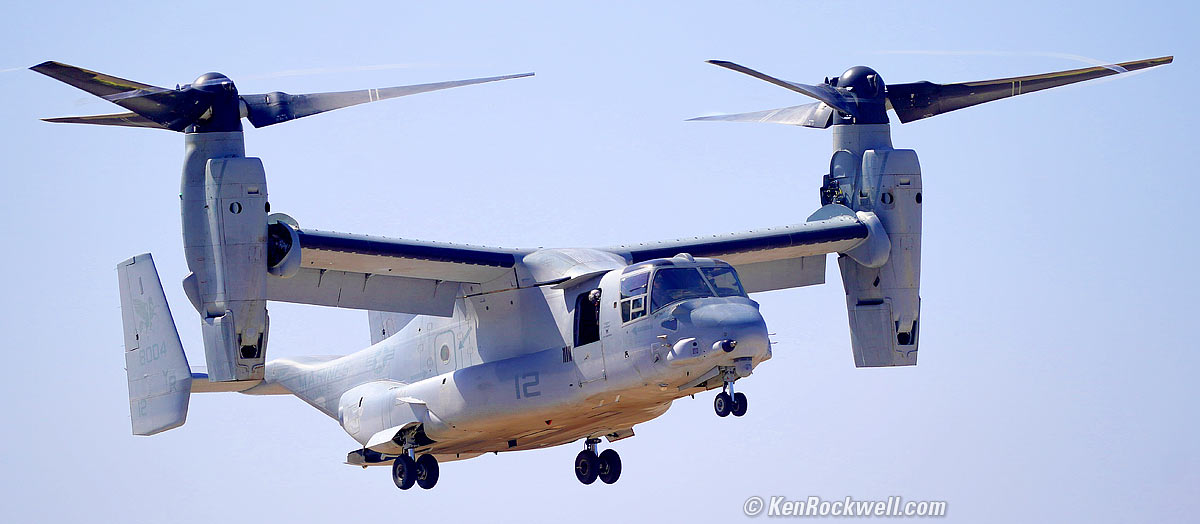
USMC V-22 Osprey, Miramar Air Show. Sony A9, Sony 400/2.8 on Wimberley WH-200, f/2.8 at 1/4,000 at ISO 100. bigger or full-resolution.
Ospreys look like an airplane crashed into a helicopter - and kept flying! Both huge powerplants rotate as seen here for hovering, takeoff and landing, and pivot forwards to fly forwards at high speed.
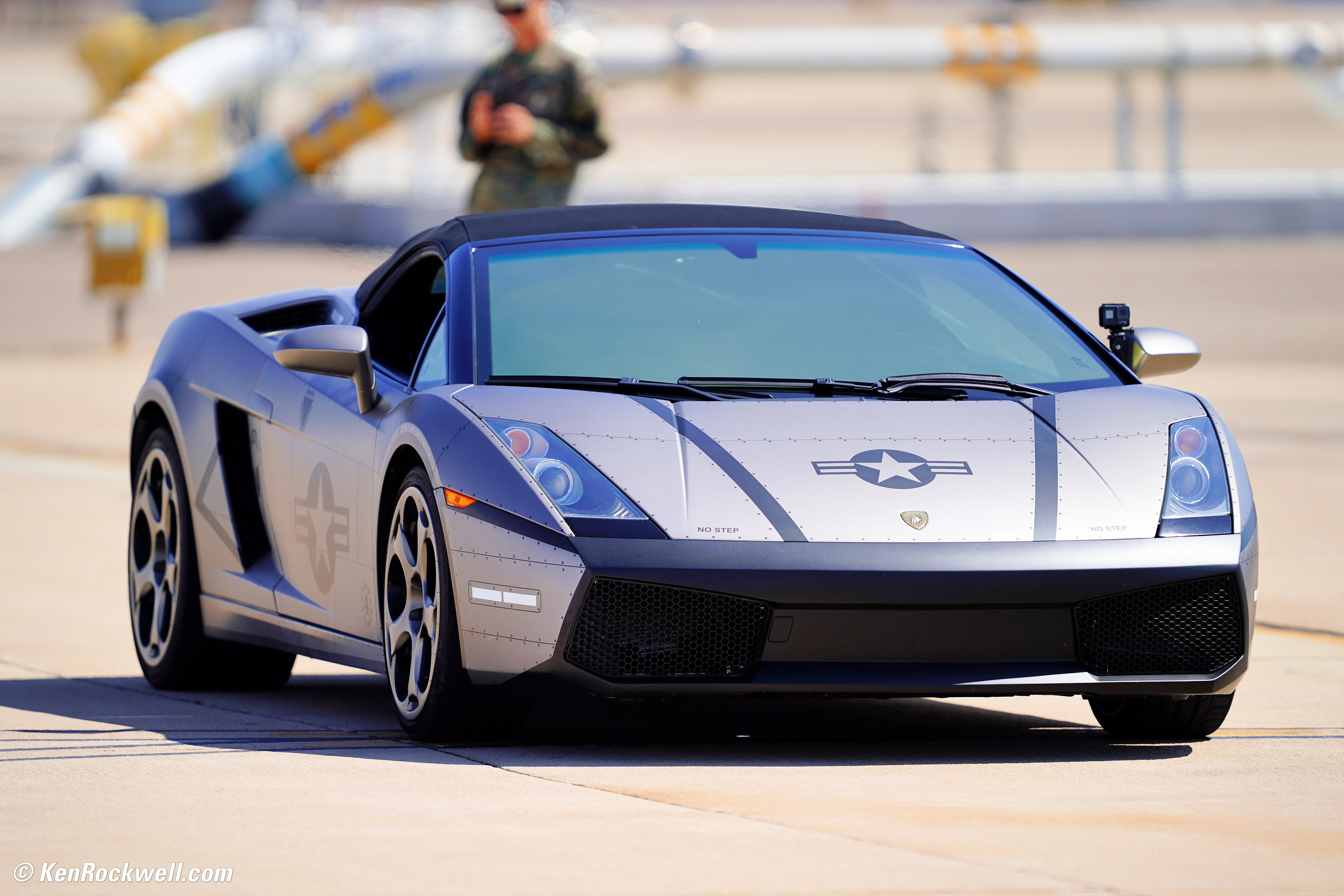
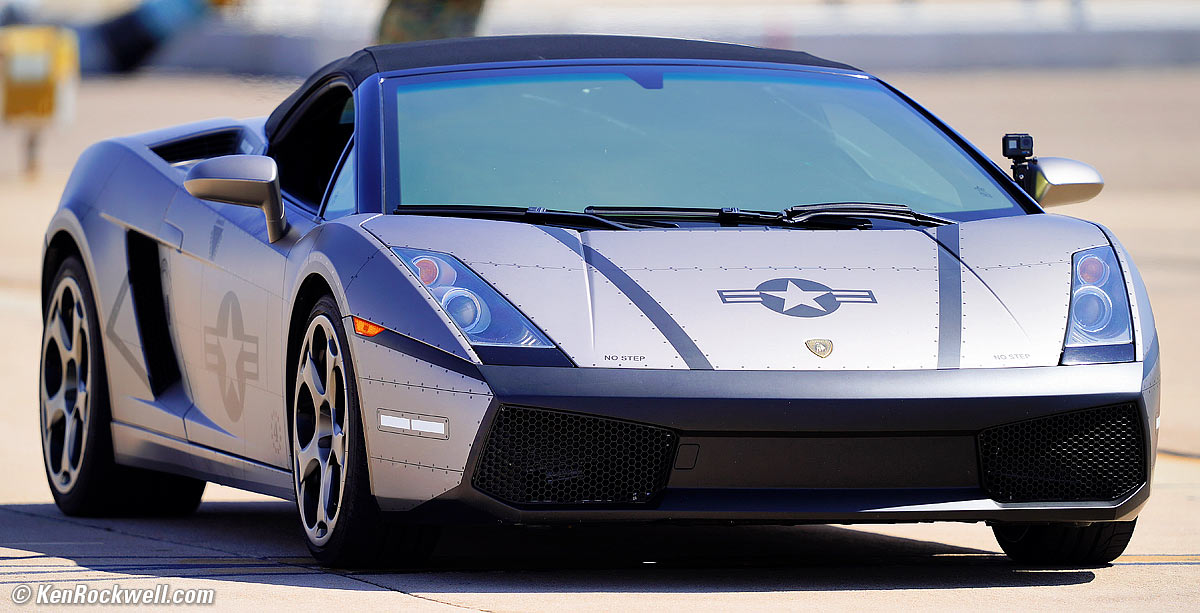
Flying Lamborghini, Miramar Air Show. Sony A9, Sony 400/2.8 on Wimberley WH-200, f/2.8 at 1/1,600 at ISO 100. bigger or full-resolution.
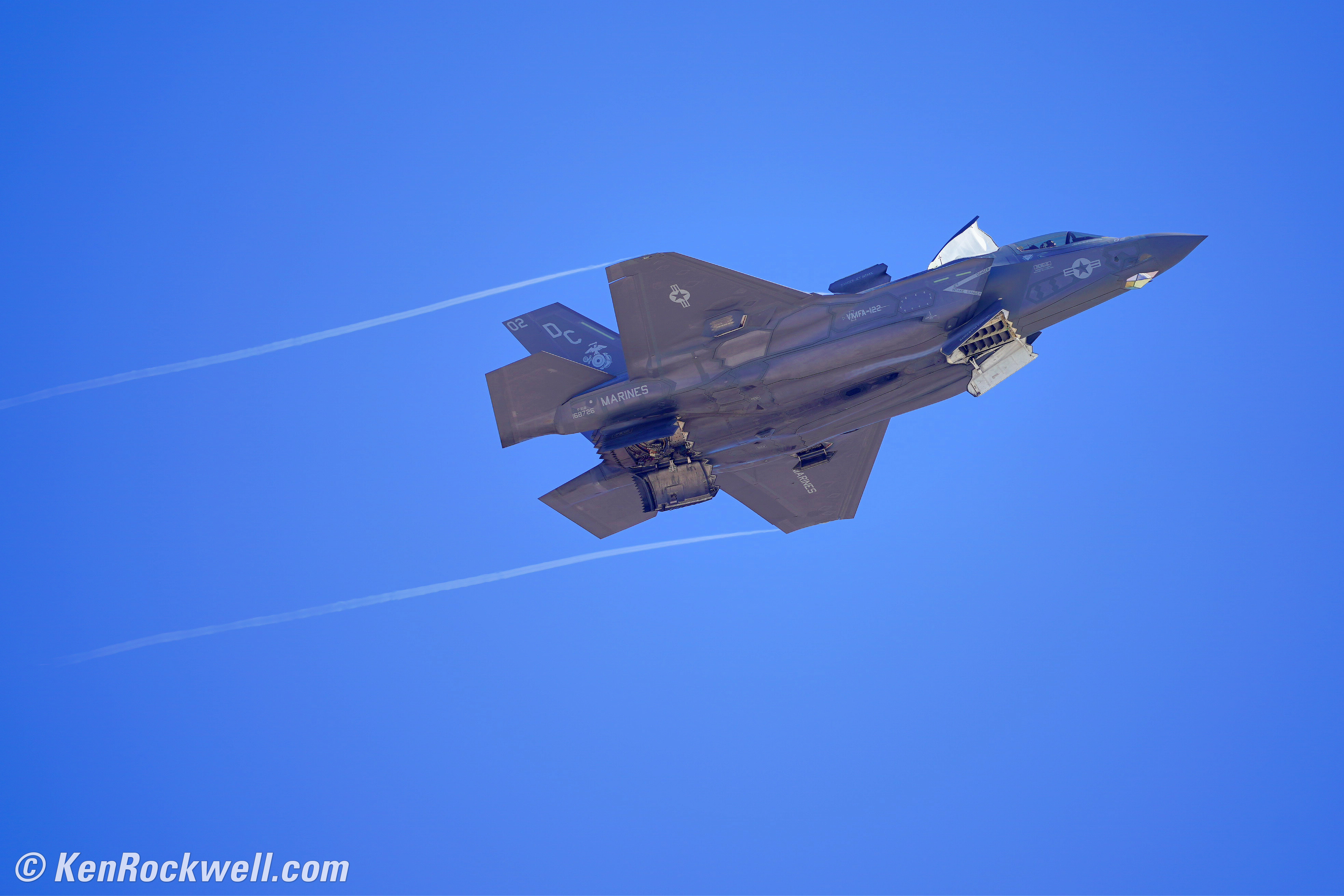
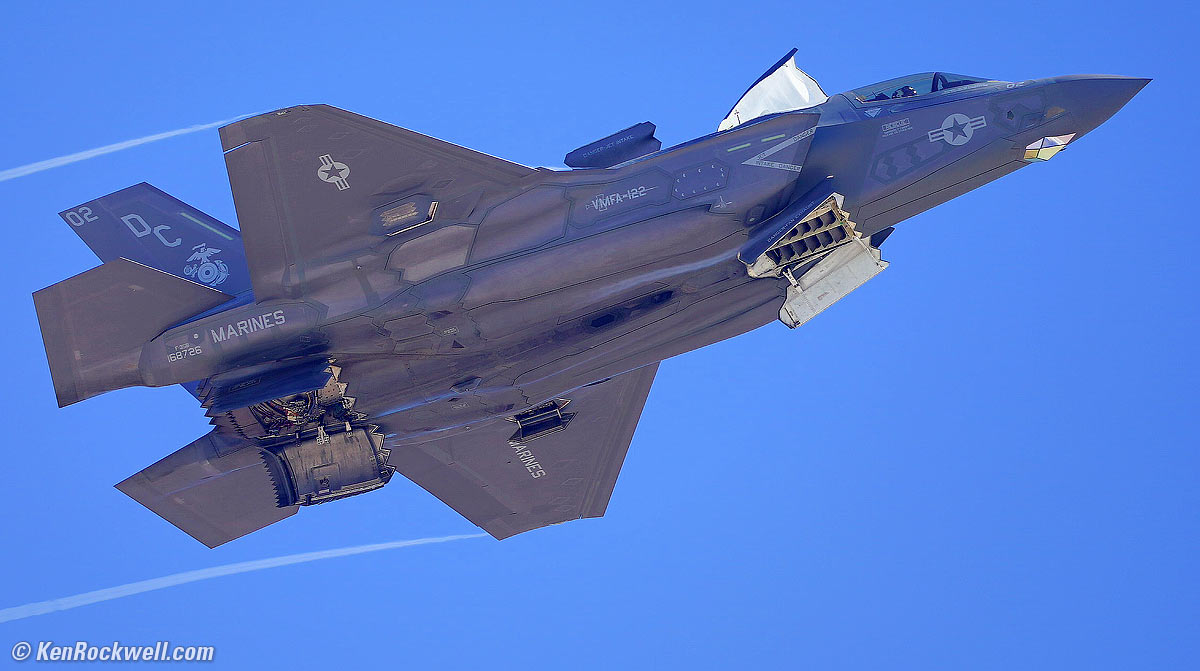
US Marines F-35B, Miramar Air Show, 28 September 2018. Sony A9, Sony 400/2.8 on Wimberley WH-200, f/2.8 at 1/1,600 at ISO 100. bigger or full-resolution.
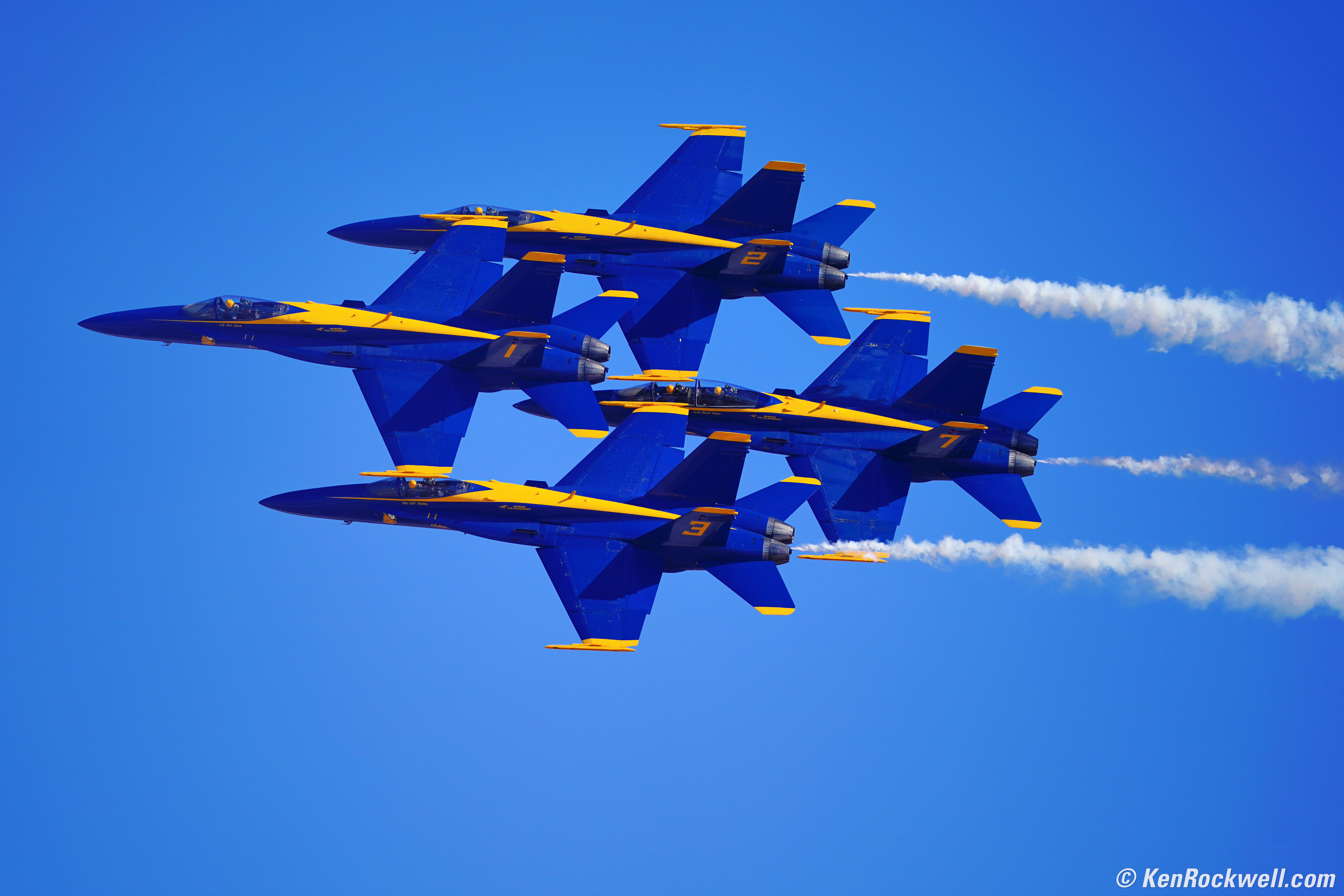
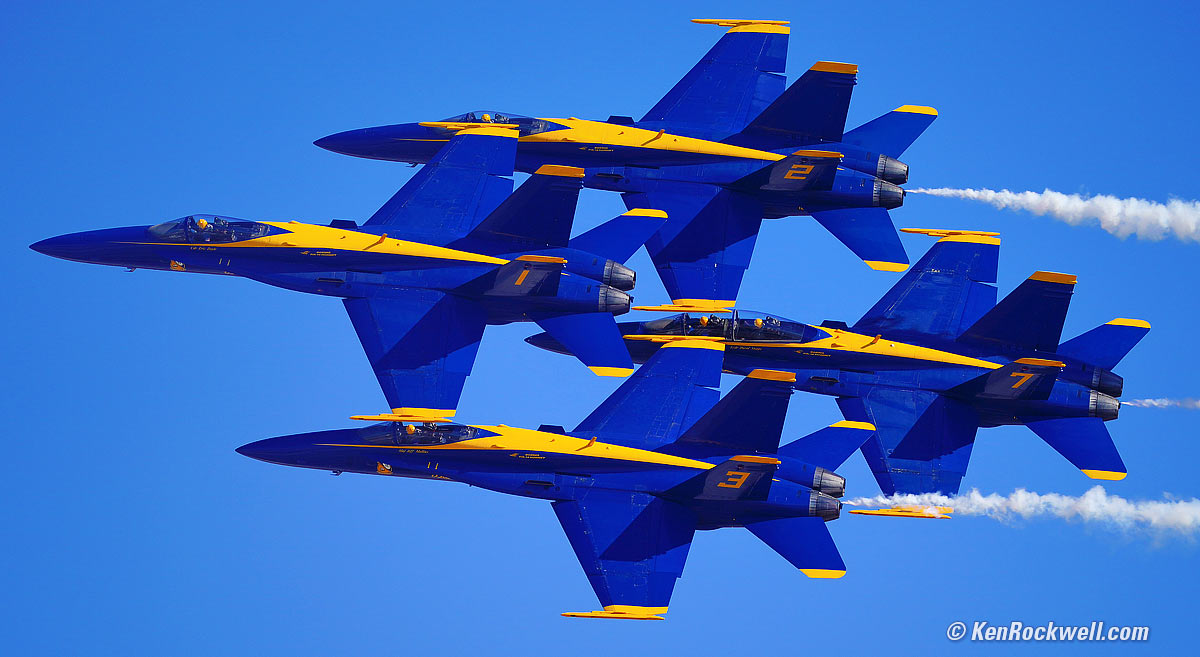
The Blue Angels, Miramar Air Show. Sony A9, Sony 400/2.8 on Wimberley WH-200, f/2.8 at 1/4,000 at ISO 100. bigger or full-resolution.
The key to sharp photos of planes flying at 600 knots is fast shutter speeds, wide apertures, great lenses and low ISOs, which means shooting your f/2.8 lenses at f/2.8. Too many people use ISOs above 100 or small apertures like f/11, and get blurry photos thanks to the combined effects of any or all of diffraction, subject motion, camera motion and high-ISO noise reduction.
A fixed 400mm lens is ideal for an air show. It's fast enough to catch everything at ISO 100, and the perfect focal length most of the time. With the 100-400mm I'd have to shoot at ISO 400 at f/5.6.
The Sony 400/2.8, like all $12,000 400/2.8s, is ultrasharp, especially at f/2.8. This is why we pay $12,000 for it. If you're going to shoot it at f/5.6, you may as well use the 100-400mm instead. Paying $12,000 for a 400/2.8 is like paying $120,000 for a 500 HP car; if you're not going to drive it fast and use those 500HO or shoot it at 2.8 where it roars, then you're wasting your money.
f/2.8 lets me shoot at super-fast shutter speeds at ISO 100 for ultrasharp results.
Of course at 20 FPS and autofocus to match, the Sony A9 and my killer Wimberley WH-200 rig made this the most fun airshow ever. I've been shooting this show since the 1980s when I used my manual-focus Nikon 600mm f/5.6 on my Nikon FA on Velvia.
With the A9, I got over 3,000 shots on a charge - with a third-party Wasabi battery!
27 September 2018, Thursday
Update: Tech diagrams added to my Sony 24mm f/1.4 review.
I added graphics for its internal optical construction, diaphragm, linear focus system and MTF.
Update: Weights and Prices added to Nikon vs Canon vs Sony Full-Frame Mirrorless.
I also added compatibility with classic 1990s lightweight, inexpensive, high performance lenses.
25 September 2018, Tuesday
NEW: iPhone Xs Max Bokeh vs Full-Frame Professional Cameras.
I wouldn't have believed it until I saw it myself. Apple really knows what they're doing.
24 September 2018, Monday
iPhone Xs Max Variable Aperture
The iPhone Xs, iPhone Xs Max and iPhone XR can shoot photos in a magic format which lets us change the effective aperture (depth-of-field) after we've shot the picture. it really works, and it works great:
|
|
|
Set to f/1.4. bigger. |
Set to f/4.5 (default). bigger. |
Set to f/16. bigger. |
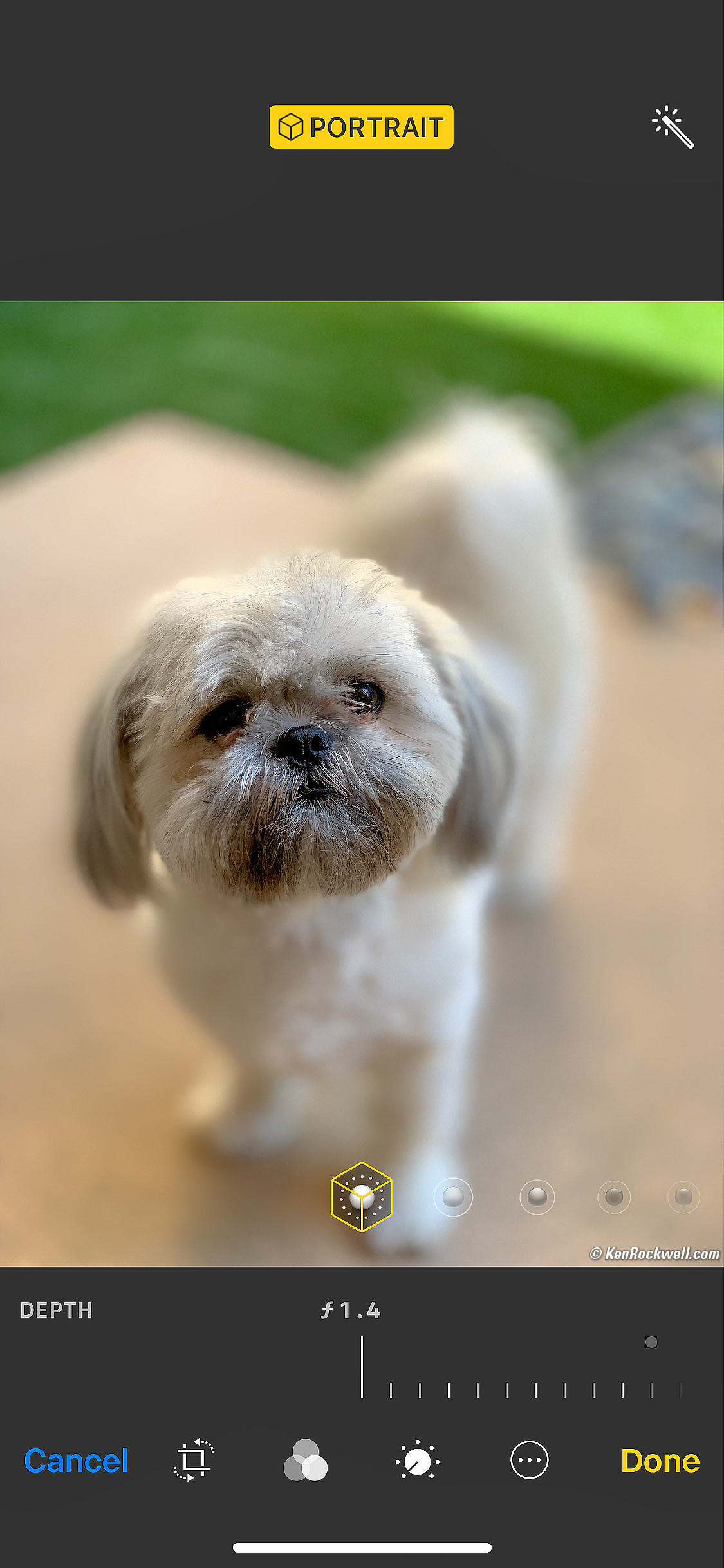
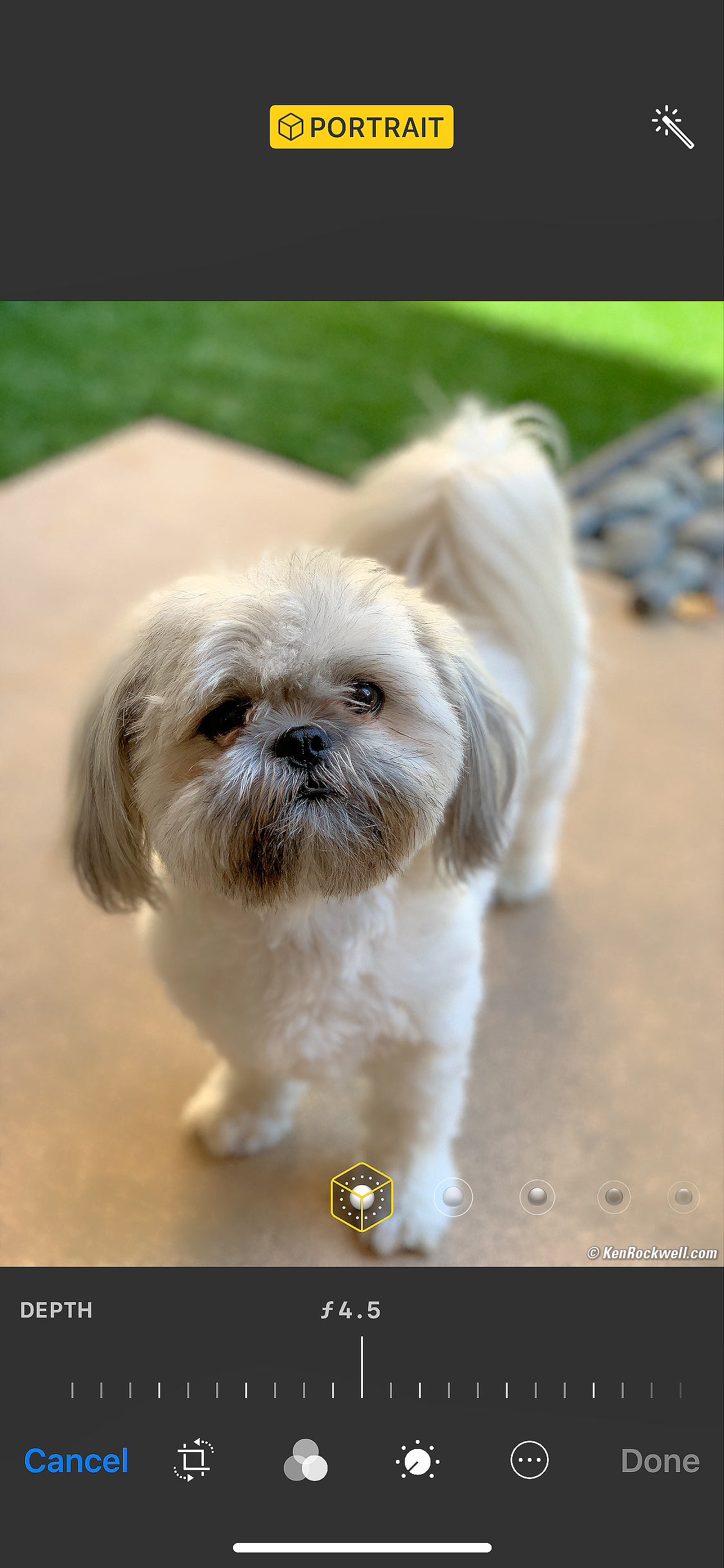
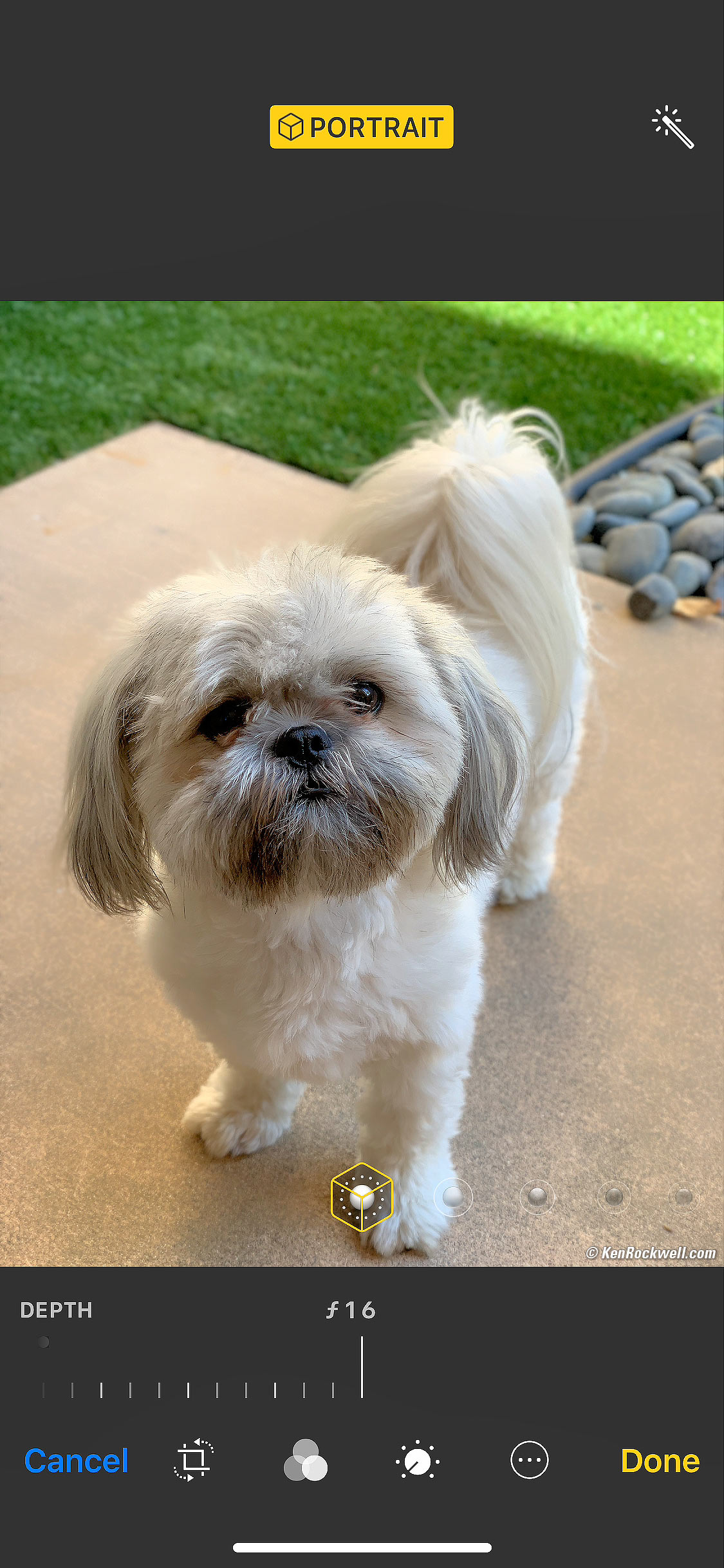
To do this, first shoot a picture in PORTRAIT mode. Then play it back in Photos and tap EDIT, which will show this screen. Move the slider to taste, and tap Done.
The iPhone Xs, iPhone Xs Max and iPhone XR can do this with people photos, and the iPhone Xs and iPhone Xs Max also can do it with just about any kind of subject.
22 September 2018, Saturday
EOS-R Adapted lenses
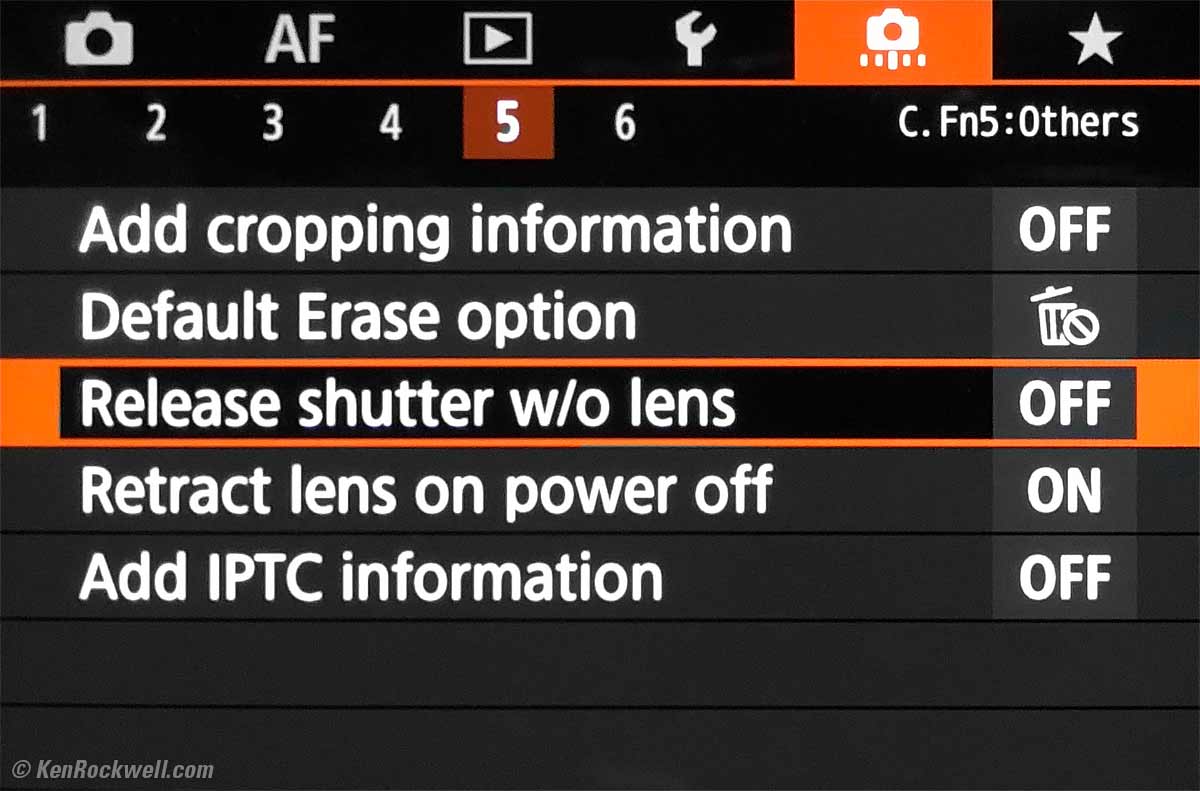
Set MENU > C.Fn > page 5 > Release shutter w/o lens > ON.
A reader had seen some misinformation on YouTube (don't believe anything you read on the Internet either); the EOS-R works great with every crazy lens so long as you set MENU > C.Fn > page 5 > Release shutter w/o lens > ON; otherwise of course it won't shoot with a lens on a random off-brand adapter.
Of course the Chinese are still gearing up to make all the off-brand adapters, and with the short flange-focal-distance of the EOS-R it is feasible to adapt every SLR, DSLR and rangefinder lens to it.
Canon EOS-R & Nikon Z Focus Peaking
Set this on Canon at MENU > AF page 2 > MF peaking settings > Peaking > ON. It's OFF by default.
You also can set in on Nikon Z; Sony, Nikon and Canon all have this.
21 September 2018, Friday
New at the Top
I added Mirrorless vs DSLR and Nikon vs Canon vs Sony Full-Frame Mirrorless to the links at the top of this page because these are very important today - and I keep adding more each day to my complete Nikon vs Canon vs Sony page.
I've also added detailed comparisons of each brand's menu system: Canon's superior EOS-R menu system, Nikon's pretty good Z7 menu system and Sony's atrocious menu system.
NEW: Tokina "Opera" 50mm f/1.4 Full-Frame DSLR Lens for Nikon F, also for Canon EF.
How weird; Tokina now has a $1,000 50mm f/1.4 to copy Sigma.
Personally I love my superb Nikon 50/1.4G as it's much smaller and less than half the price. The Canon EF 50/1.4 is actually a dinosaur from 1993. I use either my EF 50/1.8 STM, EF 50/1.2L or the beastly RF 50/1.2L.
DSLR lenses are yesterday's news, as was the Nikon F6 when it was announced 14 years ago last Sunday. Sure it was a new 35mm camera still sold today, but who cared in 2004 and who cares today?
Go ahead and spend a grand on these, but if you can't make a super-sharp image with a $125 EF 50/1.8 STM or $132 50/1.8 AF-D, you won't with a $1,000 lens, either. 50mm f/1.8 lenses are among the sharpest lenses made; spending a grand is for people who are spending other people's money or who earn less than 100% of their income through the sale of their own photographs.
Hey, some people simply deserve the best. Don't let me spoil your fun if you like nice gear.
20 September 2018, Thursday
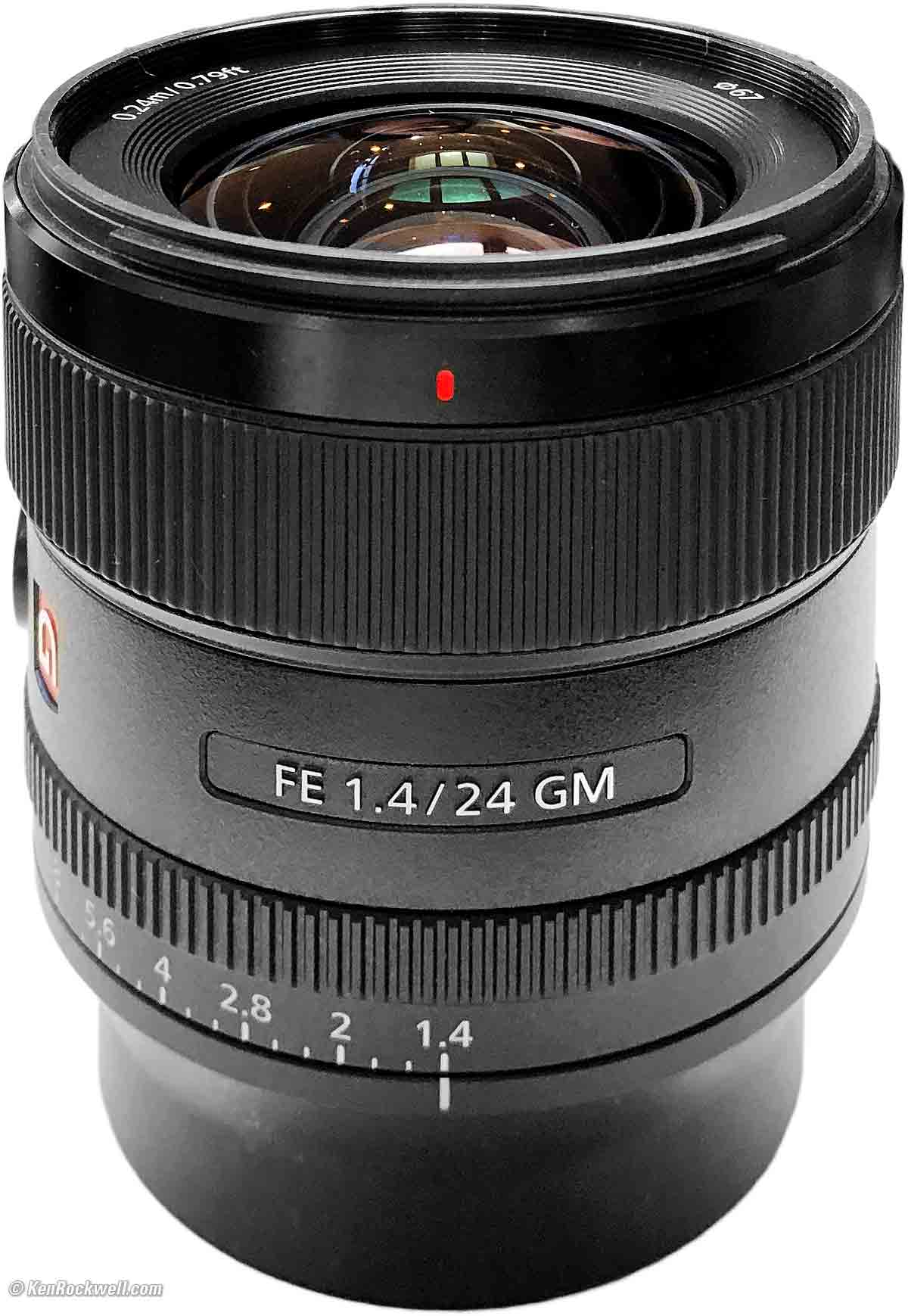
Sony FE 24mm f/1.4 GM.
BREAKING NEWS: Sony 24mm f/1.4 Hands-On Review.
Holy cow! Finally mirrorless delivers with a lens that's smaller and lighter than any 24/1.4 DSLR lens. It's even lighter than the LEICA 24/1.4, and this Sony thoroughly outperforms all of them.
And one more thing - this Sony costs much less than any of them as well!
It excels in sharpness, bokeh, distortion, coma, sunstars and even price.
Sony was able to pull this off by creating a brand-new design expressly for mirrorless. Because Sony can put lens elements much closer to the sensor it got around many of the size, weight, expense and optical problems that have plagued SLR and DSLR wide-angle lenses ever since SLRs were invented in the 1930s.
Bravissimo Sony!

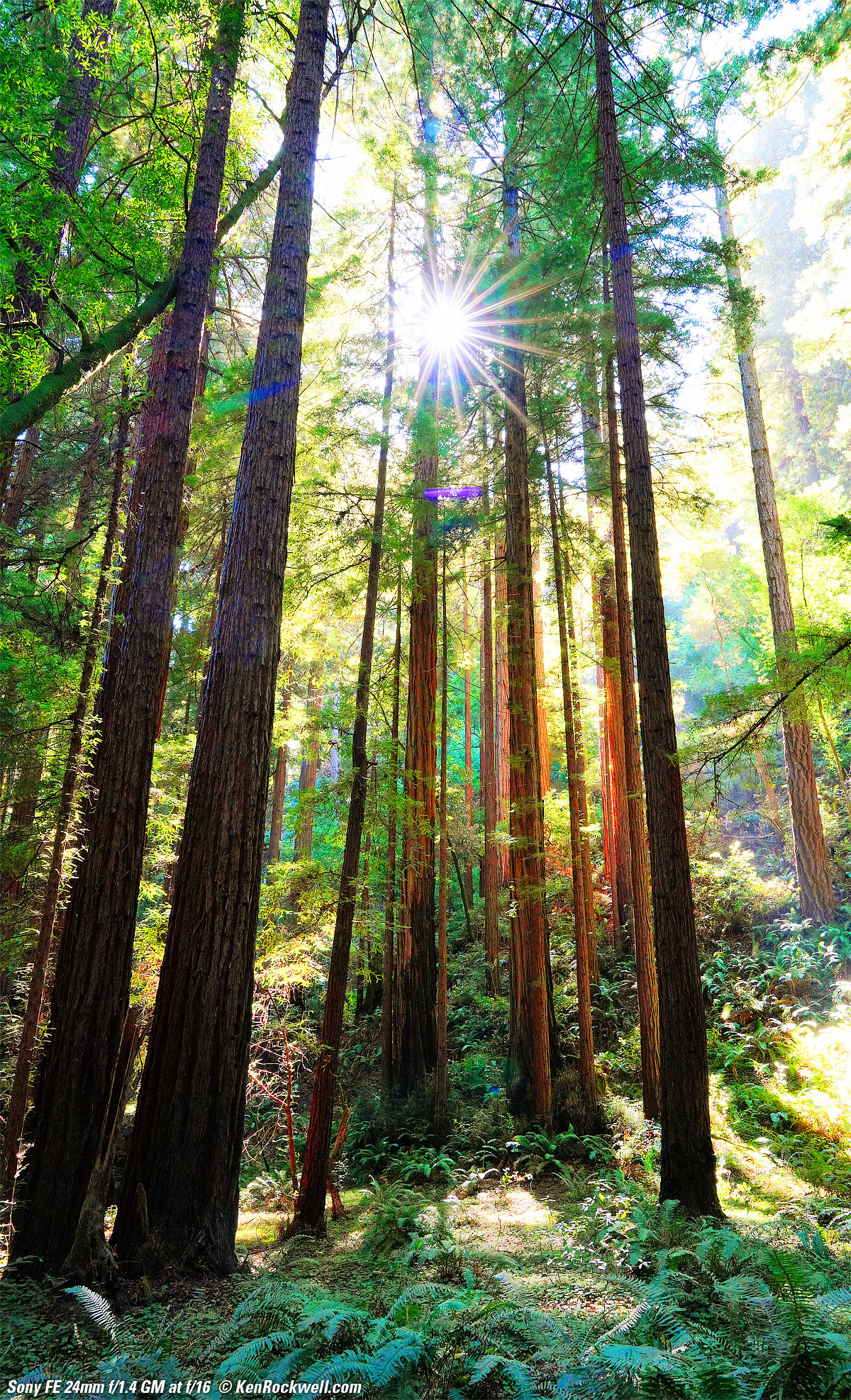
Redwood Trees in Muir Woods with Sunstar, 2:55 P.M., 17 September 2018. Sony A7R III with Sony FE 24mm f/1.4 GM at f/16 at 1/15 at Auto ISO 1,600, Perfectly Clear. bigger, full-resolution or camera-original © file.
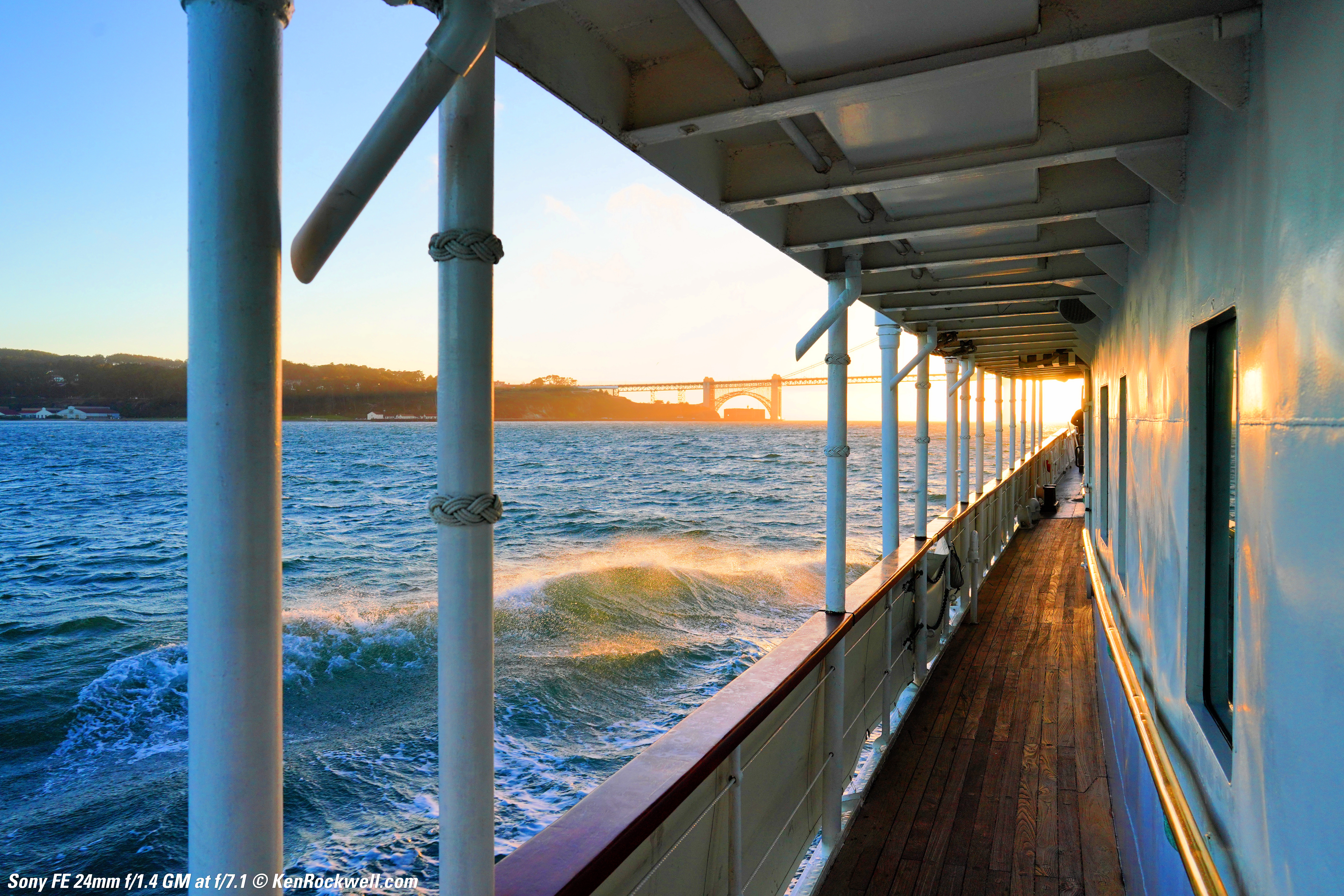
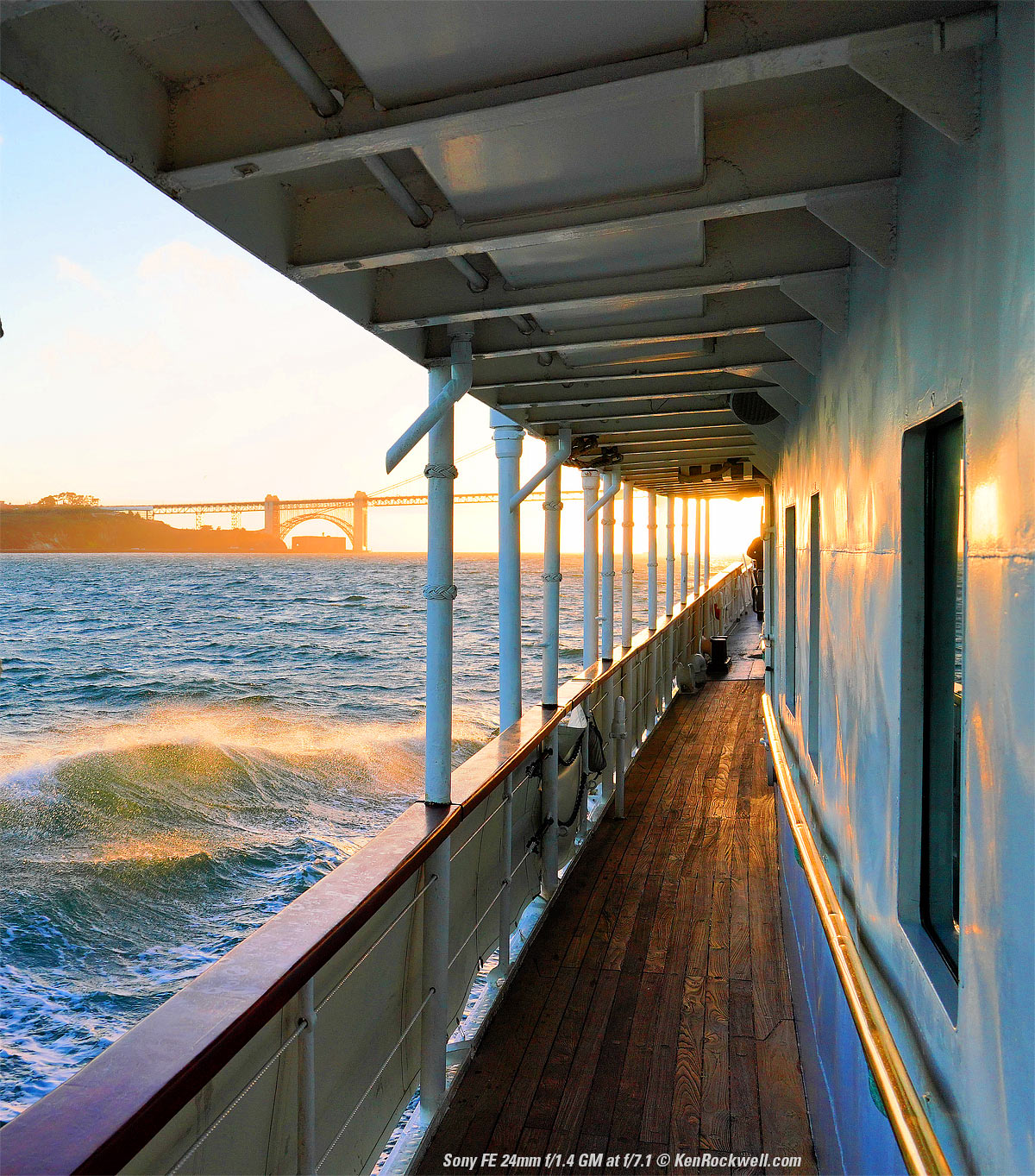
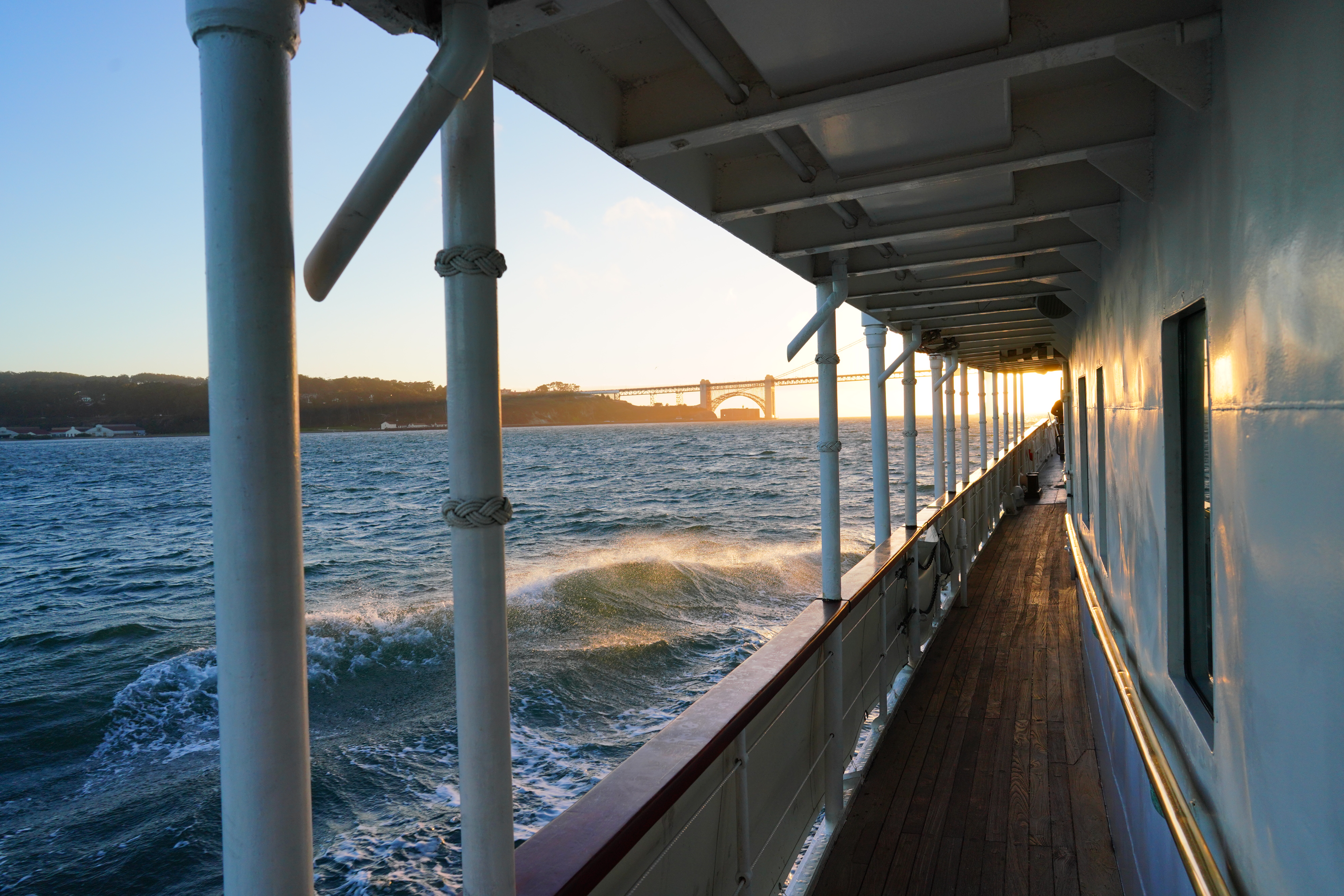
Sunset over the Golden Gate Bridge with Backlit Waves as Seen from the San Francisco Bay aboard the USS Potomac, 6:57 P.M., 17 September 2018. Sony A7R III with Sony FE 24mm f/1.4 GM at f/7.1 at 1/400 at Auto ISO 500, Perfectly Clear. bigger, full-resolution or camera-original © file.
How Do I Get These Colors?
A reader asks what software I use to open my raw files, as he loves the colors I get.
I don't bother with raw. Raw is for photo learners and hobbyists with time to fiddle and who can't get what they need in-camera; people who know what they're doing and have to produce a lot of pictures for a living prefer JPG, as I shoot. Raw may give you more leeway to rescue a really botched photo, but if you know what you're doing, it's not needed. If the lighting ratio (dynamic range) is too great, you need to pop up your flash or change the lighting; raw is not a band-aid for not having proper lighting - unless you don't really know what you're doing and screwed-up big-time.
Once I get back with my JPGs into my Mac Pro, I cull through what I've got and sort out the best ones using Phase One Media Pro.
Once I pick the ones I’m going to publish, I drag the files into Photoshop CS 6 and add whatever artistic input is needed. I almost always run them through the Perfectly Clear plug-in, and then I format them for whatever outlet they're going.
Of course the most important part of photography is seeing the picture in the first place; I point my camera at colorful things.
See also How to Get Great Colors, which says the same thing: look for colorful things, and then take their pictures.
People without Ph. Ds in mathematics and image processing misunderstand the JPG format. JPG images have the same sharpness, resolution and dynamic range of raw, just that it's much less data to fiddle around with. If you don't understand discrete cosine transforms (DCTs) and quantization matrices, don't even try to understand. It's this math that lets the file size get so much smaller without throwing anything visible away.
As you can see by looking at my camera-original JPG files in the sample images in my Sony 24mm f/1.4 review and comparing to my final results, it's easy to change white balances and bring up shadow details and everything else from JPG files. I don't use Adobe Camera Raw, but I'm told that it opens JPGs and applies the same changes to them just as well!
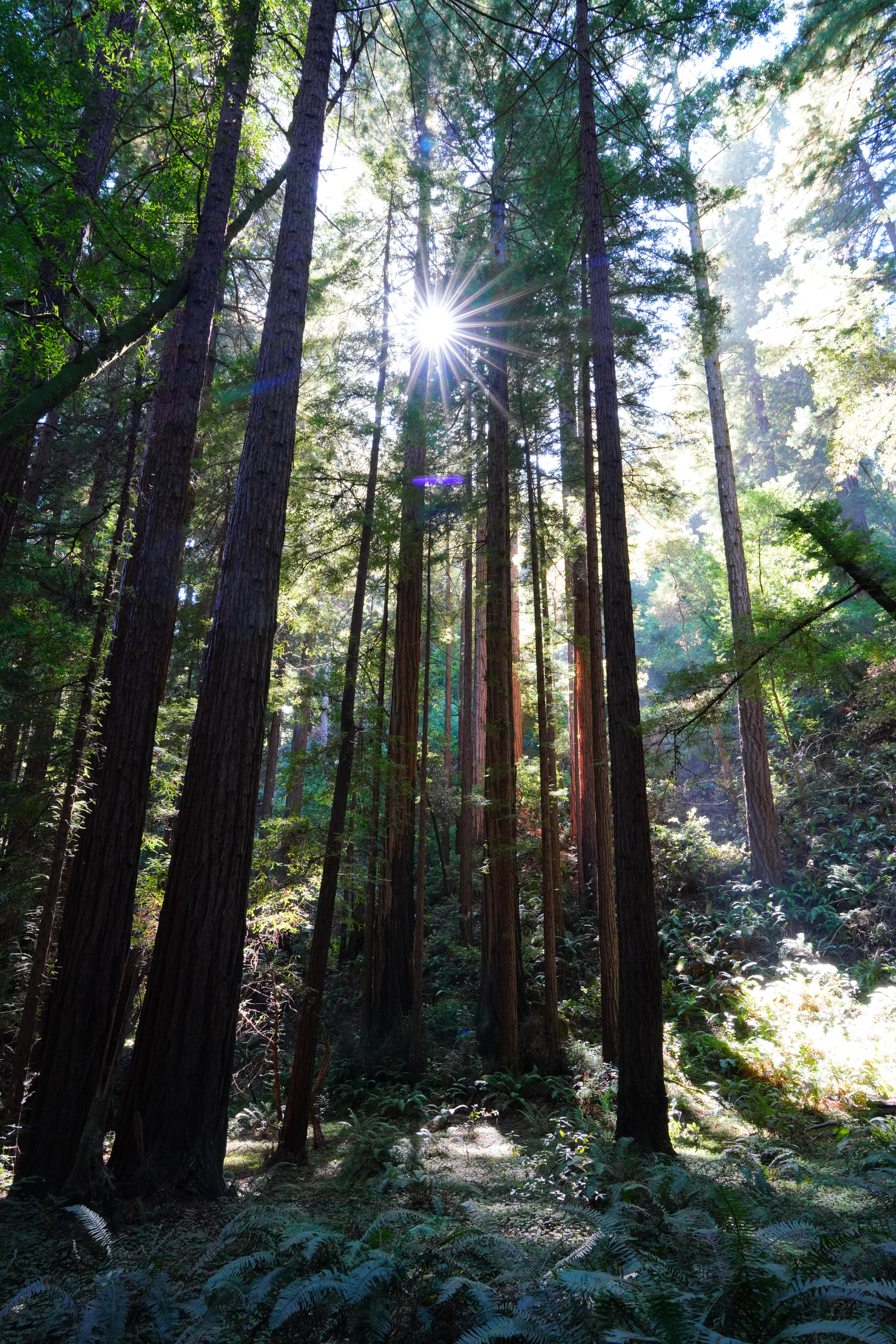
Here's the camera-original JPG for the tree image above. It's easier to work from JPG than to get involved with raw, and as you see it's easy (for me at least) to pull magic out of a dull file. It's called art.
This is all ancient history, and just as relevant today. I wrote about Dynamic Range over ten years ago; it's your responsibility, not the camera's.
Did You Know?
USA versions of Sony cameras DO NOT HAVE GERMAN as an option for LANGUAGE. Sony specifically removes this from American versions to make it easy to identify gray-market cameras. USA versions of the A7R III also probably have a serial number beginning with a 3.
If you buy only from authorized sources then you don't have to worry, but if you take the chance of buying elsewhere, this is another tip in addition to looking for the UC2 printed on the box with a matching serial number.
NEW: Canon SX70 HS, also at Crutchfield.
No relation to the Polaroid SX70, this is a 20MP P&S with a 65x optical zoom, 10 FPS and 4K video and time-lapse.
More snaps from last weekend in San Francisco
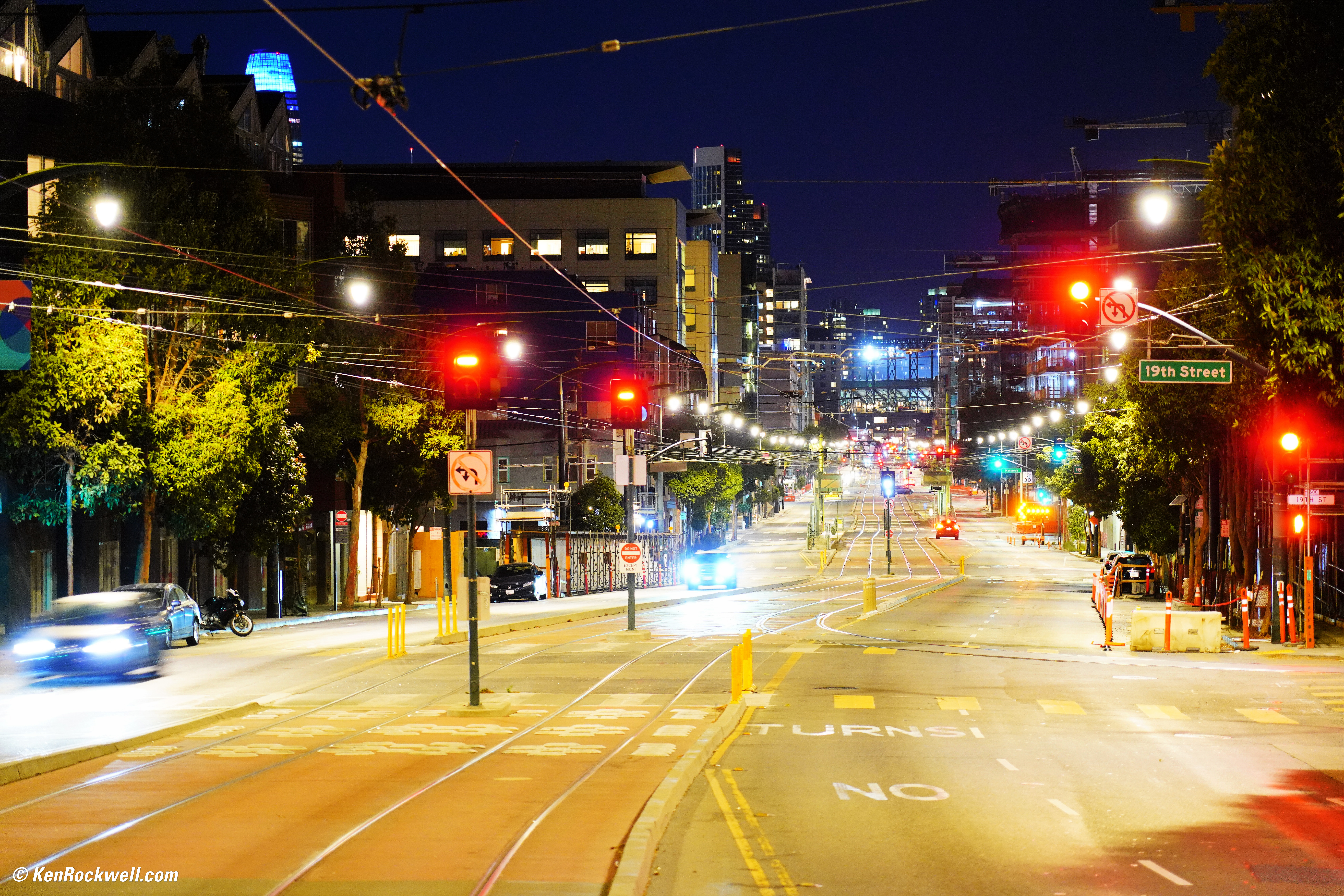
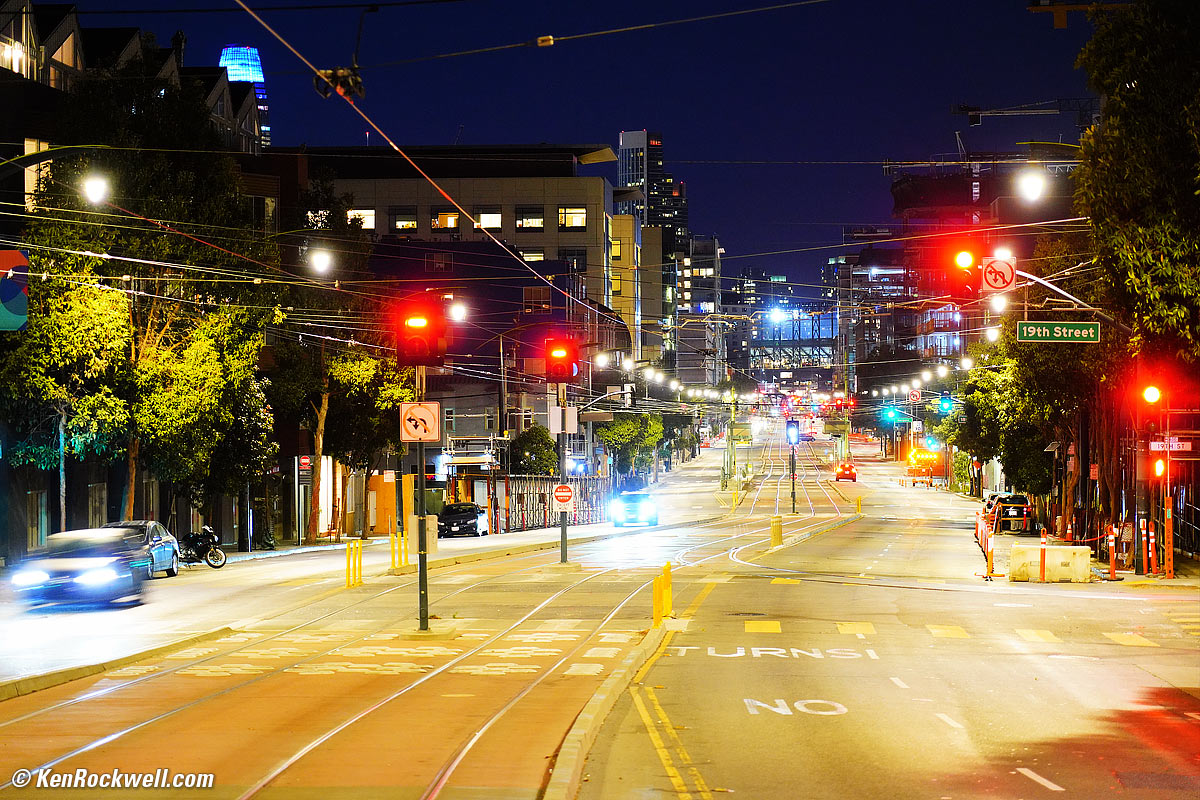
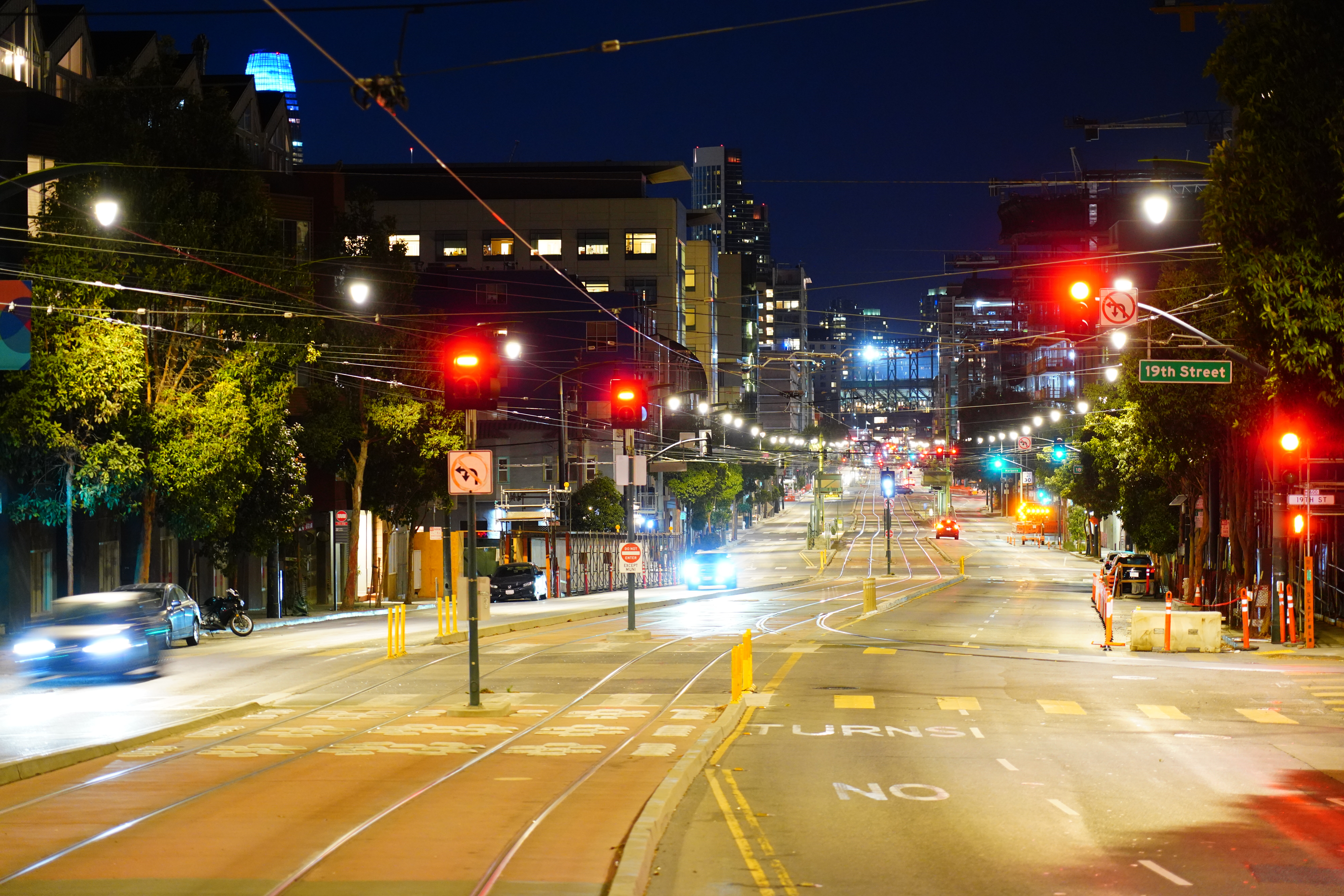
Third Street at 19th, San Francisco, 8:03 P.M., 16 September 2018. Sony A7R III with Sony 24-105mm f/4 G at 105mm at f/4 at 1/10 hand-held at ISO 3,200, Perfectly Clear. bigger, full-resolution or camera-original © JPG.

Blue, Green and Red, Third Street, San Francisco, 8:02 P.M., 16 September 2018. Sony A7R III with Sony 24-105mm f/4 G at 24mm at f/4 at 1/5 hand-held at ISO 1,600, Perfectly Clear. bigger, full-resolution or camera-original © JPG.

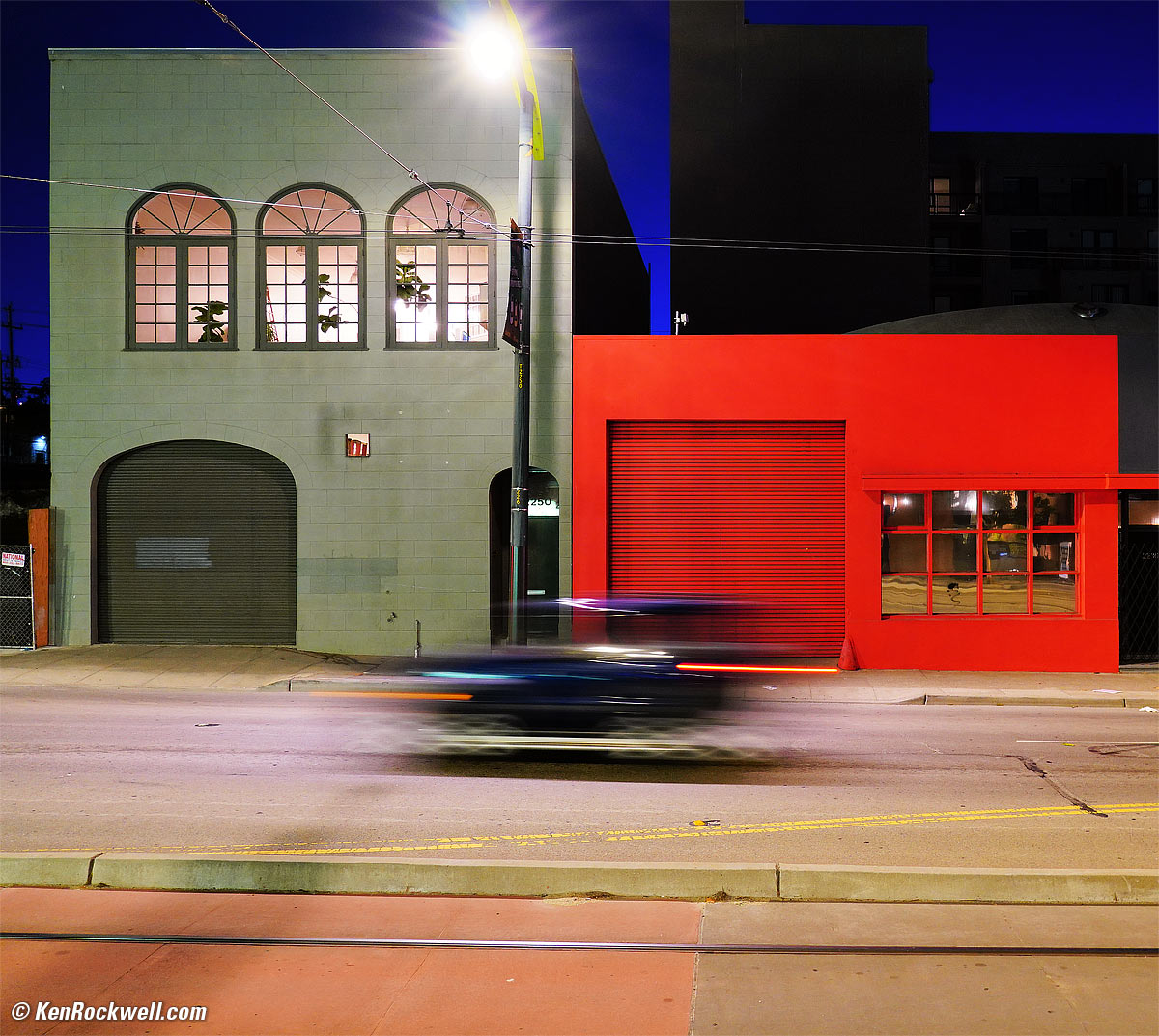
20th Street, Dogpatch, San Francisco, 6:06 P.M., 16 September 2018. Sony A7R III with Sony 24-105mm f/4 G at 49mm at f/7.1 at 1/160 at Auto ISO 100, Perfectly Clear. bigger, full-resolution or camera-original © JPG.
19 September 2018, Wednesday
What I did last weekend
I shot these in San Francisco:

Chinese Restaurant San Francisco, 12:25 P.M., 16 September 2018. Sony A7R III with Sony 24-105mm f/4 G at 86mm at f/6.3 at 1/250 at Auto ISO 100, Perfectly Clear. bigger or full-resolution.

Three Brick Windows, San Francisco, 5:54 P.M., 16 September 2018. Sony A7R III with Sony 24-105mm f/4 G at 93mm at f/7.1 at 1/320 at Auto ISO 100, Perfectly Clear. bigger or full-resolution.
14 September 2018, Friday
NEW: Nikon vs Canon vs Sony Full Frame Mirrorless Compared.
Now that I've shot with them all, here is the real hands-on deal.
Of course this will be updated as time goes on.
EOS-R
It took them a week, but now you also can get the Canon EOS-R at at Amazon and at Crutchfield. You probably want the EOS-R & RF 24-105 kit, now also at Amazon and at Crutchfield.
Here are all the links:
EOS-R body only (be sure to get an EF adapter): $2,299 at Adorama, at Amazon, at B&H and at Crutchfield.
EOS-R and RF 24-105 kit: $3,399, also at Adorama, at Amazon, at B&H and at Crutchfield.
Nikon Z7 Hands-on
I got my digits on a Z7 yesterday. It's even nicer than I expected. I'm writing up the differences between it and the Sony and Canon full-frames, but to sum up, either Nikon Z7 & Z6 or Canon EOS-R are superb. Each has a few trade offs against the other, so your choice is ultimately which system you prefer in general or already own.
Sony is ahead technically in terms of high frame rates or silent shooting, but either of the Canon or Nikon have such superior ergonomics and handling that Sony is really going to have to step up its game to be able to compete with Canon and Nikon. The balky handling and menus we've endured with Sony appear even rougher now that Canon and Nikon have full-frame mirrorless that handle and feel like the real cameras we love, without compromise.
13 September 2018, Thursday
NEW: Canon EOS-R vs Sony.
I added this to the comparison section of my EOS-R review.
The Sonys look better on paper, while I prefer the EOS-R for its better ergonomics, better pictures because of better colors and no dust problems.
NEW: Canon RF 24-105mm vs Sony 24-105mm vs Nikon.
Each is the most useful possible lens for each system, and each is state-of-the-art.
Nikon has no mirrorless 24-105; all they have is a 24-70. Poo.
How to get your Canon RF 24-105mm
The RF 24-105mm lens won't be available separately until December because Canon is including all it can make with the kits with the EOS-R, first, in October. Obviously the 24-105 doesn't do anyone any good unless you have an EOS-R so this makes sense, but what it means is that if you want the 24-105, order it with your body as the kit and don't order it separately.
Kits should start shipping in October — but only if you order it today.
12 September 2018, Wednesday
ORDER NOW: Order your Canon EOS-R system now; ordering is open.
Order first, get it first. It's been this way for decades.
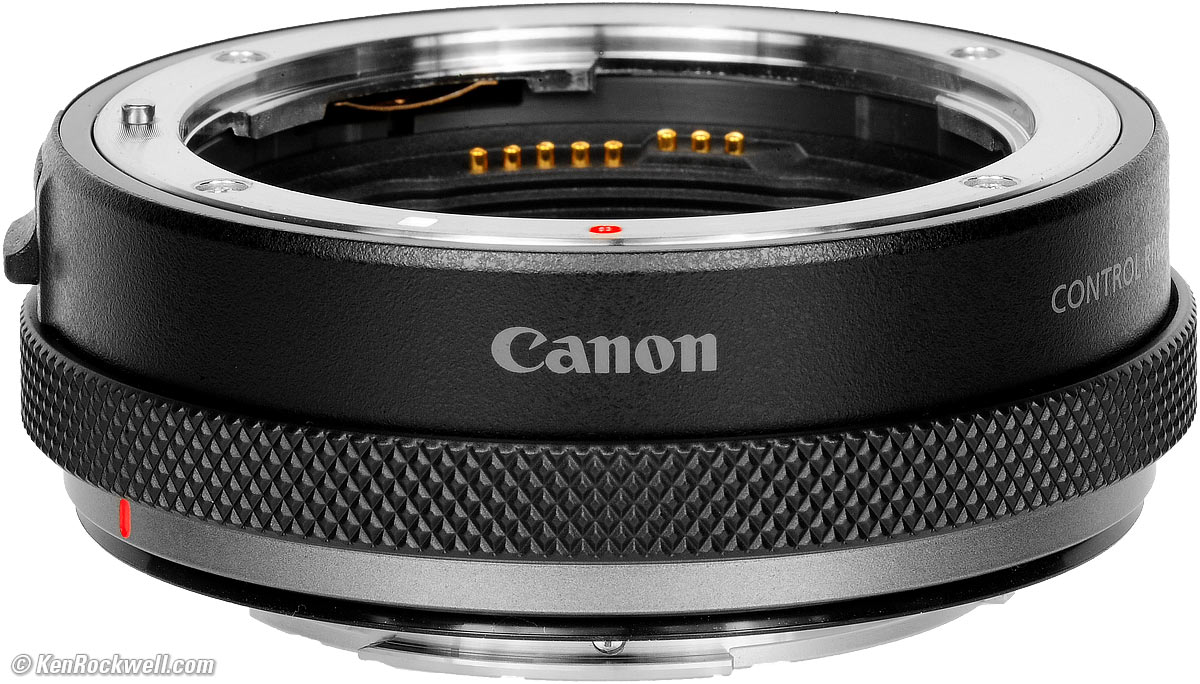
Control Ring Mount Adapter EF-EOS R.
NEW: Canon EF to RF Lens Adapters.
A complete listing and review of which adapter does what.
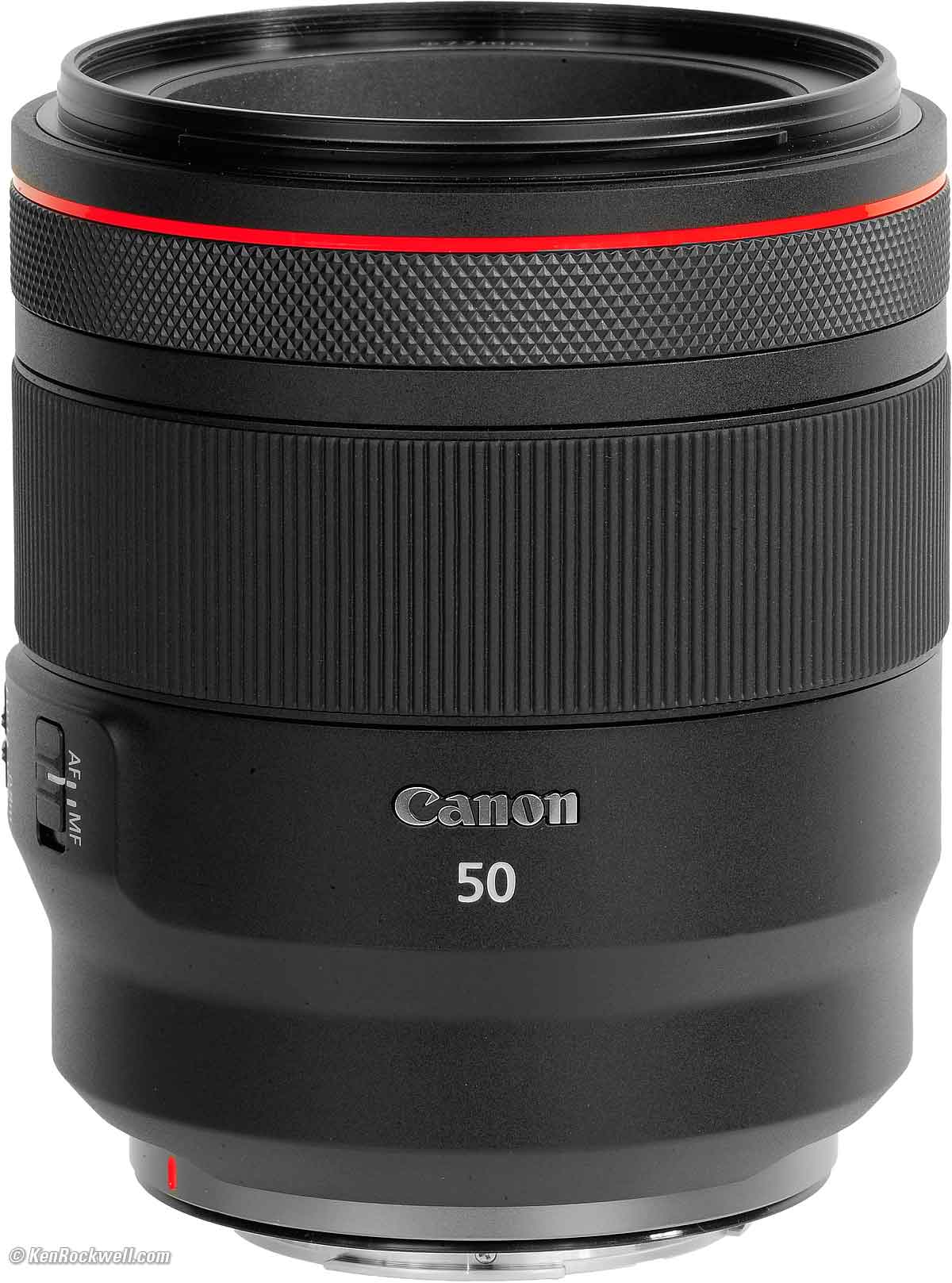
Canon RF 50mm f/1.2L USM.
NEW: Canon RF 50mm f/1.2 Review.
My usual complete in-depth technical review of a production lens.
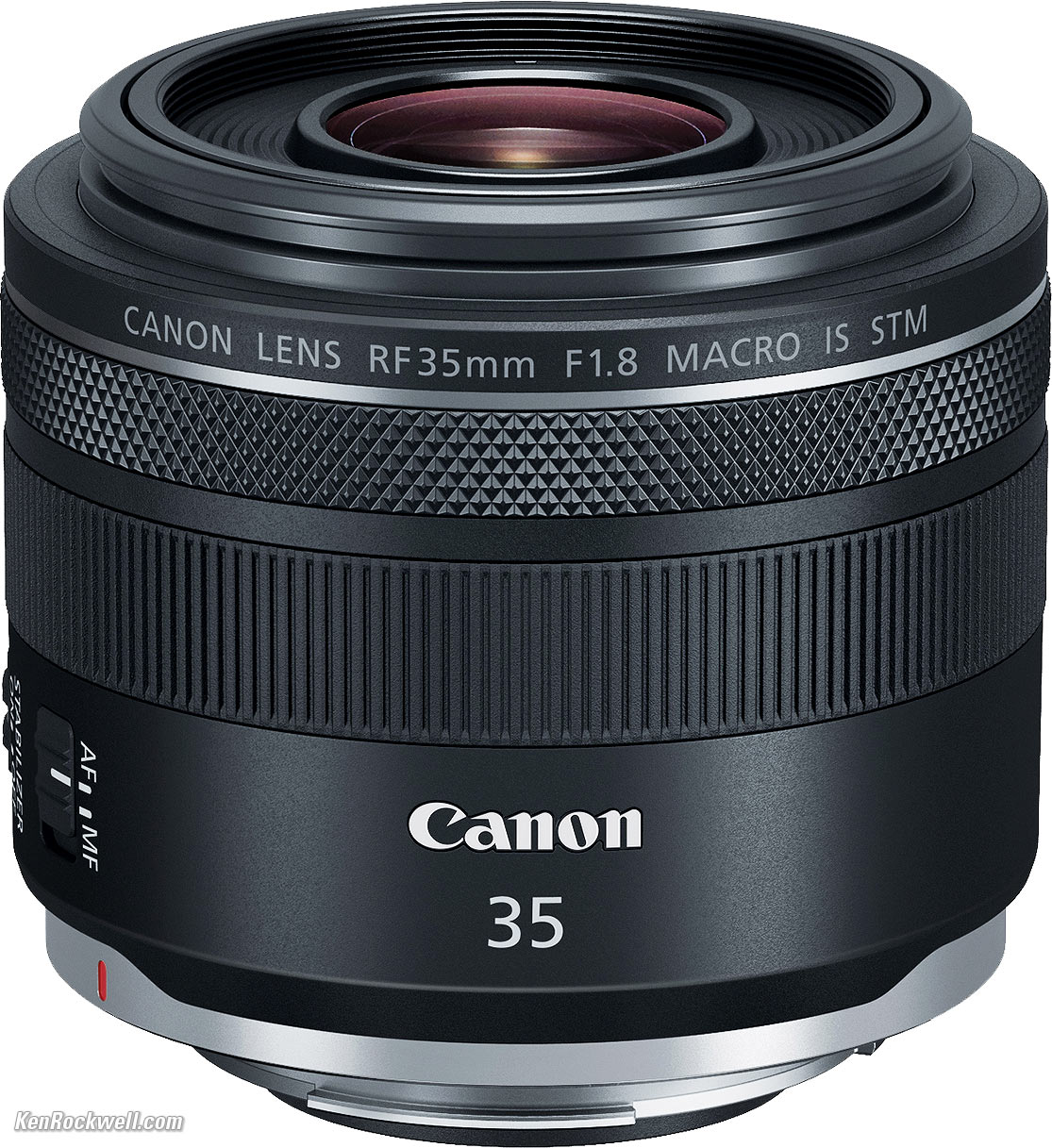
Canon RF 35mm f/1.8 Macro STM.
NEW: Canon RF 35mm f/1.8 MACRO IS STM.
I've shot with a prototype of this lens, but since it's a prototype I haven't run it through my usual tests and details.
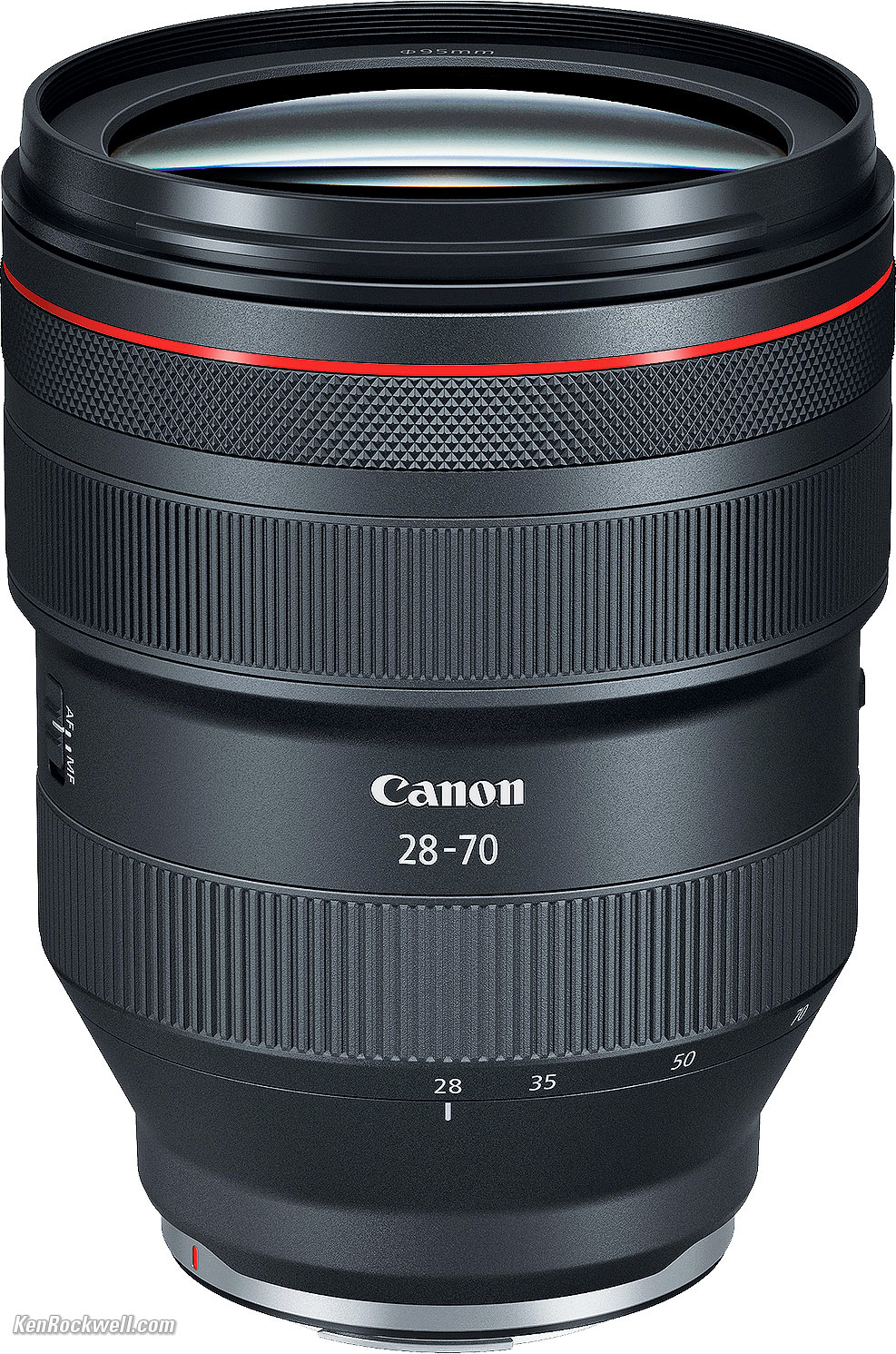
Canon RF 28-70mm f/2L USM.
NEW: Canon RF 28-70mm f/2 L.
I've shot with a prototype of this lens, but since it's a prototype I haven't run it through my usual tests and details.
NEW: Canon EF400mm f/2.8L IS III.
World's lightest 400mm f/2.8.
NEW: Canon EF 600mm f/4L IS II USM.
Also super light, so you will actually take these out and use them.
NEW: Canon EF-M 32mm f/1.4 STM.
50mm f/1.4 equivalent for EOS-M.
11 September 2018, Tuesday
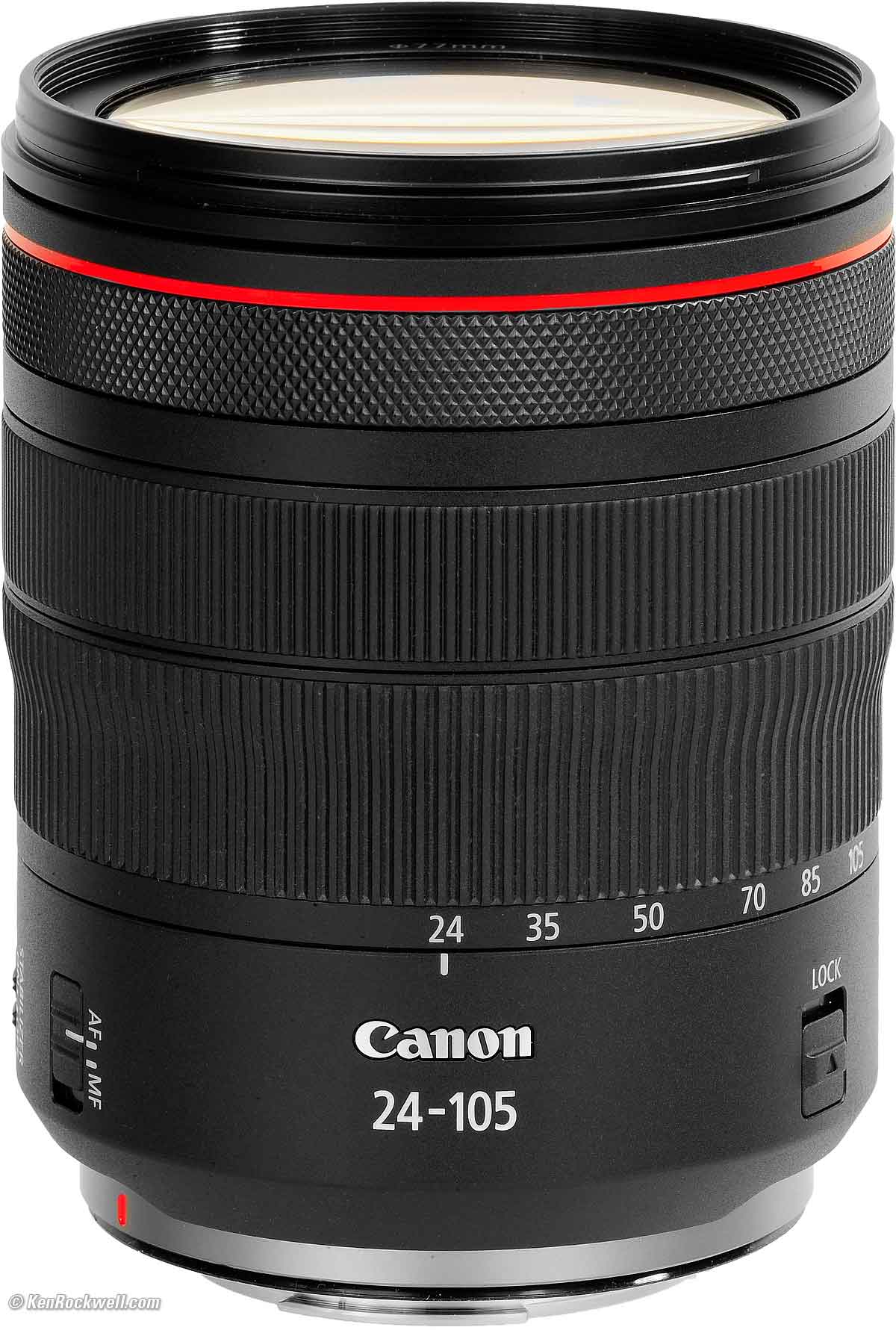
Canon RF 24-105mm f/4L IS USM.
NEW: Canon RF 24-105mm Review.
My usual complete in-depth technical review of a production lens.
10 September 2018, Monday
Lunch Time
Here's a snap from lunch with my EOS-R and ancient 14mm f/2.8L on EF adapter:
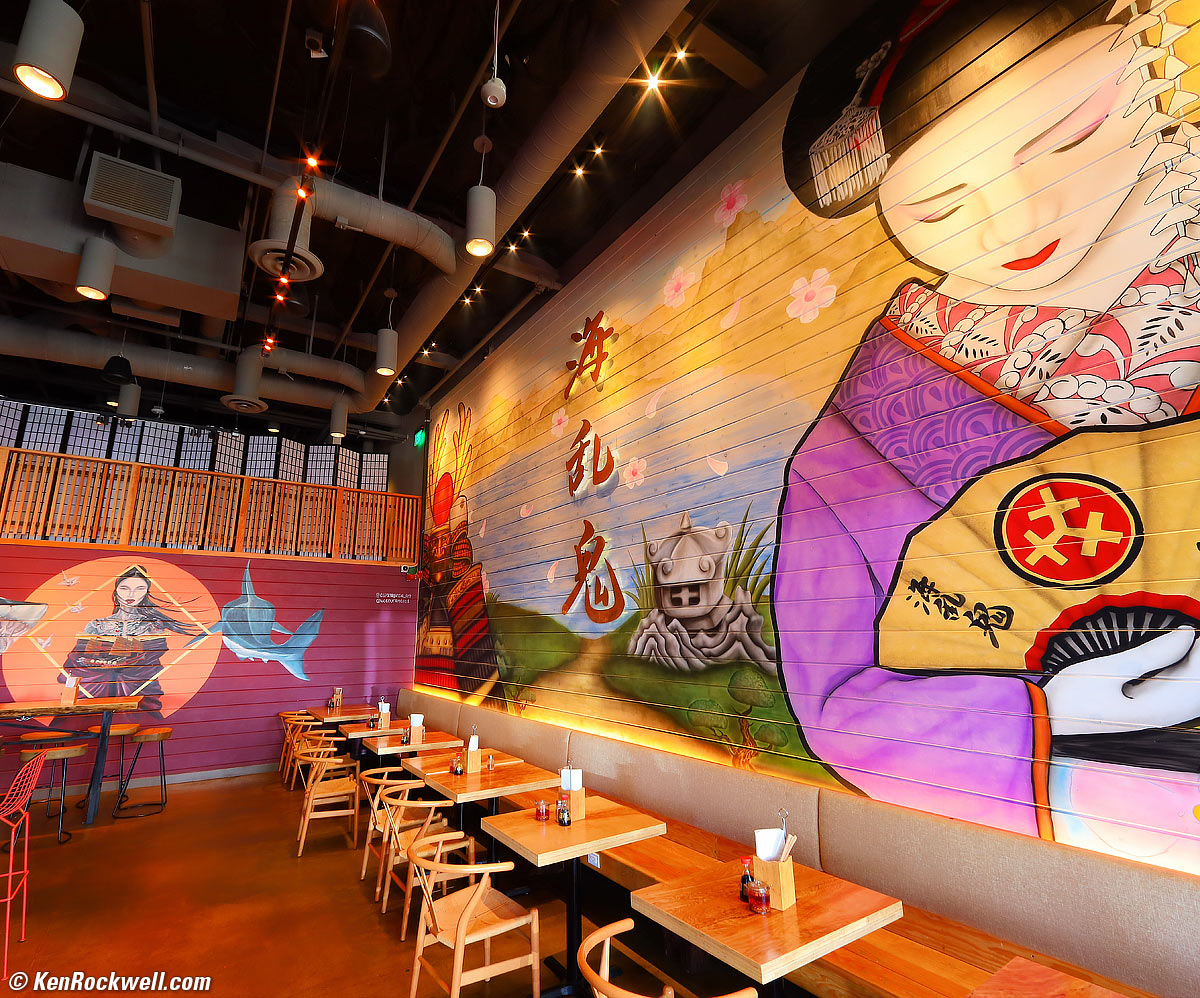
Tokyo, 10 September 2018. Canon EOS-R, Canon 14mm f/2.8L on adapter, f/11 hand-held at 1/6 at ISO 500, auto WB, Standard Picture Style with +4 saturation, Perfectly Clear. bigger, full-resolution or camera-original © file.
The EOS-R does a brilliant job of correcting distortion and lateral color fringes in my old 14mm lens.
NEW: Mirrorless vs DSLR.
I finally completely re-wrote that page from scratch to bring it up to date.
Now you know why I'm so stoked about mirrorless now that it's finally good and made by real camera makers. It's not 2012 any more.
The last I wrote about this was in 2012 and 2014 when things were very different.
Now that Sony's cameras rock and Nikon and Canon have serious mirrorless models, the world has changed completely over just the past few weeks and months.
I'd go Sony for sports and action (A9) and silent shooting (A7 III), and get the Canon EOS-R for everything else. Nikon hasn't shown any Z7 or Z6 production samples yet, so I can't consider them. I doubt Nikon will ship anything anytime soon, and I hope I'm wrong. Canon will have updated firmware for the EOS-R, which will improve its silent shooting, while Fuji has no full-frame system (of course I love my little X100F). I prefer Canon for color, but today the EOS-R doesn't run 20 FPS like a full-time pro sports camera that costs twice as much; the EOS-R is a mid-priced general purpose landscape, people and travel mirrorless camera for everyone.
You don't know it yet, but mirrorless has already replaced the DSLR if you're paying attention. The newest mirrorless cameras do more better for more people and don't cost any more - but the best of these new cameras have only been out a few months like the Sony A7 III. While I have a production Canon EOS-R, I don't know that Nikon even has any production Z7s and they haven't started the Z6 yet.

Canon EOS-R and RF 24-105mm f/4L IS.
NEW: Canon EOS-R Review.
I worked on my review all weekend, and it's mostly complete. Back on Friday all that was there were some sample images I had shot, some awful product images, some specs and a boatload of typos.
Loads more coming this week, as well as reviews of the RF 24-105mm f/4L IS and RF 50mm f/1.2 L which I also have in my hands.
09 September 2018, Sunday
NEW: Canon EOS-R Product Shots.
I have a production model Canon EOS-R in my hot little hands, and just added all my usual high-resolution studio product shots of it from all angles so you can see it all for yourself.
Something I hadn't realized until one of you pointed it out is that these are the only good photos of this camera available, other than the same PR shots from Canon. The Internet is clogged with people handing out free advice on everything, but I'd be careful not to waste much time reading anything written by someone when can't even produce decent photos of something as simple as a camera. I actually am what some people consider to be a very talented photographer (in over 18 years of this site I've never bothered to talk about my qualifications, I prefer to let my photos do the talking); beware taking advice from mass media outlets where their writers are the same people who churn out articles on video games and e-cigs.
Cameras are artists' tools, not bluetooth speakers, and just like a piano, require a virtuoso to be able to give meaningful insight on what's important or good or bad, rather than just repeat the manufacturer's press release and recite features and specifications. No real photos of a camera? Author has no portfolio posted to show their work? Then that author has no perspective or right to be writing about cameras any more than I do to write about pianos. I'm not picking on anyone in particular today; I've been writing about this phenomenon since at least 1999! I could write a blue streak about a piano and go into vivid detail about every technical aspect, but if you heard me play, you'd run. Ditto for "reviewers" who can't show great pictures in a review. It's the old "two kinds of photographers" as usual.
Would you take piano lessons from someone who can't play piano? Then why do so many people take advice from Internet people who have no ability to produce outstanding photos? This reminds me of back in May when my wife got a fancy new car. We know a guy who wouldn't shut up showing her every auto-drive feature and everything you could do in its computer, like reprogram cam shaft lobes, ignition timing, air/fuel ratios and engine control maps right from the steering wheel. He even showed how to get satellite weather maps on the navigation screen. Who is this expert? My 11-year-old son Ryan, who has never even driven a car. He has a YouTube channel, like every other kid in his sixth-grade class., which he updates every week.
I have a recording engineer friend who used to write for audio magazines reviewing equipment when he started out and didn't have much work. Today he looks back and shudders about all the inexperienced information he handed out, long before he had gained the wisdom of knowing exactly how to use all this gear creatively - and now that he has the experience, he doesn't have the time to write reviews because he's so busy doing what he used to just write about! Always see if someone has a portfolio of great work before you take any advice from them.
If someone can't even make a sharp photo of a camera but they talk about a new camera's resolution as if it matters, you can tell they have nothing to say. Ditto for focus tracking; if all they have are soft images of a camera sitting in a coffee shop, how on Earth would they know anything about tracking focus with something actually moving? Camera resolution became irrelevant years ago due to pixel dumping. So long as you have about 12 MP, you have more than enough resolution for anything. So much for armchair commentators.
Anyway, I also shot the EOS-R with a few of my odder older EF lenses, with which it really does work flawlessly.
Few people know that modern SLR "bright" screens can't show the full amount of a lens' defocus at wider than about f/2.5. If you use your preview button, you can't see the actual depth of field at apertures wider than f/2.5 on modern laser-cut matte screens (we haven't used actual ground glass since the 1970s), but today with mirrorless, my f/1.2 and f/1.0 lenses show exactly how little is in focus in my EOS-R finder.
Whaahoo!
I'm adding to my EOS-R review all day today, as well as all next week. I've barely started writing about it; there's loads more to come.
08 September 2018, Saturday
I'm Back!
Whew! I just got back last night from Canon's EOS-R launch event where I got to play with the new camera and meet with the engineers from Japan and experts from the USA and learn just about everything about the new system.
I've also been shooting with it all week, and here's the best part: I have a full production version EOS-R, RF 24-105mm L, RF 50/1.2L and EF adapter in my hot little hands at home for my usual complete reviews in the coming week.
Some new observations:
EOS-R Battery Life
As expected it only gives a few hundred shots per charge if you fiddle with menus to set each shot and then look at playback for each shot, as we all do when we first get the camera. Remember with mirrorless that the sensor and processors all need to be running full speed all the time you're simply looking through and framing your shots, while a DSLR only really turns on to take the picture.
On the other hand, when I shot long, continuous sequences where I just held down the shutter and let it motor along on its own, I got over 7,000 shots on a charge!
So while a DSLR usually gets between about 800-3,000 shots per charge depending on how much fiddling versus how much shooting you do, I'm seeing between about 300 ~ 7,500 shots per charge with the EOS-R.
Autofocus
AF works as fast as with my DSLRs.
The great news is that it tracks all over the frame extremely well, and shows me what's going on even better than my DSLRs.
Here's the best part: it autofocuses over the entire frame! While our DSLRs have lots of AF sensors, they're all in the middle. I've been petitioning for years for full-frame AF, and now we have it.
EF Lens Compatibility
While Nikon's FTZ only autofocuses with half of Nikon's lenses, Canon's Japanese engineers assured me that every feature of every EF lens ever made will work flawlessly with the EF adapter.
How good is it? I've already tried my EF 50mm f/1.0 L and it seems to focus faster than ever on the EOS-R, and focus is always dead-on, not iffy as it always was on SLRs and DSLRs.
My original EF 14mm f/2.8L not only works great, the EOS-R defaults to correcting its distortion automatically!
FD Lens Compatibility
I asked when the FD adapter was coming, and I was told they already made it!
Just use the new EF adapter and Canon's classic FD -> EOS adapter from 30 years ago.
Of course we all know the classic FD to EOS adapter needed internal optics to correct infinity focus because the EOS flange focal distance is greater than the FD flange focal distance. I asked if Canon would be announcing a new dedicated FD to EOS-R adapter that today won't need any internal optics, and they said no.
No worries, the Chinese will have plenty of third-party ones over eBay eventually. The short 20mm flange focal distance of the EOS-R means we'll be able to adapt just about anything to it, as soon as third parties set up their CNC machines.
Fast frame rates
While I'm most likely dumping my 5DS/R as soon as I can since I use it for nature, landscape, portrait and other things that sort of hold still, I'm keeping my A9 and 1DX Mk II for sports and action.
The EOS-R still can't run in silent mode with the continuous shutter release (neither can my 1DX II), but it will as Canon updates firmware.
Here's the biggest gotcha for sports and continuous mode: my EOS-R with version 1.0.0 firmware can't update the finder continuously as shot in continuous mode. It looks jerky, running at about the same frame rate as the camera, and not at its usual live, fluid frame rate. While the finder of my 1DX II is just a smeared blur at 14FPS, at least it's live (the A9 is smooth and live even at 20 FPS). I need to confirm, but it seems as if exposure is locked with the EOS-R even at the regular continuous frame rate, and focus might be locked, too.
So while the EOS-R is my new go-to for general shooting, at least in its current iteration it's not a pro sports camera. Give it a break; it's a $2,300 mid-level camera like the 6D II. It is by no means is a 1DX II replacement - yet.
07 September 2018, Friday
NEW: Fuji XT-3, also in silver.
Also comes as a kit with 18-55mm, and the kit also comes in silver.
VG-XT3 Vertical Battery Grip for X-T3
BLC-XT3 Bottom Leather Case for X-T3
MHG-XT3 Metal Hand Grip for X-T3
CVR-XT3, X-T3 Mirrorless Camera Cover Kit
RR-100 Remote Release for X-T3
BC-W126S Charger for NP-W126S Batteries
EOS-R Sample Image Files
Here are some snaps I made on the Canon EOS-R yesterday. I've been shooting it all week and will have loads to add next week, too:
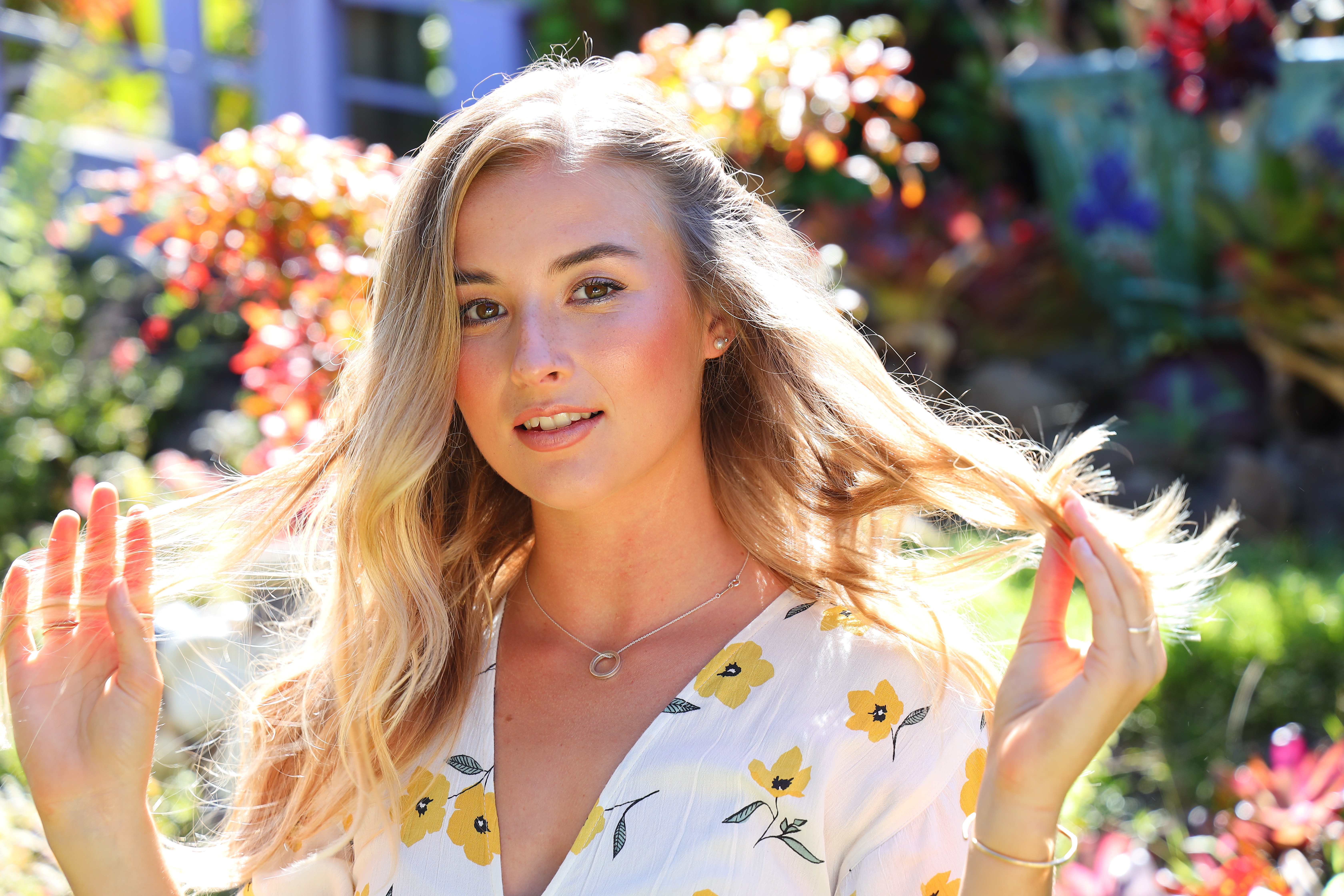
Sophia, Maui. Canon EOS-R, Canon RF 24-105mm f/4L IS at 105mm, 1/160 at f/5 at Auto ISO 100, +1 stop exposure compensation, auto WB, Standard Picture Control at +2 saturation. bigger or camera-original © file.

Girl on Rock at Beach, Kapalua, Maui. Canon EOS-R, Canon RF 24-105mm f/4L IS at 105mm, 1/640 at f/5.6 at Auto ISO 100, auto WB, Standard Picture Style, -4 contrast, exactly as shot as NORMAL JPG. bigger or camera-original © file.
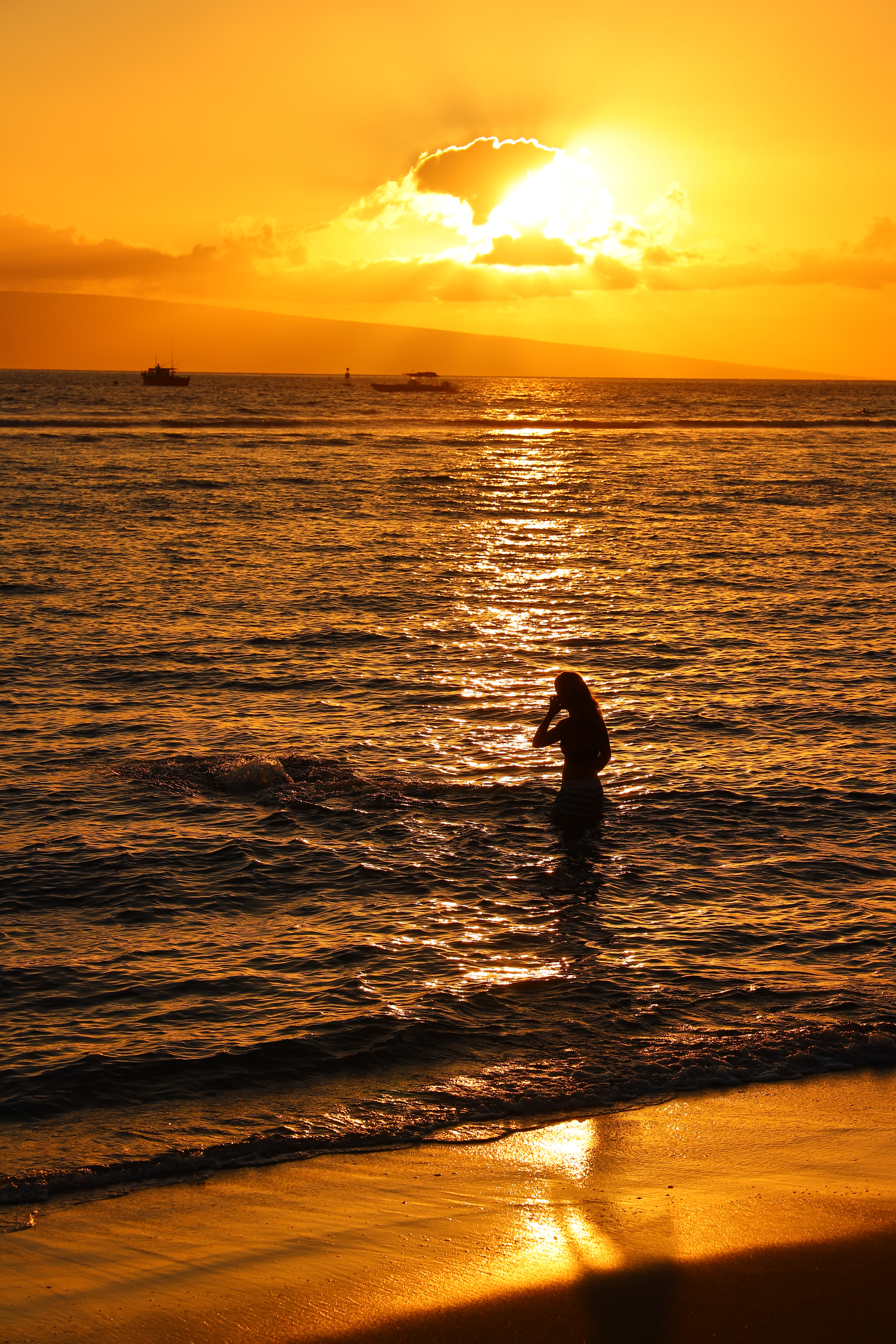
Girl in Sunset, Lahaina, Maui. Canon EOS-R, Canon RF 24-105mm f/4L IS at 91mm, 1/500 at f/10 at Auto ISO 100, SHADE WB, Standard Picture Style, +4 saturation, exactly as shot as NORMAL JPG. bigger or camera-original © file.
05 September 1959, Wednesday
BREAKING NEWS: Canon EOS-R Full-Frame Mirrorless!
I have my hands-on the EOS-R, so I'll be updating all day and all week.
It works perfectly with every EF EOS lens with a $99 lens adapter. VR, AF and everything work fast and sure with all the lenses we already own. I can't wait to use my 50mm f/1 and finally get perfect AF accuracy so can shot at f/1.
Today is the biggest day in photography since 1959 when both Canon and Nikon introduced their first 35mm SLR cameras, the Canonflex and the Nikon F.
While the Canonflex was discontinued in less than a year, the Nikon F system was wildly popular and became the Nikon DSLR system we all know today.
Nikon announced its first serious mirrorless system last month, and now Canon announces its first full-frame mirrorless. This is huge news for the future. The future is now.
Ground glass was so 1950s. In mirrorless we can magnify Live View and playback and set all our menus right through the viewfinder. Rear LCD loupes are done. AF Fine Tune is gone, too. Most people don't realize that a DSLR's AF sensors are nowhere near their finder screen. They're actually in the bottom of the camera and see the image through a series of several mirrors that fold away under the main mirror. For every micron any of those mirrors are out of alignment, there's up to two microns of focus error. With mirrorless, focus is read directly from the sensor so there is zero error, especially at large apertures.
The reason today is so important is now the big two pro camera makers all have full-frame mirrorless cameras, just as they both had new SLRs which changed the next 60 years of photography back in 1959.
Mirrorless isn't just for vacation anymore. It is what professional cameras will be. Yes, the bodies are smaller as there's no need for a mirror or prism when you can see the images electronically live from the sensor, but the lenses will be just as big. Silent cameras are critical in many kinds of photography. LEICAs, even the M10-P, are just too noisy when only silence is silence. No Nikon, Canon and Sony will all have this.
Full frame mirrorless systems will be the same size and weight as DSLR systems have been. The bodies are smaller, but the lenses and flash and everything else is just as big.
It's the same thing in television. Professional TV cameras in the 1950s were the size of VW buses and today are the size of a DSLR, but the big 100x zoom lenses we use to televise sports are still as big as your leg. Cameras get smaller, but asking lenses to get sharper and sharper means they will keep getting bigger and bigger.
Today's Canon announcement shows that Canon is taking this very seriously, with an f/2 (yes, f/2.0) zoom and a 50mm f/1.2. While Nikon announced totally boring mirrorless lenses last month and hopes we'll be happy with the FTZ adapter, Canon introduced lenses we actually can use, as well as an EF adapter.
Look back at 1987 and Canon announced its still state-of-the-art 50mm f/1. No one has ever made a more advanced lens; Canon was showing off back in 1987. The 50/1 is a dual aspheric autofocus lens that continuously adapts its optics based on focused distance. Canon is taking mirrorless very seriously when you look at the great lenses they've announced: lenses we don't have today for any DSLR.
Nikon announced a mirrorless 58mm f/0.95, but who cares; it's only manual focus just like the world's first 50mm f/0.95 lens. Who made the world's first 50mm f/0.95? Canon did, in 1961! Did you know so little is in focus at f/0.95 that if you don't have tracking autofocus that your own breathing will lose the focus due to the shallow depth of field? You'll need a tripod for best results with any manual focus 0.95 if you actually want perfect-enough focus at 0.95 to keep everything sharp.
I've been shooting for fifty years. I can tell what's a significant game-change and what's just from the usual baloney from marketing departments. Mirrorless is the future and you're looking right at it.
New DSLRs will still come out and still be sold in the coming years, just as new 35mm rangefinder cameras were still bought and sold through the 1960s, but SLRs and DSLRs have ruled the world since the 1970s.
Today is like 1959 all over again. We'll will still have new DSLRs sold for several years to people who still want to milk what life they can out of their old systems while Canon and Nikon develop complete mirrorless lens lines, but in ten years, DSLRs will have gone the way of film.
New Canon Mirrorless Lenses
All have an extra customizable control ring.
RF 24-105mm f/4L IS: $1,099, December 2018
Smaller and lighter than the EF 24-105 5 stops IS.
THREE control rings: zoom, focus and a third programmable ring.
RF 28-70mm f/2 L: $2,999, December 2018
Extreme image quality.
RF 50mm f/1.2 L: $2,299, October 2018.
Totally new design.
RF 35mm IS Macro STM: $499, December 2018
1:2 repro ratio.
6.7" close-focus.
New Mount Adapters
All retain full function! None of Nikon's compatibility problems.
Allow insertion of a polarizer or grads, even with ultra ultrawides!
Some of them even add a new control ring we never had with out lenses.
YES!
EF-RF: $99, October 2018.
EF-RF with control ring: $199
EF-RF with drop-in filter holder and variable grad or polarizer: $299.
No words about the FD lens adapter yet.
New EF 600mm f/4 L IS III
1.9 pounds less than the last 600/4.
New 400mm f/2.8 L IS III
2.2 pounds less than the last lens, which was pretty light.
25% less weight!
New EOS-M 32mm f/1.4
Seventh lens in the EOS-M system.
Nikon versus Canon Mirrorless
If history teaches us anything, it is that Canon will actually have cameras to sell, while we will be waiting for months or years to get our Z7s and Z6s, just as tons of people who ordered last year's Nikon D850s are still waiting. It was like this for Nikon who couldn't ship enough F4s in the 1980s, couldn't ship enough 80-400mm VR in the 1990s, couldn't ship the D100 or D200 or 18-200mm VR or D300 in the 2000s, and can't ship most of their hottest cameras today.
What I've done, and I suggest you do, is have your Z7 and Z6 already on order (see the text at the bottom of Z6 vs Z7 to see my game plan for getting both Nikons fast and profitably). Keep both Nikons on order, and order your Canon ASAP as well.
When you order from approved sources, your credit card doesn't get charged until it ships to you, and you can play with your new camera all you want for about 30 days depending on which approved source you use. If you don't love any or all of them, just return what you don't love. Don't sit in mystery, order your own and try it for yourself shooting what and how you like to shoot. These cameras are so new and different that you really want to order your own for yourself to try in your own environment with your own system.
The key is that there is no risk to ordering your own since you can return it for a full cash refund (so long as you save everything and don't break anything), but if you wait, you might be at the back of the line. You'll probably be OK and be able to get the EOS-R without waiting long (I hope), but Nikon has such weak manufacturing ability that you really need to get in line first if you ever hope to see your Z7 or Z6 this year.
Secret Summer Sale on Phil Steele Photography Courses

My friend Phil Steele is having a private sale on his courses. Phil's tutorials are the best I've seen; check out his previews and see for yourself. He has a 60-day no-risk money-back guarantee, so you've got nothing to lose and everything to gain. You can watch them from anywhere on just about anything, far better than a book, file or eBook.
SAVE 33%: Phil Steele's Advanced Off-Camera Flash course at 33% off!
SAVE 33%: Secrets of Successful Event Photography.
SAVE 30%: Lightroom Made Easy.
SAVE 30%: Photoshop Basics for Photographers.
SAVE 30%: Pro Portraits with Off-Camera Flash.
04 September 2018, Tuesday
My Favorite Camera?
A friend asked me a funny question: what is my favorite camera?
My immediate and honest response of course was "My iPhone X."
"No, seriously" he replied. I explained that to be completely honest like most of us, I shoot more on my iPhone than anything. It's always with me and I always grab it first. It's been this way for years; I remember maybe 7 years ago and we put together a collage at my kid's preschool of photos of them, and most were taken on my iPod Touch! Like most of life, showing up and being there is 90% of success. Today, I can draw my iPhone, wake it and get my shot faster than with any other camera.
Of course I was pestered more, and when I have something serious to shoot, I grab my Canon 5DS/R. It's the best there is and the only DSLR or mirrorless with at least 50 MP. I've had it a few years so it's out of the limelight of all the news lately, and there is nothing else that can touch it for handling, ergonomics, image quality and lens selection. I usually only carry my 16-35 IS L and 100-400 L IS II and I'm good to shoot anything. Even if I also carry my 50/1.2 or 50/1.8 or 35/1.4, I never actually use them. If I'm carrying just one lens it's usually my 28-135 IS for its huge zoom range and low weight. I usually don't bring my 24-70/2.8L II; too heavy.
If I'm photographing a kid's event, I grab my Fuji X100F instead.
It's always OK to have lots of options from which to choose when I go out to shoot, but never OK to carry it all with me at the same time. I always carry as little as possible
03 September 2018, Monday
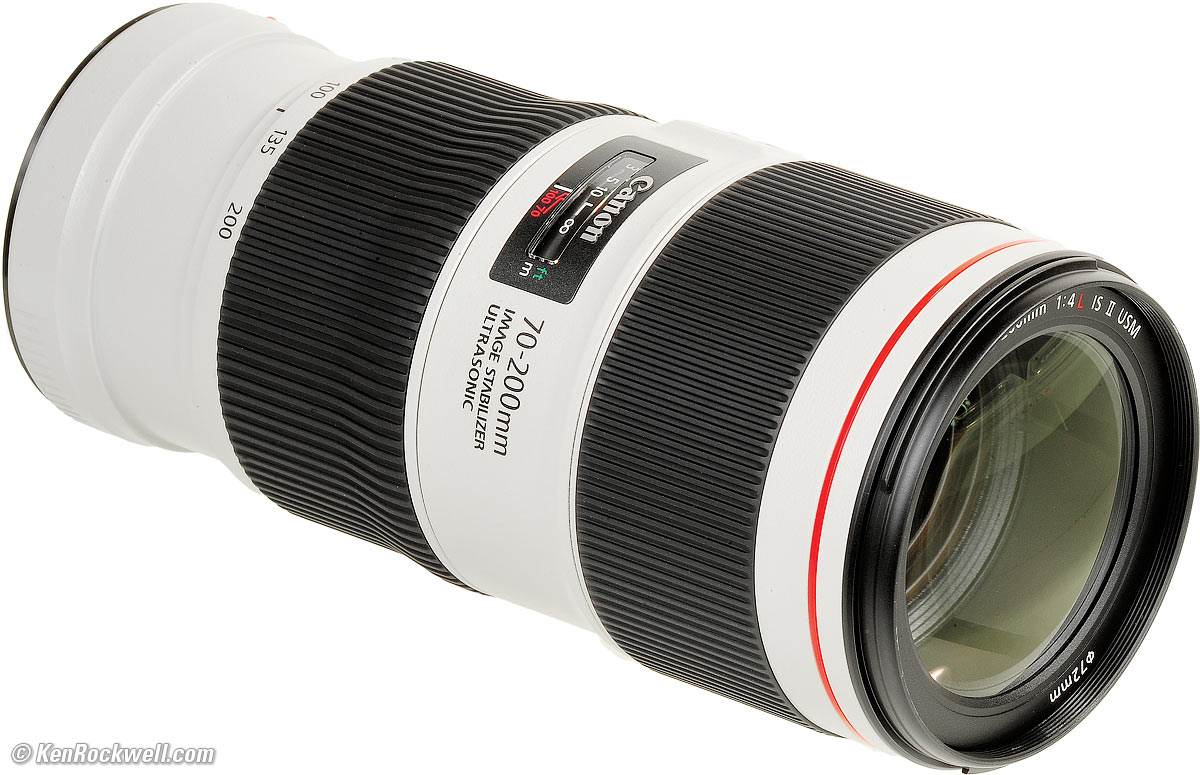
Canon EF 70-200mm f/4L IS II.
NEW: Canon 70-200mm f/4L IS II Review.
Canon's best 70-200mm ever.
31 August 2018, Friday
NEW: Tamron 15-30mm f/2.8 G2 for Canon and for Nikon F DSLR.
Wow, I just tested the previous Tamron 15-30mm f/2.8 and it's excellent, so this new G2 has got to be awesome. It wil be a tough call if this new G2 is worth $200 more, however, seeing how good is the original. I'd probably just get the original and keep the extra $200.
The G2 starts shipping 21 September 2018 for Nikon F and 12 October 2018 for Canon.
Change
Nikon just reinvented professional photography again. I now and forever will have to specify "Nikon F DSLR" versus "Nikon Z Mirrorless" anytime I mention anything about Nikon cameras or lenses. See how I had to do it above?
Anytime I mention a Nikon lens for the next ten years I'm going to have to specify to which system it is compatible.
It's just like when digital cameras came out around 1999 and we called them "digital" cameras.
Ten years later people shortened them to just "cameras."
Today we just say "cameras," while people refer to what were regular cameras in the olden days today as "film" cameras.
Likewise today we say "Nikon" and imply DSLR, and say "Nikon Mirrorless" for the Z system, and in 10 to 20 years we'll just say "Nikon" and mean the Z system since that's what will be relevant, and we'll have to qualify the old system as "Nikon DSLR" or "Nikon F" if we still talk about it. I'm serious; 60 years ago people meant the S-mount rangefinders when they said "Nikon," and had to qualify the new SLRs as "Nikon F SLR" when they meant the new SLR system.
Maybe it's because I've been actively shooting for over 50 years that I have a broad enough perspective to see what's really going on when something genuinely game-changing happens. I'm not some blogger ot youtuber blabbing-on tor ten minutes to say what could have been said in just three written sentances; I can separate marketing fluff from genuine innovation.
Z7 Scam?
I got click-baited by an email claiming I could "Come and Experience the new Z7" and "be the first to get my hands on the new Z7" at a location near me.
Well, I showed up and all I saw was a hundred people watching a sales presentation. I didn't get my hands on any hardware. Beware.
All Nikon has now are prototypes, not any shipping cameras, so I suspect they're not comfortable actually putting them in the hands of the general public yet. Seeing how they don't even have a specified battery life, I suspect it's still in design and not close to production. It may be a long wait until ours start shipping, presuming yours is already on order. I had mine on order at Adorama before the sun rose last Thursday when it was announced. If you haven't yet, get yours on order now. You don't have to pay until it ships and you can just return it for cash if you don't love it when yours shows up, but if you wait to order, I doubt you'll see one for a year. Ditto for the D850; people are still waiting for theirs and that was announced in August - last year!
Bravo Nikon!
I almost forgot to mention with all the hoopla lately how impressed I am at Nikon breaking yet another barrier.
Nikon started making cameras in 1946. The first Nikons were just improved copies of Contax. Even though they had more features on paper than LEICA and sold for less, they failed against LEICA.
Nikon went nuts and developed the world's first extremely practical and popular 35mm SLR system with the Nikon F and all its lenses in 1959. This is the system we all know as the Nikon system today, and from which all its current cameras descend. Nikon put LEICA out of business a couple of times, making LEICAs and all rangefinder cameras essentially obsolete and relegating LEICA to the men's jewelry department for the past 50 years. Bravo, Nikon!
In 1999 Nikon introduced the world's first practical DSLR, the D1, from which all its current DSLRs descend - and using the same 1959 lens mount as the Nikon F.
Well, last week Nikon is the first major and current maker of pro cameras to introduce a completely new kind of camera system for mainstream professional use. The Z series is a complete break from the past; as completely different from DSLRs as the first Nikon F was from its rangefinders.
Yes, there is some semblance between the Z and DSLR, just as the Nikon F body of 1959 was mostly the same as the Nikon SP rangefinder body of 1957, just with a mirror and prism added.
Just as the F went so much further than the SP, I think the Z system will do all the things that no one has imagined yet, just as the F system blazed new territory for decades.
The real hats off is how Nikon is the first major maker to come out with something that obsoletes everything it's done, while its old cameras are still very popular. Nikon's DSLRs are still doing well, and Nikon comes out with the Z. No other company has had the guts to do that ever since Canon dumped its then-current FD system with the brand-new EF EOS system back in 1987 - but Canon's FD and EOS systems were still all 35mm SLRs.
Pentax, Olympus, Minolta and innothe rest of the third-tier companies never had significant shares of the pro market - and never introduced any revolutionary new kinds of cameras. (First tier: Hasselblad, Contax, Linhof and LEICA. Second tier: Nikon and Canon. Third tier: Pentax, Olympus, Minolta, etc. Fourth tier: Chinon, Industar, Zenit, Kiev, etc.)
LEICA made SLRs, but long after Nikon, and while pricey, they were inferior and summarily canned by LEICA a few years ago. No one cared; they were big and clunky and couldn't compete against Japan, so they gave up. Even if LEICA's R system had been competitive, it was hardly anything innovative and game-changing at the time. Heck, LEICA chose the wrong decades for the R system, the same decades that Nikon ruled the 35mm SLR world.
Sony rules the mirrorless world, but again they never had any significant stake in the camera world before. Their previous DSLRs were simply whatever was left over when they bought Minolta.
Thus Nikon is the first major player to try to change the game, when it's a game that they had been winning until Canon and Sony started beating them at it.
Hopefully the Z series will do everything we hope it will and it will be wildly successful for the next 60 years as was the F system. It's been sad the past years watching nothing new come from Nikon; the D850 is simply a refined D810 which was simply a refined D800 - all with the same awful Settings Bank system we all hate and the system and its lenses increasingly moved offshore to save money. Yawn! Having a mirrorless that handles, feels and shoots like a real camera rather than a VCR will be a first.
Bravo, Nikon.
Bravo, Canon!
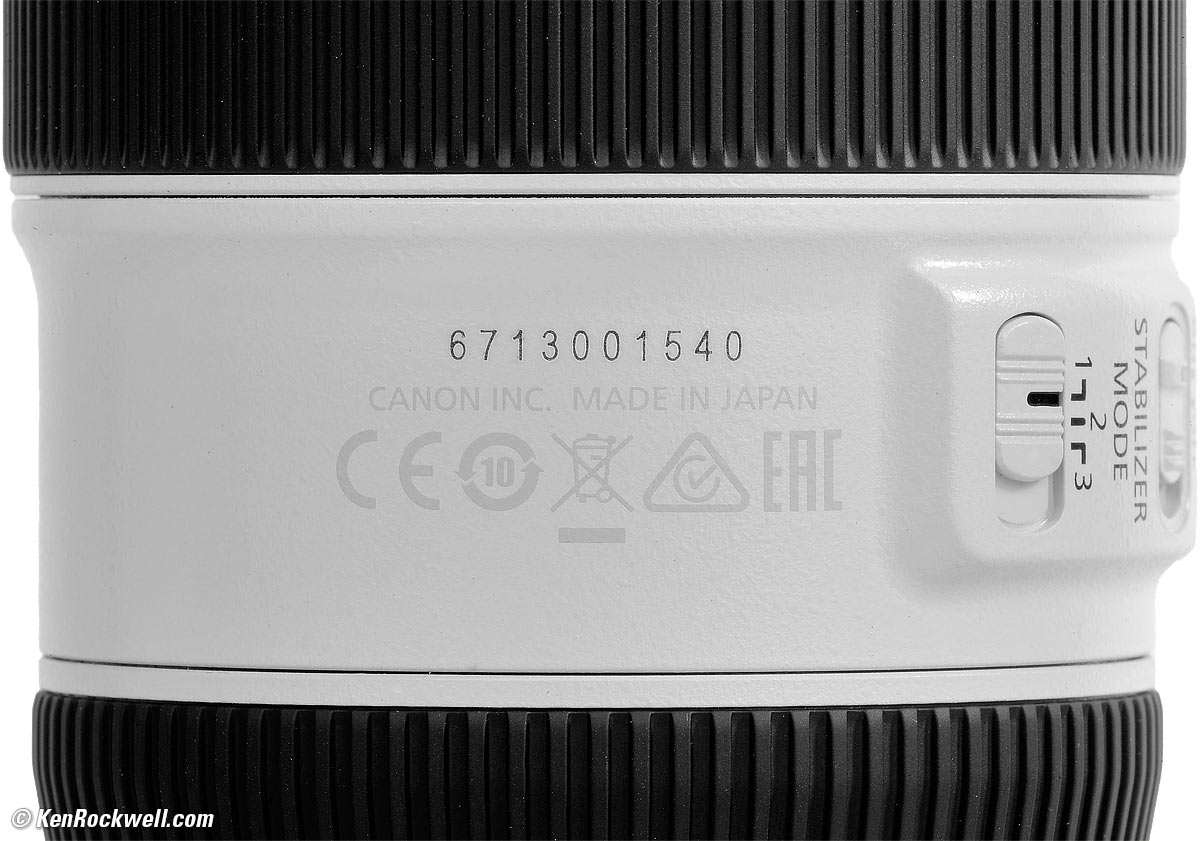
Canon EF 70-200mm f/4L IS II. bigger.
I also just got my 70-200mm f/4 L IS II. It rules, just as my original 70-200mm f/4 L IS does, and my new lens is also made in Japan for the highest quality. (My review will take a while to complete, but rest assured it's a fantastic lens, as is the original). It seems Canon and LEICA are the only major companies making their cameras domestically while everyone else farms them out to whatever Communist or third-world county has the cheapest labor. At least Canon and LEICA still care about quality.
Even the lens hood for my new 70-200mm f/4 L IS II is made in Japan.
I care about where my gear is made. All my cars come from the USA or Germany, my audio equipment comes from the USA, Germany or England and even my bicycles are made in the USA or France. It took me a while, but I even got a brand-new new (leftover 2016) Trek Émonda for Christmas last year that is proudly made in USA. Sadly Trek dumped their bikes and now doesn't make anything in the USA anymore, so I'll have to get something different like Litespeed, Detroit or Allied next time.
Bravo, Apple!
My made-in-USA Mac Pro has been pumping out this website all day, every day nonstop without a hiccup for well over four years.
Ditto fo rmy 2009 MacBook Pro and 2004 12" iBook. Apple gear never stops working.
Loving my Fuji X100F
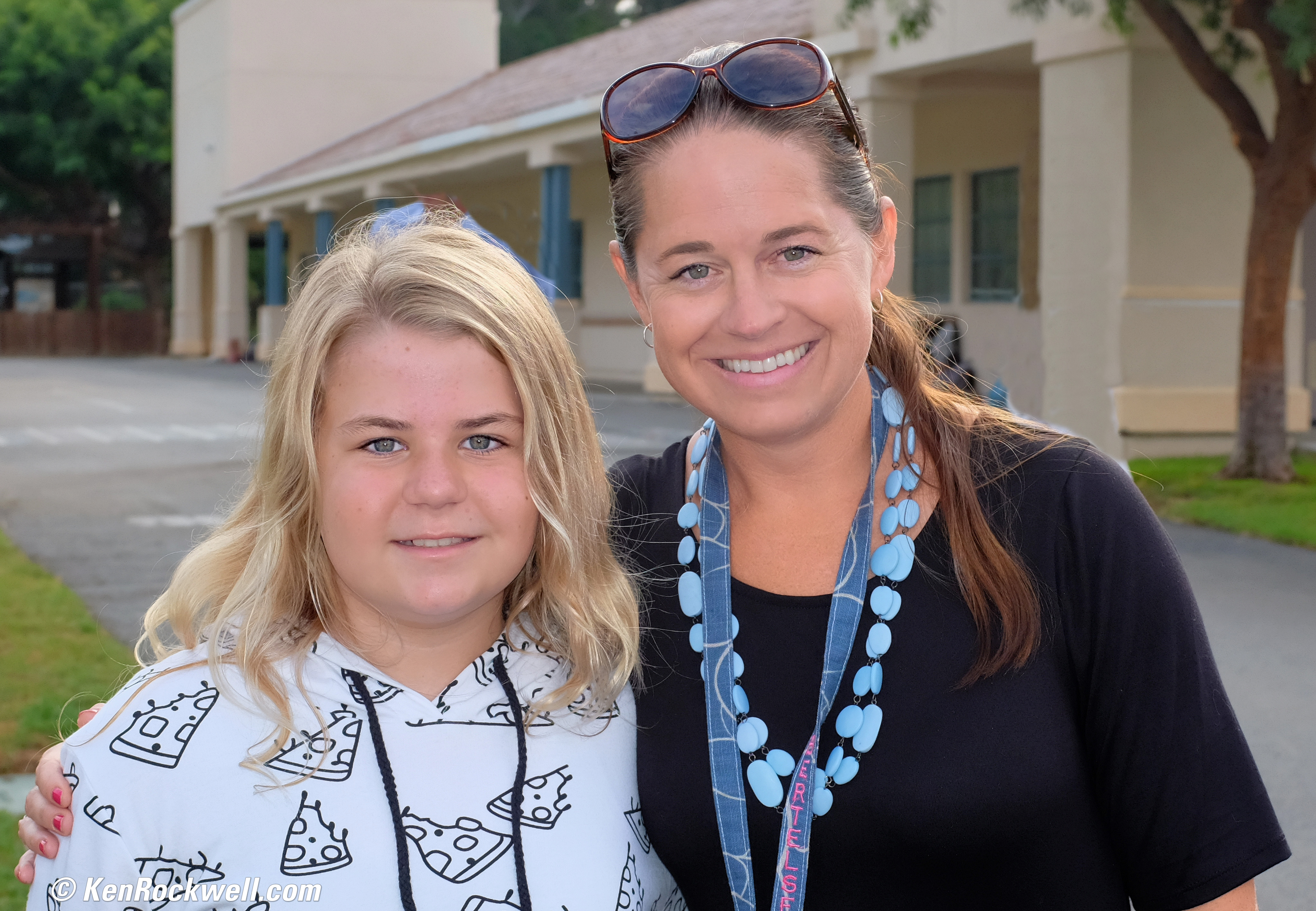
First Day of School! Fuji X100F, flash ON, f/4 at 1/950 at Auto ISO 400, digital zoom, Perfectly Clear. bigger or full-resolution.
Nothing beats the Fuji X100F for people pictures in fast environments. These snaps are whipped-off fast as kids and teachers are running all over the place like nuts on the first day of school.
My Fuji X100F nails it every time, especially with its insanely wonderful skin tones under any random lighting condition unmatched in any other camera brand, and its 1/4,000 flash sync that lets its tiny flash recycle just about instantly and perfectly balance just about any ambient light for perfect fill-flash - all of which add up to better pictures faster under no-time-for-reshoots conditions like the crazy times of 8:00 AM on the first day of school.
No interchangeable lens camera and no DSLR or mirrorless can do this; you need the special leaf shutter of the X100F to get flash sync at super high speeds so its tiny built-in flash can balance daylight and recycle quickly. HSS doesn't work here; it wastes most of the flash's power and results in long recycle times and very short range, none of which would work in these conditions unless I also lugged a huge flash, which was not happening this morning. DSLRs can't do fill flash this well for every shot as the X100F can. In this case, I needed perfect exposure for each and every shot with no time to waste looking at playback like an amateur. In these cases, the X100F nails it every time.
Oh yes - I also love my X100F's digital zoom that lets me select 35mm, 50mm and 70mm lenses as I turn the lens ring (I think I used 50 or 70mm here), and the fact that I can force it directly into aperture-priority at f/4 just by moving the aperture ring by feel. I didn't even have the time to look at the f/stop; I did everything by feel just like I did in the 1980s as a newspaper photographer shooting my F2AS.
30 August 2018, Thursday
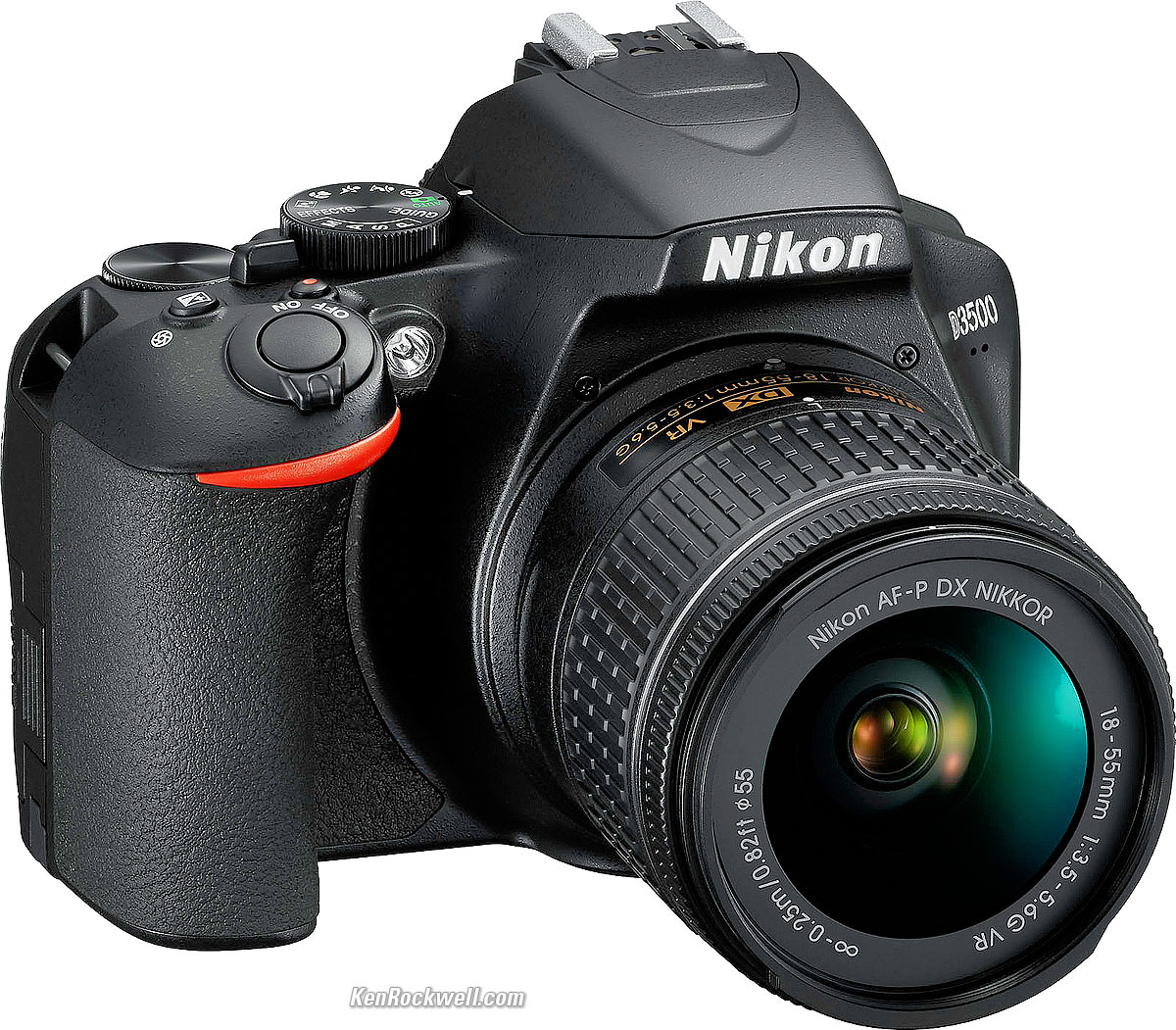
Nikon D3500 and included 18-55mm VR DX AF-P.
NEW: Nikon D3500: World's Lightest DSLR.
The Nikon D3500 is Nikon's newest and least expensive DSLR. It's only $500 brand new, complete with a fantastic 18-55mm AF-P VR lens.
It's the same as the D3400 from two years earlier, with most of the buttons now moved to the right, which is where they belong so we can control everything with one hand. It also weighs a little less and has a little more battery life, and otherwise has the same resolution, ISO, frame rates, mono microphone, video resolutions, rear LCD, AF system, light meter, battery and everything else the same as the two-year-older D3400 it replaces - all for the same low price!
28 August 2018, Tuesday
|
|
NEW: Nikon Z6 vs. Z7.
Z7 Scalping has started
Exactly as predicted last week, the first scalper is listing Z7 kits for sale for about $1,000 more than you should have ordered yours for last week. Even ahead of schedule they're simply taking your money today and don't promise to ship until October, very sneaky.
Having seen this time and again for hot new Nikon products ever since the miraculous Nikon F4 in the 1980s, the Z series are going to be very tough to get, and the only way to protect yourself is to order yours right now (if you haven't already as I did last week), and be patient.
If you wait, you'll be the one waiting until 2019 to get yours, or paying $1,000 more to a scalper.
I don't condone the idea of ordering a dozen today and becoming a scalper yourself. Yes, your credit-card float will let you do all this without risk, but scalpers buying them all up is part of what causes the shortage for everyone.
Financing
Adorama offers 0% financing for 12 months on the entire Nikon Z-series as well as takes trade-ins.
XQD Card Deal
I don't know about you, but I needed to break down and buy an XQD card so I can use my Z7 and Z6. I've resisted because they start at about $90 each. They were invented by Sony for video recording.
I've resisted buying any up until now, but since Nikon requires this to use these cameras, I looked on eBay and found this deal for $50 each (used). Whew. I'm still too cheap to buy an XQD reader; I'll use the camera.
Guys who shoot a lot of video love XQD, as it was invented by innovative Sony to replace solid state and hard drives in video cameras used in professional teleproduction. XQDs move a lot of video around fast. Most of the D5s sold are bought in the two XQD-card slot version. I'm a still-shooter and prefer SD, but tough.
I'll bet you that Nikon gets the Z7 and Z6 sensors from Sony, and Sony mandated that Nikon use only XQD on the new cameras if Nikon wanted to buy sensors from Sony. As I understand it, Sony invented XQD and makes most of the cards sold, and gets royalties on every other brand that sells, too. When buying XQD cards, I'd stick with Sony.
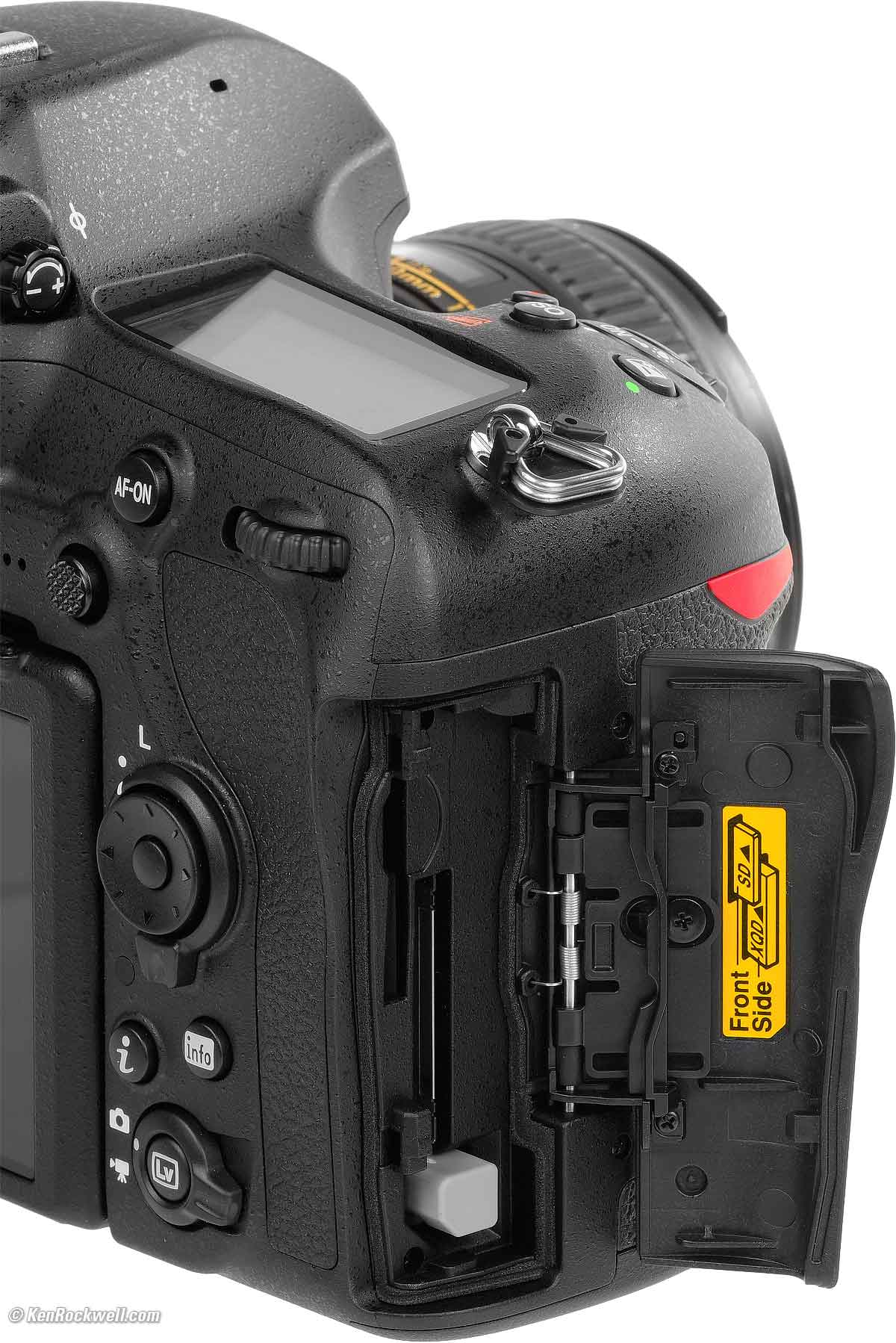





Nikon D850: XQD and SD card slots.
NEW: Do You Really Need Two Card Slots?
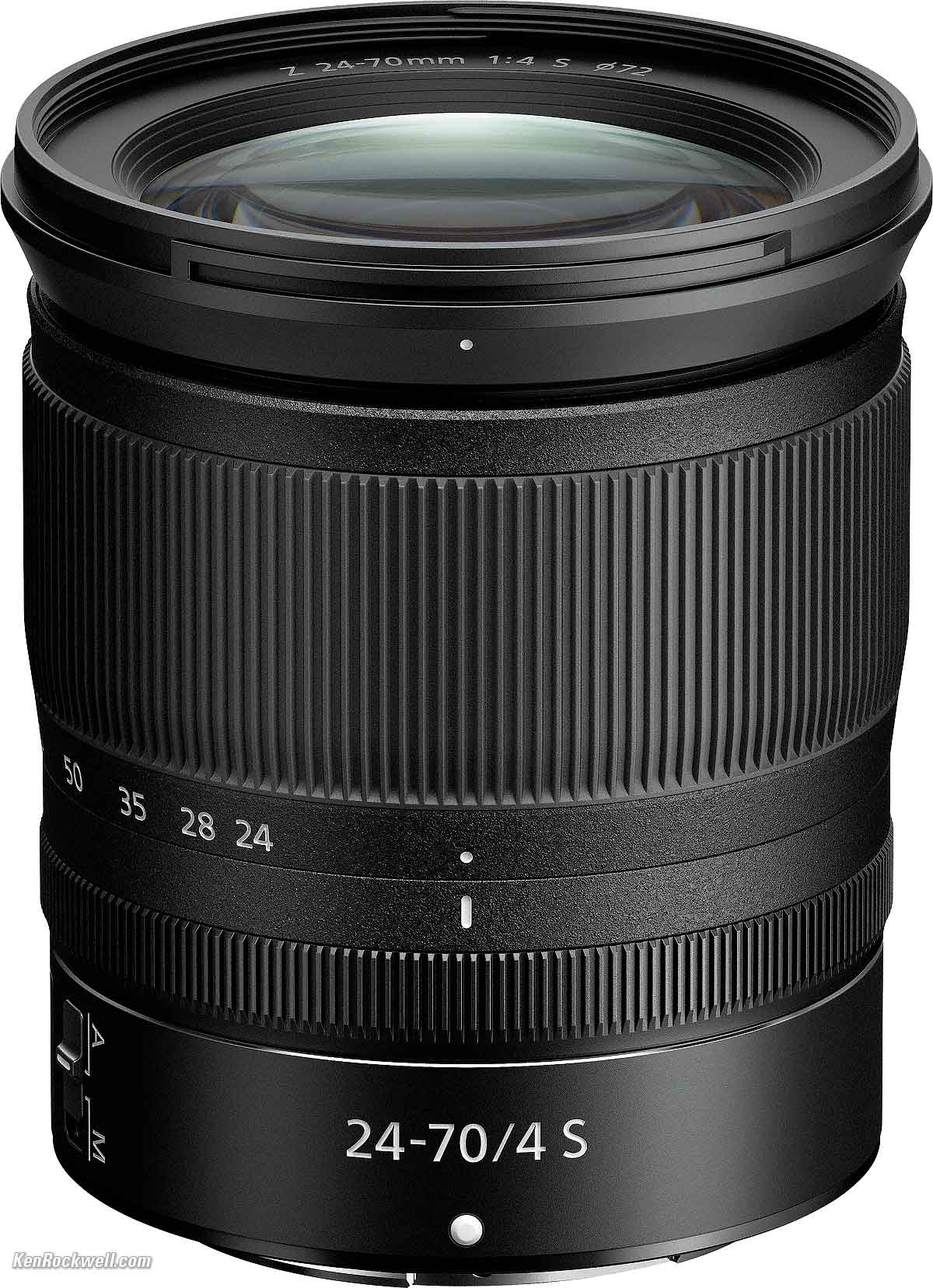
Nikon Z 24-70mm f/4 S.
NEW: Nikon 24-70mm f/4 S.
I had a page up last week, and I just completed it yesterday afternoon with all we know about it today.
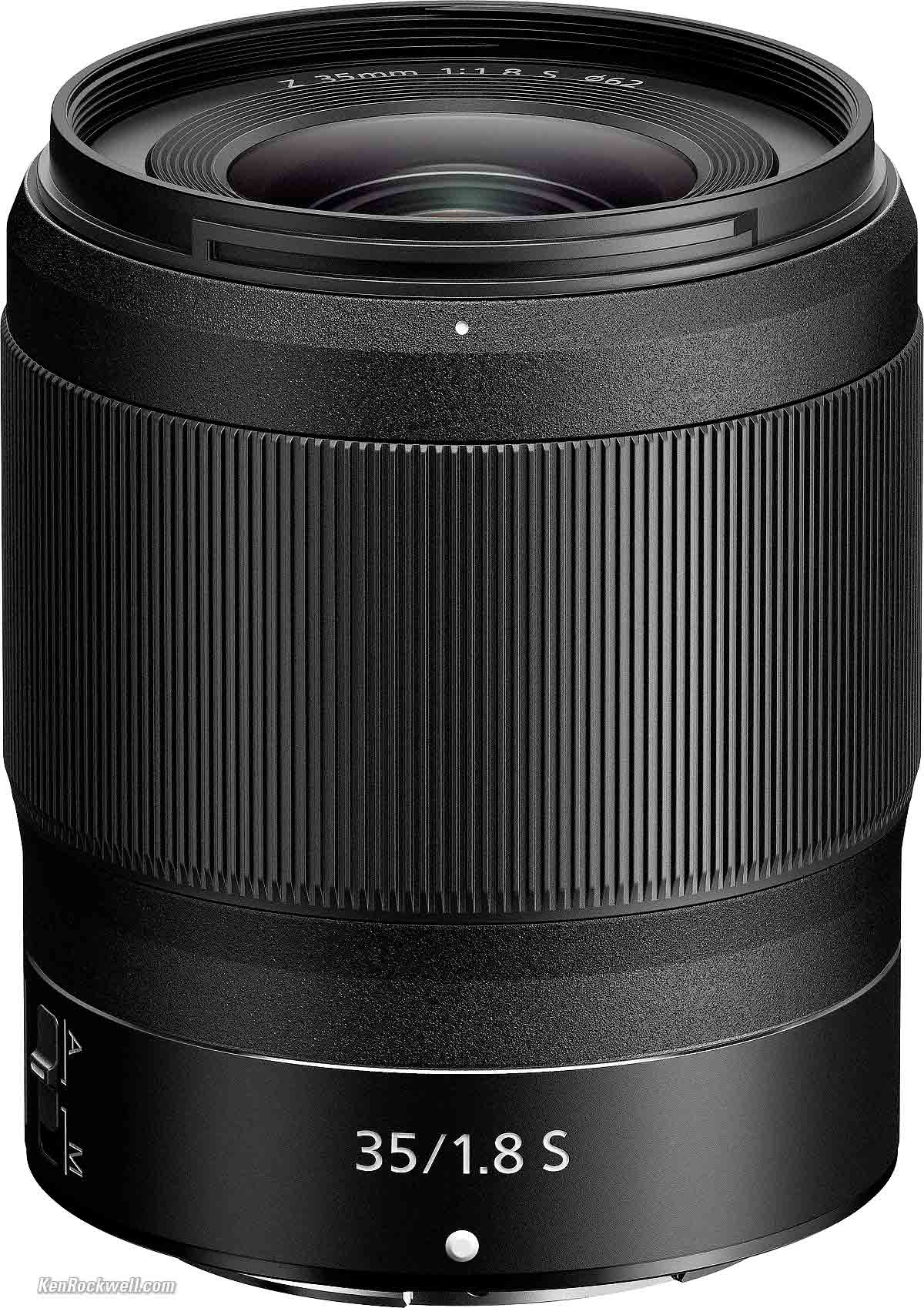
Nikon Z 35mm f/1.8 S.
NEW: Nikon 35mm f/1.8 S.
Likewise, I had a page up last week, and I just completed it yesterday evening with all we know about it today.
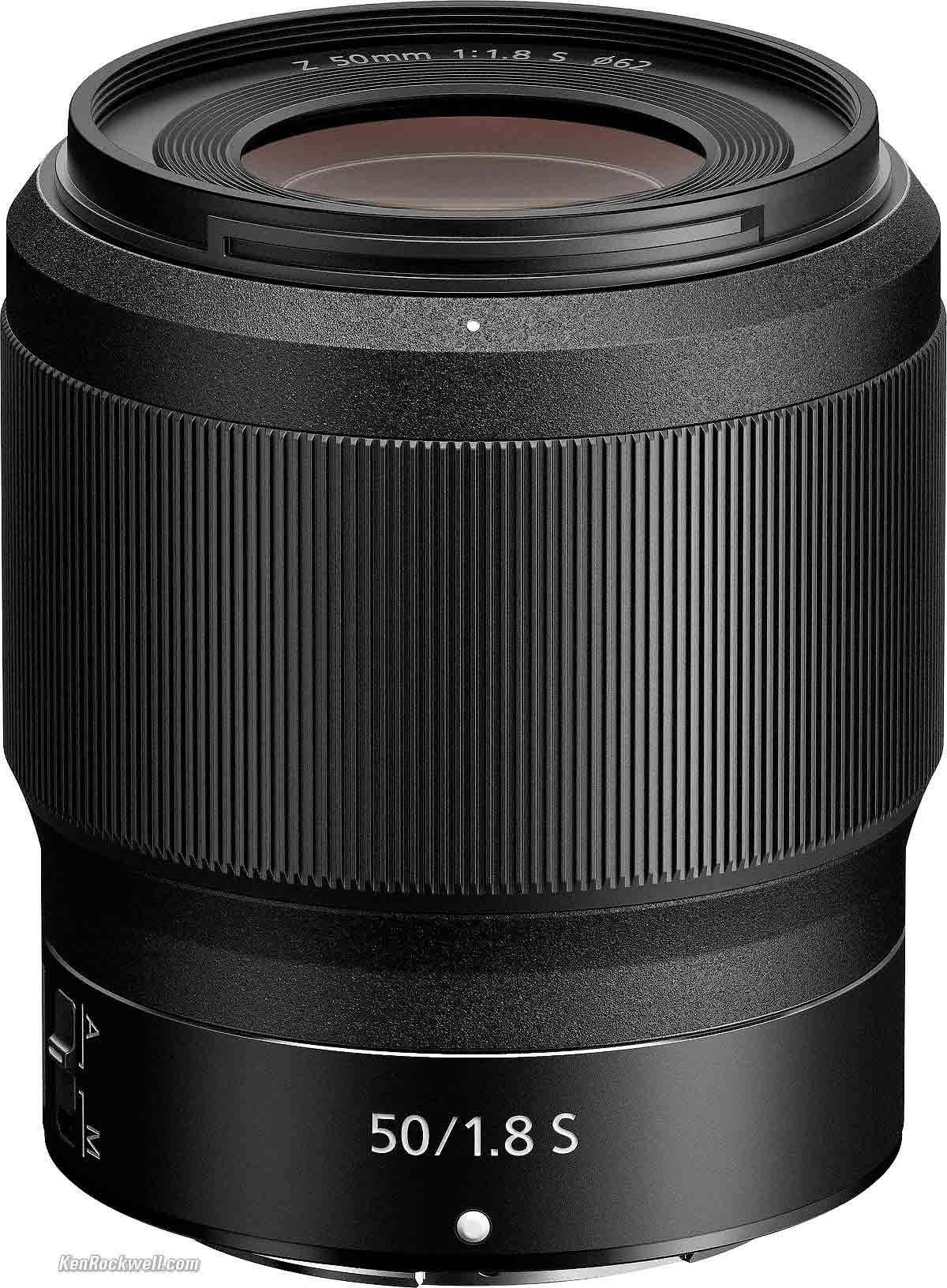
Nikon Z 50mm f/1.8 S.
NEW: Nikon 50mm f/1.8 S
Last but not least, I got this one up after dark last night.
27 August 2018, Monday
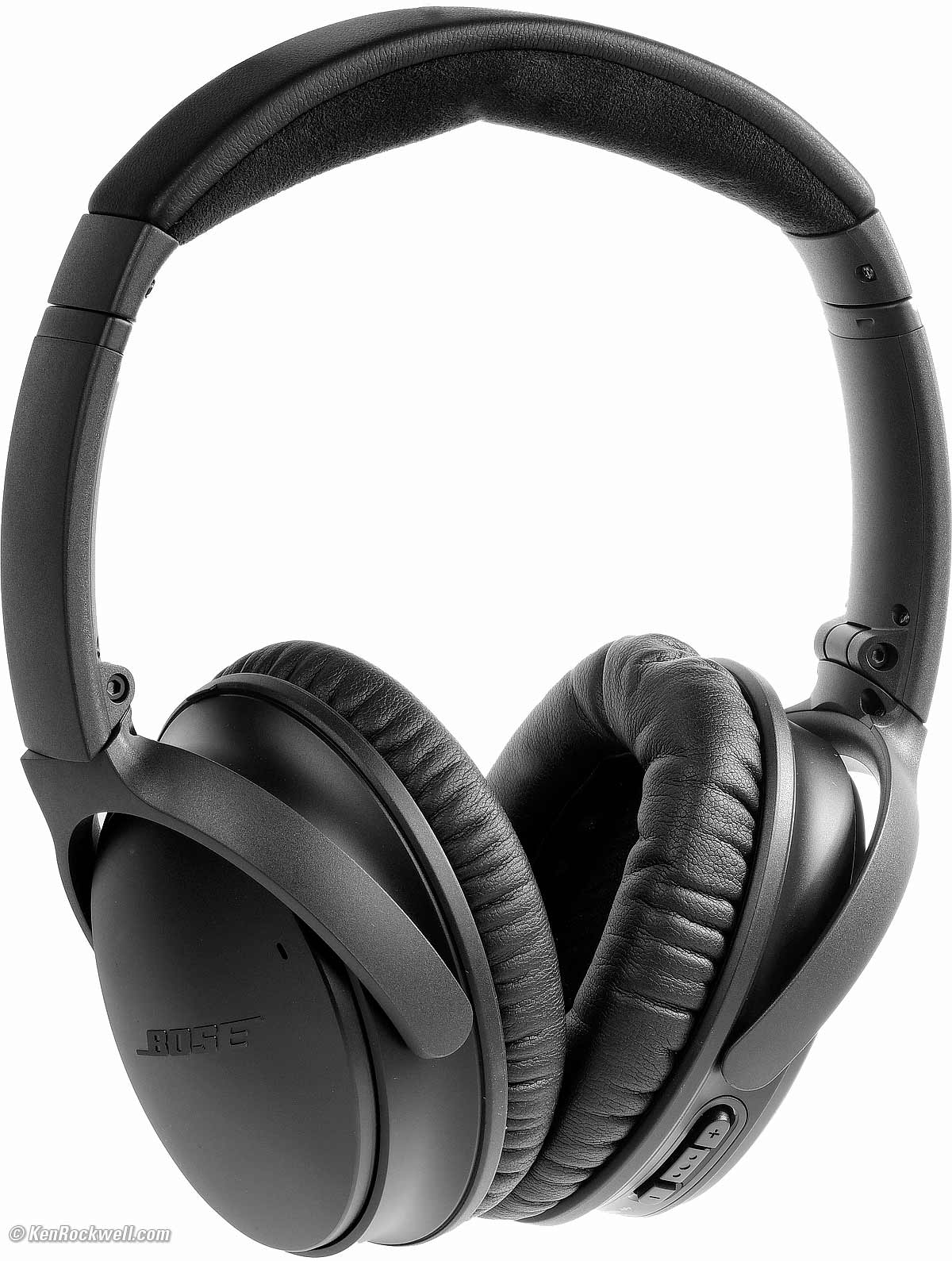
Bose QC-35 Bluetooth Noise-Canceling Headphones.
Two-Year Update: Bose QC-35 Headphones.
I bought my Bose QC-35 headphones two years ago and they never cease to amaze me. I wrote my review in 2016 when I had to do a lot of flying and they worked wonders - and even cured jet lag! Today when I turned them on after sitting in my drawer for two years unused, they still had 40% battery charge and were already instantly connected to my iPad Pro, no fiddling required!
I also appreciated that they connect to two Bluetooth devices at the same time. Therefore I can be using them with my laptop, and if my iPhone rings, it's also connected and lets me pick up the call without having to fiddle with anything. BRAVO!
Even better, they are $50 less expensive than when I bought them. If you travel by air, you'll love these. While I used mine extensively two years ago and then they've sat idle, I bought another pair for my wife at the same time and my son Ryan has adopted them from her. He uses them all day, every day with his computer and even he hasn't worn them out yet.
26 August 2018, Sunday
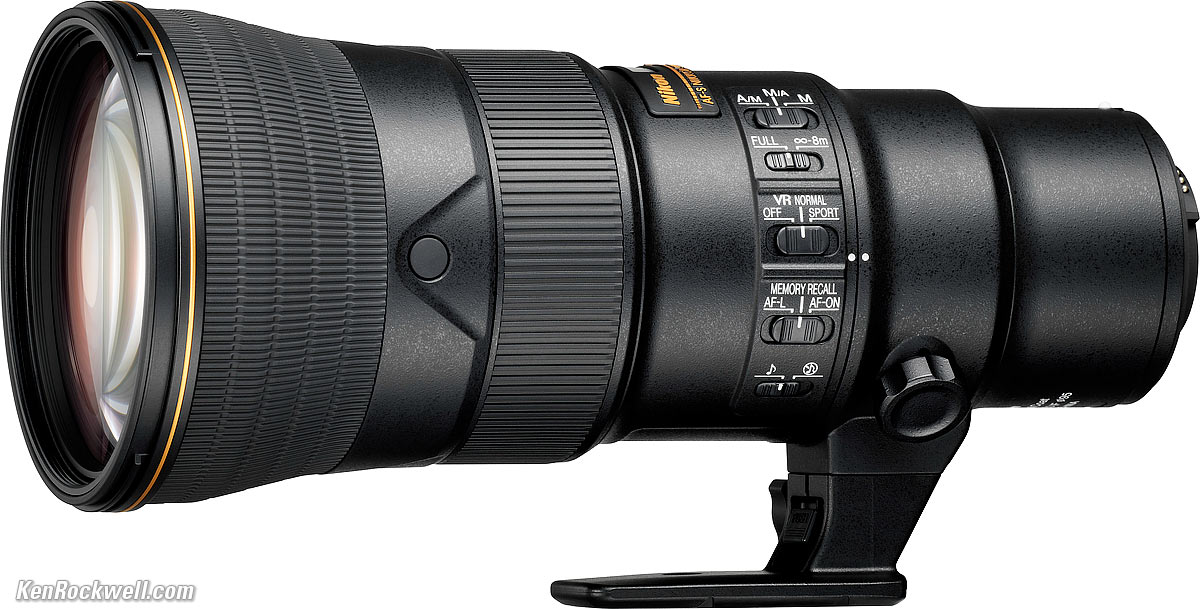
Nikon 500mm f/5.6 PF.
NEW: Nikon 500mm f/5.6 PF.
Working with little sleep the past few days, I've added a full analysis of this new ultralight ultratele.
It's a F-mount lens for the old DSLR system; use it with your FTZ on your new Nikon mirrorless.
Nikon vs. Sony Mirrorless
I also shoot Sony, and mirrorless offers loads of advantages over DSLRs, namely being able to see playback and magnified images through the finder with exquisite detail, and set all the menus. It also finally gives us full-frame AF; we can focus in the corners and not just near the center.
Huge advantages of Nikon mirrorless I anticipate over Sony to which I'm looking forward are:
 Superior finder optics. Sony's finders have iffy dioptrometric adjustments that never give perfect finder sharpness from edge-to-edge. Nikon has been making eyepieces for over 100 years for their binoculars, riflescopes, microscopes and telescopes. Unlike Sony, I suspect Nikon knows exactly how to make a superior eyepiece that will give a sharper EVF than ever.
Handles like a real camera, not a VCR. I love my Sonys, but I try not to get too peeved about their crummy menu systems since they are still the best mirrorless camera on the market until Nikon's Z7 starts shipping in a month. The Nikons will handle like Nikons, not like VCRs.
Superior Nikon color rendition. While mirrorless is fun, I get better colors on my Canons and Nikons than I get from Fuji or Sony.
Full time instant manual focus override. A core incompetancy of Sony's system is that only one lens I've used does this. The rest of the system only can do this part time, only if you set the camera in certain modes, and often the Sony lenses use electronic manual focus which doesn't respond instantly.
Does Sony only have one more month to remain relevant in still photography? Only time will tell.
Sony Rules
While this may change in coming months, Sony was very proud to announce last week that in the first half of 2018, it sold more full-frame digital cameras than anyone. Sony right now is number one.
Sony finally beat Canon and beat Nikon at their own game. Ha!
The Moral?
The moral of this past week is that this is a very interesting time in photography technology. The SLR, invented in Germany in the 1930s and made popular by the Nikon F in 1959, is finally on the way out.
We still need to have Canon join this full-frame party, but now Nikon is the third to make a full frame mirrorless digital camera, after the LEICA M9 of 2009 and the Sony A7 of 2013.
I can do without Fuji here; their sensors give yucky images except for people pictures, for which they excel.
Who will win and who will be gone 10 years from now? No one knows. These are fun times. Back in the 1980s when the world went autofocus Nikon won for a while because it stressed compatibility with its old manual-focus lenses, but Canon ultimately won because its EF system is superior, having been drawn from a clean (but completely incompatible) slate in the 1980s, not like Nikon who simply jerry-rigged their 1950's lens mount for compatibility.
Nikon's paying the price today for using its ancient mechanical 1959 F-mount all these decades. This is why Nikon has all sorts of incompatibility problems with its DSLR systems today. Let's hope the new Nikon mirrorless system wins - but I don't see it as any smarter today than Canon's all-electronic EF system was back in the 1980s. If Canon joins this party, I wonder they will have a mount that skips ahead 30 years again as they did in 1987?
25 August 2018, Saturday
NEW: Nikon FTZ Lens Adapter Compatibility.
You know you want to know!
24 August 2018, Friday
Live from New York: Nikon Z Live Stream Noon NYC time.
Whew!
I was at it for over 18 continuous hours yesterday creating the structure for Nikon's full-frame mirrorless system, and didn't complete my first cut of in-depth analyses of the Z7 and Z6 bodies until after 10PM last night (NYC time). If you tried reading them yesterday, they are much more complete now.
I'm at it again all day today, covering the lenses as well as acquisition strategies for and comparison between the Z7 and Z6. As a summary, order both right now. You'll get your Z7 in about a month, and you'll be able to run it through its paces throughly. If you hate it, just send it back, or resell it for a profit since I expect quite a shortage. Either way you can't lose so long as you save all your paperwork.
Of course the camera we really want is the Z6 which is the same thing, just faster and $1,400 less expensive than the Z7. (Due to pixel dumping there is no visible difference in resolution between the two!) Nikon cleverly is holding back the Z6 for two months after the Z7 starts shipping, so Nikon knows our 30-day returns will expire and we'll be stuck with our Z7s.
But wait - even though Nikon won't be taking back any Z7s, I predict that when our Z6s start shipping (I say "our" as I presume you guys are all as clever as I am at this), we will be able to sell our 2-month old Z7s for a profit. We'll make a few hundred bucks reselling our Z7s and keep our new Z6s, which probably will only cost us $1,799 after profits. No worries about the credit cards; they don't get charged till our Z7s ship, so we probably won't have to pay the credit card thanks to the float until we resell them! (I pay off my card in full each month.)
Game plan: order everything now, and read my Z7 and Z6 reviews now that they are reasonably complete for the time being. Keep checking back for live updates all day, especially for the lenses on whose pages I'm working in earnest all today. When the Z7 shows up, enjoy it, and monitor the resale prices a few weeks after your Z7 arrives to confirm if you're going to return it and wait for your Z6, or keep it to resell. Heck, even if the resale price stays flat it's probably worth it to hold onto the Z7 until the Z6 arrives so you have something to shoot. I'd also wait until my Z7 arrives to start dumping my DSLR gear overboard; DSLR gear went obsolete yesterday but it will take years for the general public to figure it out and the values to drop.
This brave new system replaces 35mm cameras and DSLRs. Nikon's first cameras were mirrorless in 1946 and used an S mount. Nikon has finally come home to rule the world once again!
Own the best
As a side note, I've noticed that the best 35mm and medium format film gear has appreciated significantly over the past few years. The Contax 645AF medium-format system, the Contax G 35mm system and the Canon EOS 1V are selling at about 50% over what I paid for them 5 years ago. As with any investment, buy the best of the best and hold on. These three camera systems are the ones that working pros who shoot film still shoot, and the Contax 645 AF system is still the world's best system shot in the world's top studios today with medium format digital backs. You can pay more for newer off-brands like Mamiya, but nothing ever worked as well as the CONTAX 645.
23 August 2018, Thursday
BREAKING NEWS: Nikon's full-frame mirrorless system.
Live updates all day.
Today is Nikon's biggest breaking news day in many, many decades, possibly the biggest news day ever since they started selling cameras back in 1946.
Today Nikon announced two cameras, four lenses, an adapter and lots of other little goodies as part of a brand-new modern camera system to replace all Nikon SLRs and DSLRs. With no need for an SLR's flipping mirror with real-time electronic finders, the entire F and D systems will fade away over the next 10 to 20 years as this new Z system replaces them all. As I've been saying, flipping mirrors are vestiges of 35mm cameras and are about as relevant today as rotary phones.
Now with Nikon making pro mirrorless cameras that handle like real cameras, feel good in our hands, work like they're supposed to and offer Nikon's superior color rendition, Fuji can return to focusing on their core film and paper businesses and Sony can get back to innovating again in TVs and stereos. It might be time to sell your Sonys on eBay while they still get top dollar.
Never before has Nikon announced so much on one day. Whey they announced the world's first practical DSLR back in 1999 all they did was announce a camera and maybe a lens or two. 11 years ago was a big day when the D3 and D300 came out, but never in the past forty years or so that I've been covering this can I recall so much new on one day.
Because of this I've been working since midnight, but it's going to take me a day to get it all down here.
In fact, the first thing I did was order myself one of everything without even having read about it so I'm first on Adorama's list so I'll get mine first. I can return anything I don't love after I get it - or resell it for a fast, fat profit if this becomes hard to get and used prices skyrocket while there's shortage as they often do. Nikon can never deliver really new products; heck, hundreds of people are still waiting for delivery on their D850s that came out a year ago. Order now; you have no risk. When it comes in you can try it yourself, and if you hate it, only then decide to return or resell it based on prevailing prices.
Keep checking back as I add more and more to all of these many pages of new products - just be sure to place your orders NOW so you can get it first. You always can return anything for a full cash refund if you don't love it, but if you don't order today you may be in for a very long wait.
Order first. Read later. It's not 1959 anymore.
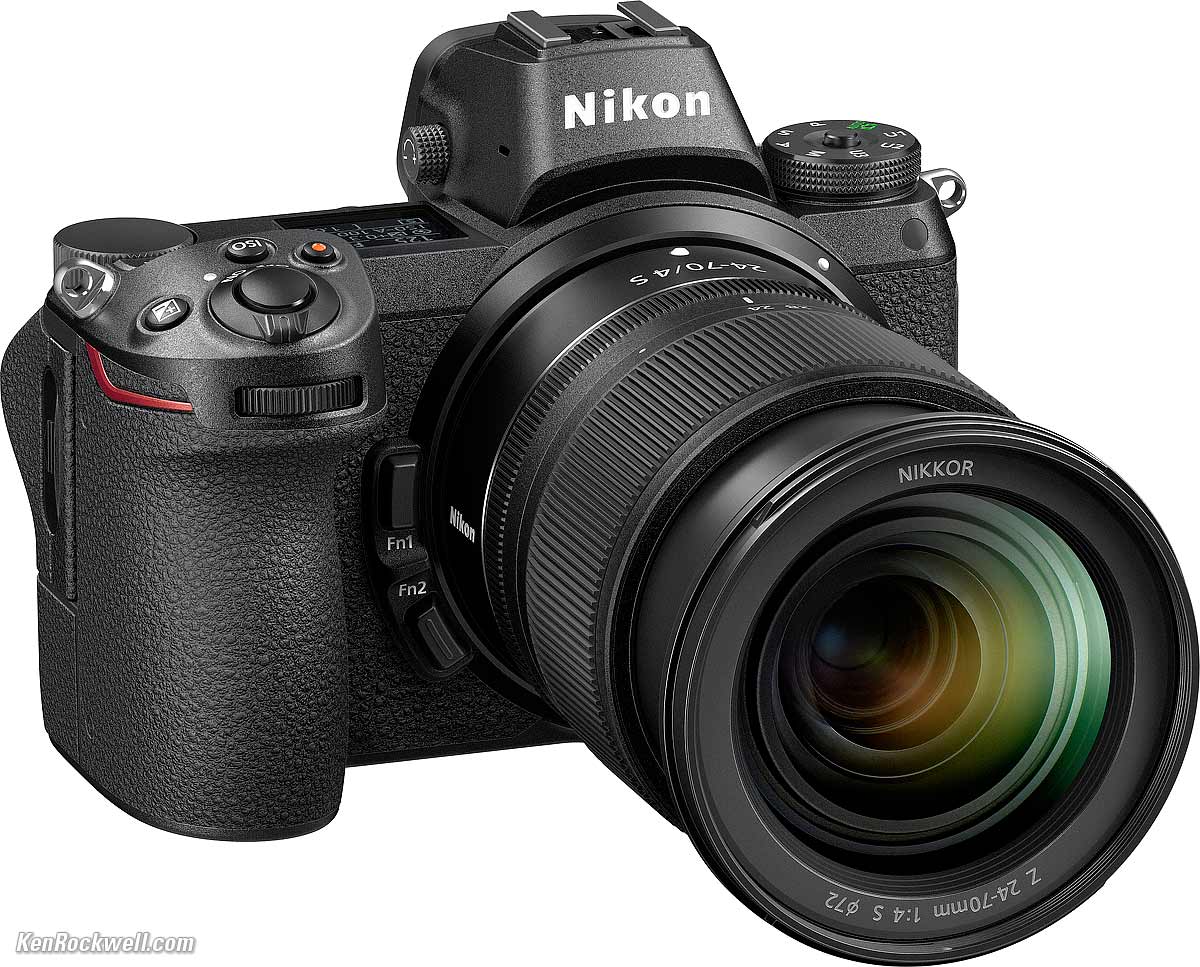
Nikon Z7 and Nikon Z 24-70mm f/4 S.
NEW: Nikon Z7
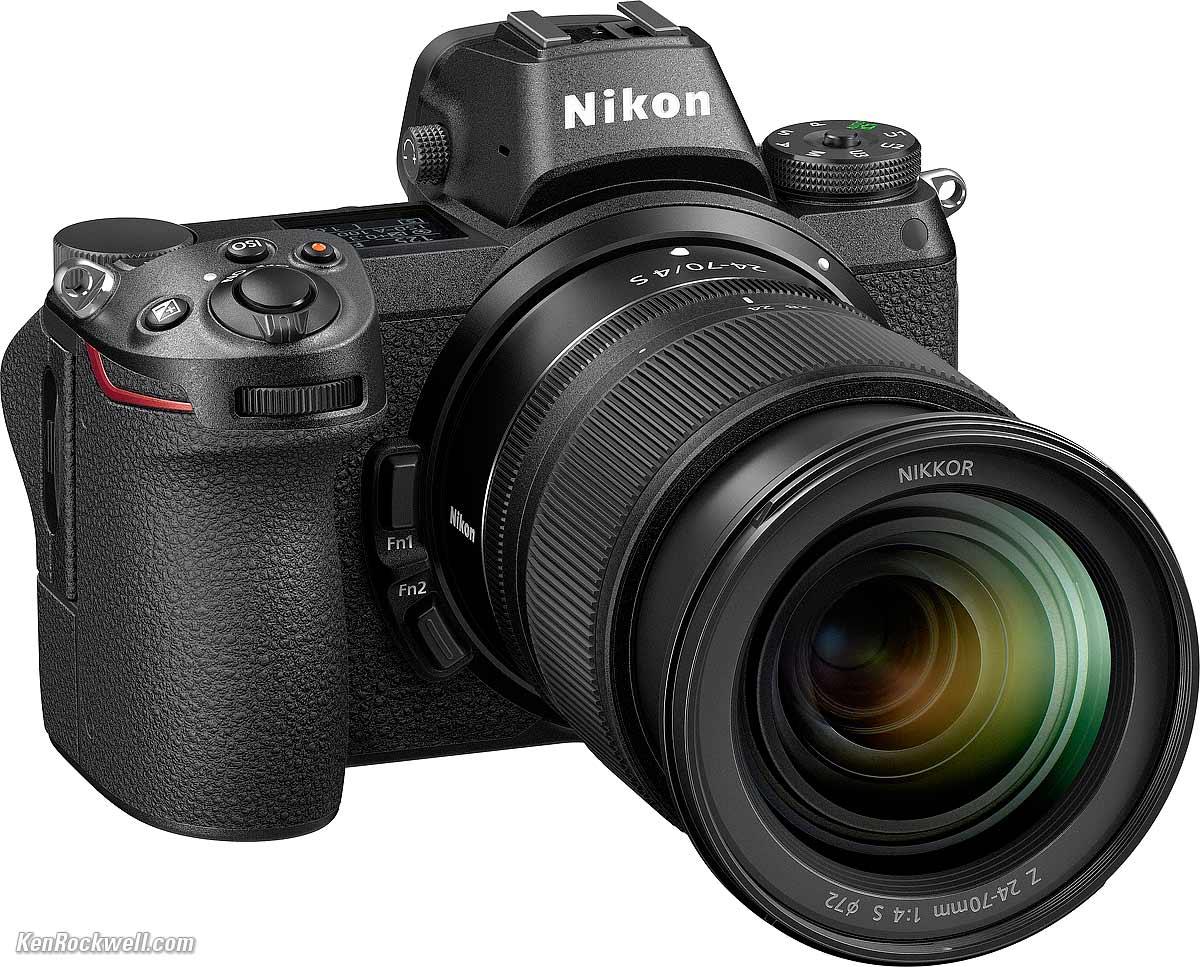
Nikon Z6 and Nikon Z 24-70mm f/4 S.
NEW: Nikon Z6
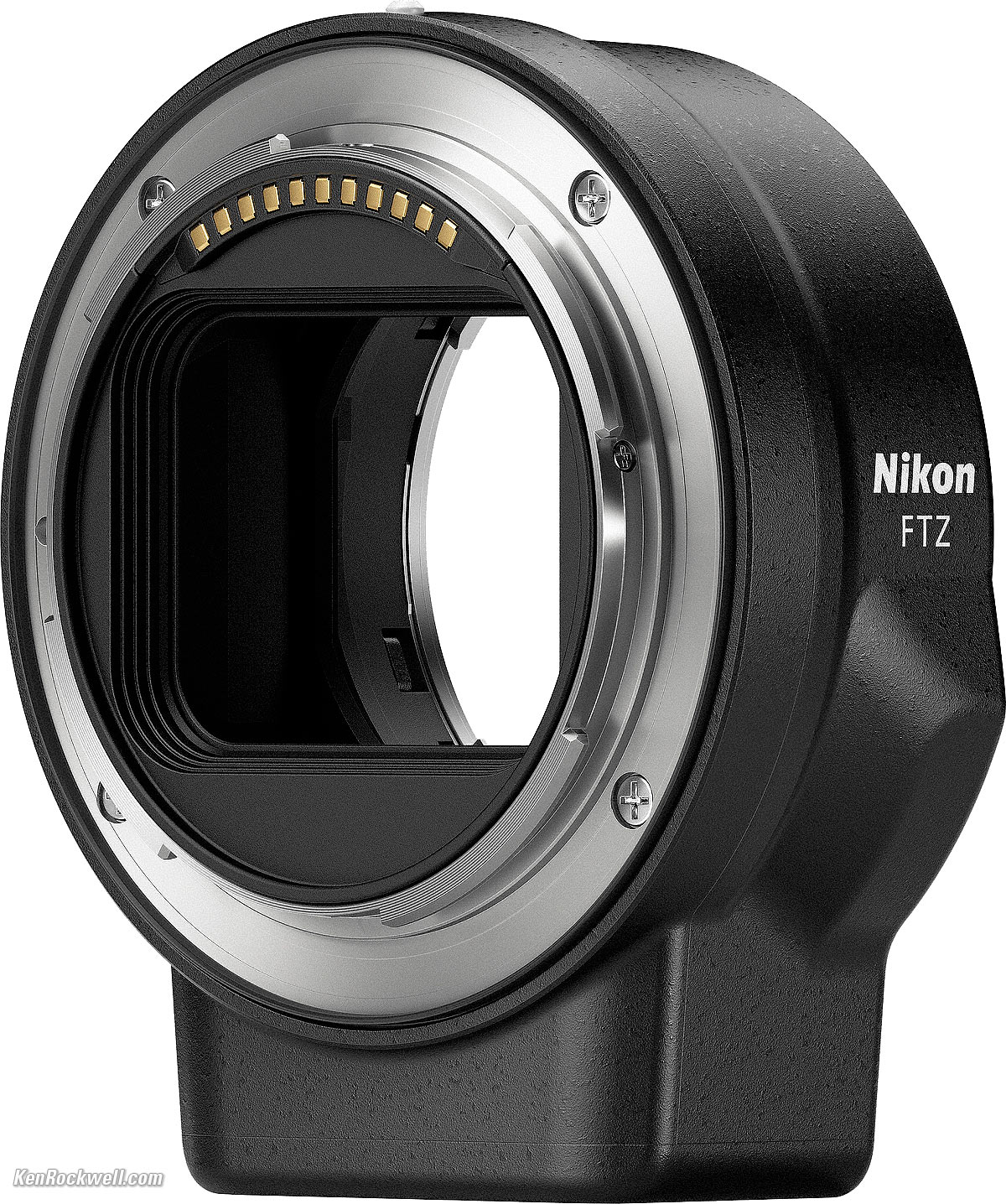
NEW: Nikon FTZ F-Mount to Mirrorless Lens Adapter
Nikon Z 24-70mm f/4 S.
NEW: Nikon 24-70mm f/4 S
Nikon Z 35mm f/1.8 S.
NEW: Nikon 35mm f/1.8 S
Nikon Z 50mm f/1.8 S.
NEW: Nikon 50mm f/1.8 S
NEW: Nikon 500mm f/5.6 PF
Did you know Nikon and Canon for decades have announced some of their biggest things on the second-to-last Tuesday or Thursday of August? I'm told this is because most of Japan comes back from vacation and they want to get back to work with a bang. There's often a "leak" a couple of days before just to get everyone talking about it, as again we have today.
This includes Nikon's first FX digital camera ever, the D3 announced this same exact day 11 years ago, 23 August 2007, the D300 (also 23 August 2007), the D80 (09 August 2006), the D90 (27 August 2008), the D3100 (18 August 2010), the D3400 (17 August 2016), and yes, the D850 was announced on 24 August last year. Canon does the same thing, and this goes much further back than just digital cameras.
21 August 2018, Tuesday
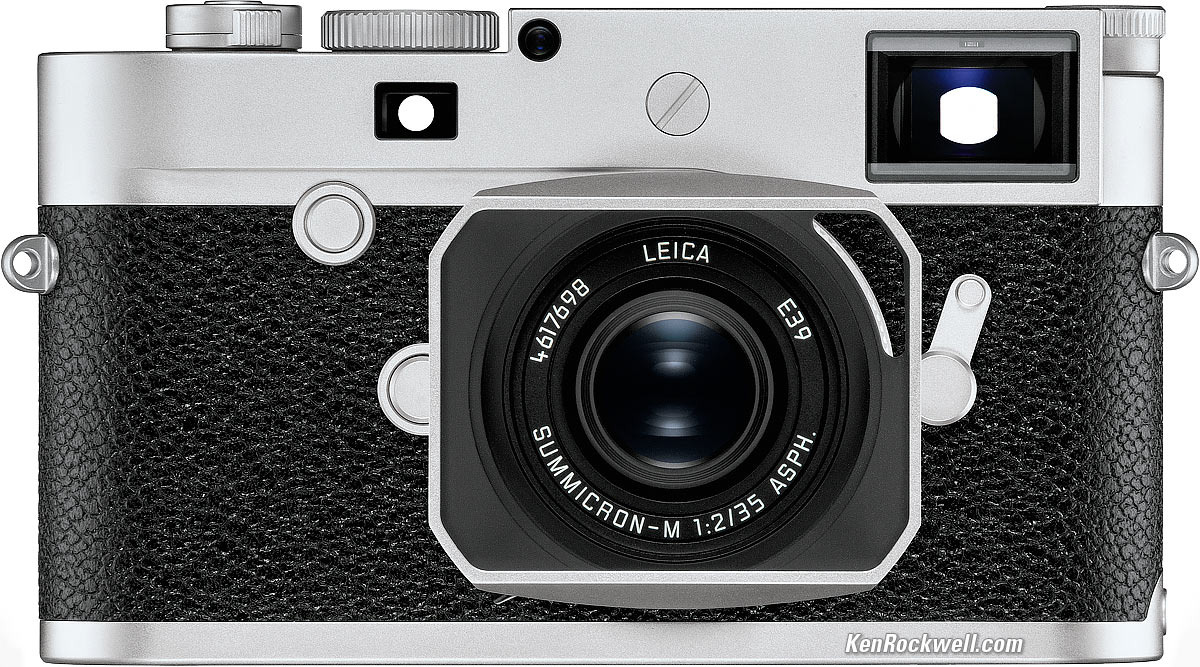
LEICA M10-P with 35/2 SUMMICRON-M ASPH.
NEW: LEICA M10-P.

Sony RX100 Mark VI.
NEW: Sony RX100 Mark 6 Review.
NEW: Sony RX100 Mk VI User's Guide.
NEW: Phil Steele's Advanced Off-Camera Flash course.
DEAL: Phil Steele's Advanced Off-Camera Flash course at 33% off!
My friend Phil Steele has released his first new photography course in four years! You can see free samples and get all the details here.
He has a 33% off introductory deal running for a limited time. There's a 60-day money-back satisfaction guarantee, so you have everything to gain and nothing to lose by trying it.
The most important technical aspect of every photo is the lighting. Cameras, lenses and sensors have much less to do with how our pictures look than than the lighting. Just watch Phil's free preview and you'll see how critical and important this all is, so get it now while it's on sale and you'll have plenty of time to make sure it's as helpful as I'm sure it will be.
I've now watched the entire series. Phil keeps no secrets; he shares everything he knows about using numbers of wireless flash and how he gets it all to work. This is why the series is so long, Phil covers everything he's learned in many years of doing this, all in simple English we all can understand and use immediately.
07 August 2018, Tuesday
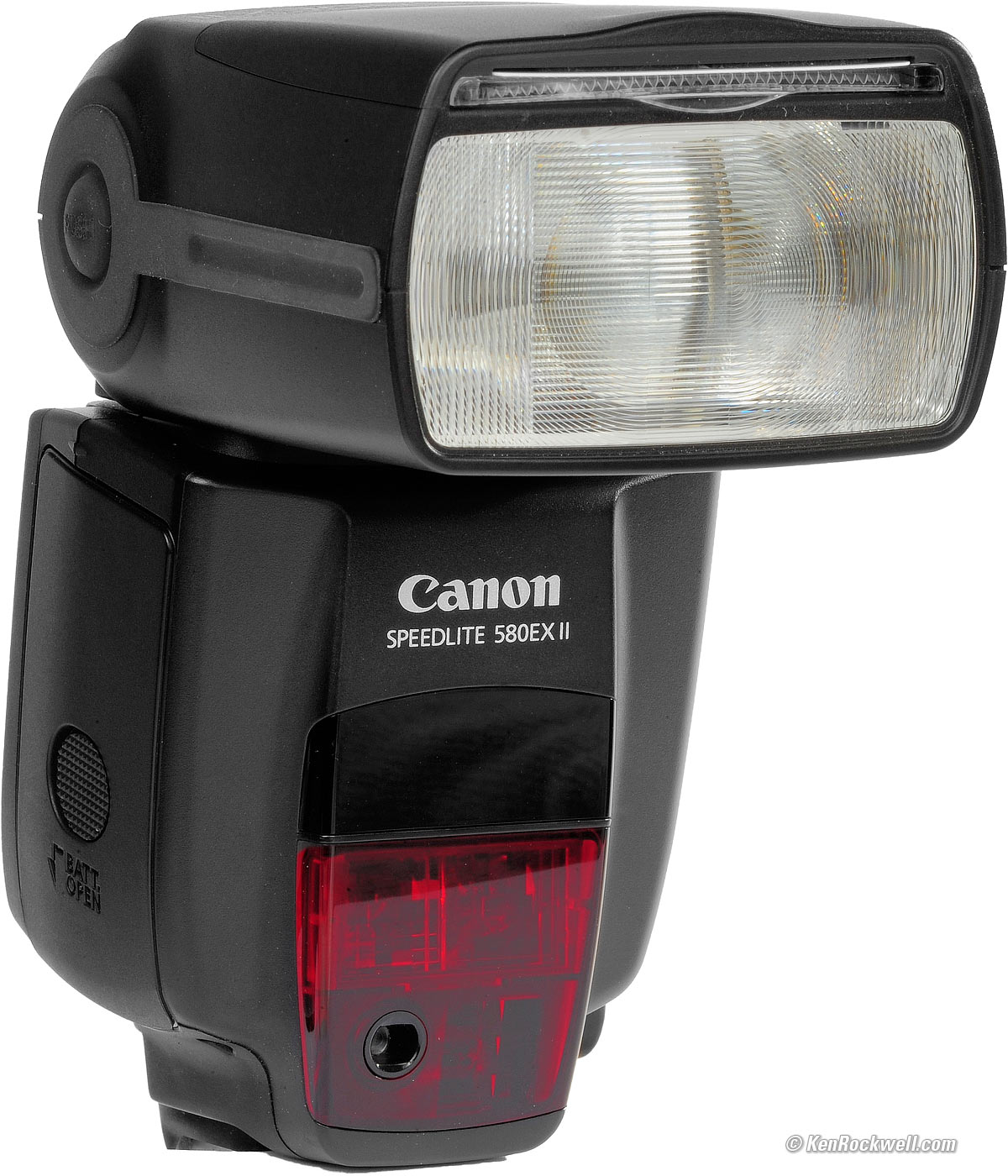
Canon 580EX II.
NEW: Canon 580EX II Review.
NEW: Canon 580EX II User's Guide.
The same superb professional power and performance as the 600EX II RT, simply without radio control for one-quarter the price - and it still has full optical wireless capability!
Watching Phil Steele's Advanced Off-Camera Flash course over the weekend made me realize that I had forgotten to review my 580EX II. Since today the third-party radio triggers Phil describes in such detail give you the same or better performance as the more limited Canon system with even older-model flashes like this, I realized it is high time for a review.
Other than radio control (which third-party wireless radio control devices allow you to do with this flash), there is no significantly better flash for Canon.
What Was New in:
June & July 2018: Nikon Mirrorless hinted at, Fuji 8-16mm f/2.8, Fuji 200mm f/2, Fuji XF10, Sony RX100VA, Nikon P1000, Tamron 100‑400mm Review, best 80-400 and 100-400mm zooms compared, How to Win Photo Contests, Tamron 18-400mm review, Sony 400mm f/2.8, Images of Yosemite in Springtime, Kodak Medalist II Review, Canon 70‑200mm f/4L IS II, Canon 70‑200mm f/2.8 L IS III and my Sony RX100 Mark VI review.
May 2018: Marc Silber's Secrets to Creating Amazing Photos, Sigma 105mm f/1.4, Fuji X-T100, Tamron 15-30mm f/2.8 IS/VR Review, beyerdynamic Amiron Home Review, Sigma 70mm Full-Frame Macro Art Lens, Nikon D1 High ISO Samples, Vello MB-D18 (BG-N19) Grip Review, Sunpak RD2000 Review, Small Flashes Compared.
April 2018: Irix 11mm f/4 Review,Tamron 28-75mm f/2.8, Canon 85mm f/1.4 L IS Review,Tamron 70-200mm f/2.8 VR/IS Review, Best 70-200mm f/2.8 Lenses Compared, Tamron 24-70mm f/2.8 VR/IS Review, Best 24-105mm Lenses Compared, MindShift 18L Backpack, Fuji GF 250mm f/4, Fuji GF 1.4X TC WR Teleconverter, Fuji MCEX-45G WR Macro Extension Tube, Fuji MCEX-18G WR Macro Extension Tube, Sony RX10 Mk IV Review, Sony RX10 Mk IV User's Guide, beyerdynamic Aventho Wireless Review.
March 2018: Nikon 70-300mm AFP E FX Review, Nikon 28mm f/1.4 E FX Review, Nikon 10-20mm Review, Nikon D7500 Review.
February 2018: Sony A7 III, Yosemite Photos, Nikon 50mm f/1.8 Pancake-NIKKOR review, beyerdynamic DT1350 review, beyerdynamic DT240 review, Canon SL2 review.
Janaury 2018: Nikon 180-400mm, Canon 6D Mk II review, Canon 18-135mm USM review, Fuji X-A5, Sony 18-135mm.
December 2017: Canon 35mm f/2.8 Macro review, Sony A7R III review, Sony A7R III user's guide, Sony FE 24-105mm f/4 G OSS review, Sony FE 100mm STF G OSS review.
November 2017: Sony 50/2.8 Macro Review, Sony 90/2.8 Macro Review, LEICA CL, Sony 70-300mm G Review, Panasonic G9, iPhone X Review, How to Make Time Exposures with iPhone, 1X Photo Contest, Tamron 100-400mm.
October 2017: Nikon D850 review, Nikon D850 user's guide, Sony A7R III, Sony 24-105mm G, Sony 85/1.8 review, Canon G1X Mk III.
June, July, August and September 2017: Canon 6D Mk II, Canon SL-2, Canon 85/1.4L, Canon TS-E 50/2.8, 90/2.8 & 135/4, Nikon D850, Nikon 70-300 VR DX AF-P, Nikon 28/1.4E, Metabones Mk V Canon EF -> Sony E-mount adapter.
May 2017: Nikon 10-20mm DX VR, Nikon 8-15mm FX Fisheye, Canon 77D Review, Canon Rebel T7i Review, Canon 18-55mm IS STM Review, Springtime in Yosemite, Irix 15mm f/2.4 Review, Sony 16-35/2.8 GM, Sony 12-24/4 G, Fuji X100F Review, Laowa 12mm Review, Olympus TG-5.
March & April 2017: Nikon D7500, Nikon 19mm PC-E review, Nikon D3400 review, Sony A7 Mk II review, Nikon D5600 review.
February 2017: Canon 77D, Canon Rebel T7i, Canon EOS M6, Sony 24-70/2.8 GM, Sony 85mm f/1.4 GM , Sony 70-200mm f/4 G OSS, Sony FE 100mm f/2.8 STF GM OSS, Sony FE 85mm f/1.8.
January 2017: LEICA M10, Fujifilm GFX 50S, Fujifilm X100F, Nikon D5600.
November & December 2016: Fuji X-A10.
September & October 2016: Nikon 70-200mm f/2.8 FL, Nikon 19mm PC-E, Sony A6500, Sony RX100 Mk V, Sony Alpha 99 II, Canon EOS M5, Canon EF 70-300 IS II USM, Sony 50mm f/2.8 Macro.
July & August 2016: Canon 5D Mk IV, 16-35 IS II, 24-105 IS II, Nikon D3400, Nikon 105mm f/1.4, Fuji XT-2.
Help me help you
I support my growing family through this website, as crazy as it might seem.
If you find this as helpful as a book you might have had to buy or a workshop you may have had to take, feel free to help me continue helping everyone.
If you've gotten your gear through one of my links or helped otherwise, you're family. It's great people like you who allow me to keep adding to this site full-time. Thanks!
If you haven't helped yet, please do, and consider helping me with a gift of $5.00.
The biggest help is when you use any of these links when you get anything, regardless of the country in which you live. It costs you nothing, and is this site's, and thus my family's, biggest source of support. eBay is always a gamble, but all the other places always have the best prices and service, which is why I've used them since before this website existed. I recommend them all personally.
Thanks for reading!
Ken